
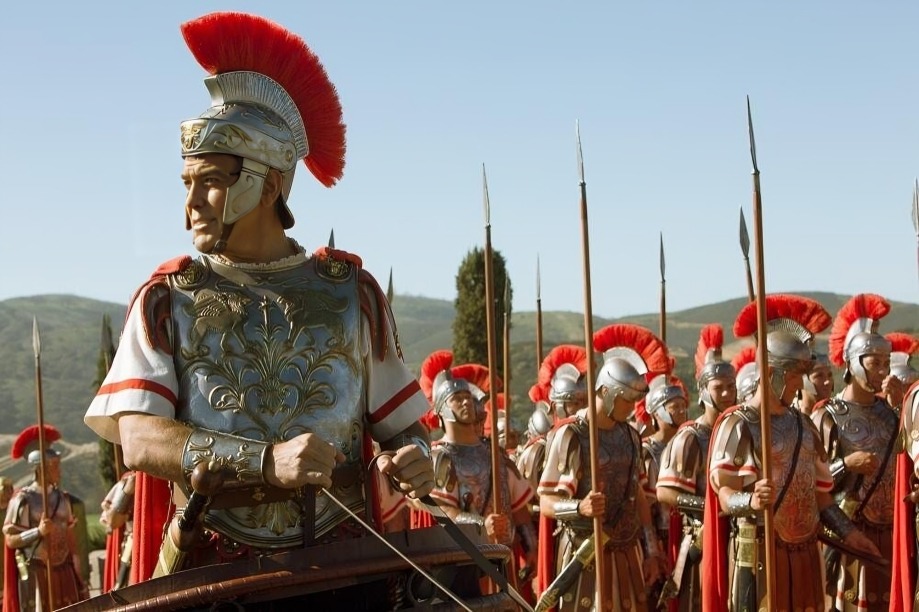
Julius Caesar, the military genius who reshaped Rome and history itself, was many things—brilliant, ambitious, calculating. But above all, he was a man who understood the power of loyalty. Of all the legions that marched under his command, one stood out above the rest: Legio X Equestris, or the 10th Legion. To Caesar, they were not just soldiers—they were his soldiers. The bond between him and the 10th was unlike anything else in Roman history.
But why? What made this legion earn Caesar’s unwavering trust?
The Firstborn of His Command
The 10th Legion wasn’t just another unit in Caesar’s army—it was the first legion he ever raised on his own. When he became governor of Hispania Ulterior in 61 BCE, he inherited a few legions, but the 10th was formed entirely under his command and filled with recruits who knew they owed their careers to Caesar himself.
This personal connection forged a unique bond. Caesar trained them from scratch, shaped their discipline, and instilled in them a deep sense of identity—not just as Roman soldiers, but as the personal blade of Julius Caesar.
Their Role in the Gallic Wars
When Caesar launched his bold conquest of Gaul in 58 BCE, the 10th Legion was at the center of every major campaign. They were the tip of the spear—the first to charge, the last to retreat. From the defeat of the Helvetii to the brutal siege of Alesia, the 10th consistently delivered.
Their performance wasn’t just effective—it was legendary. They developed a fearsome reputation for discipline, courage, and near-fanatical devotion to Caesar. While other legions sometimes faltered, the 10th became known for holding the line no matter the odds.
Caesar’s Public Praise (and Private Pride)
Caesar, ever the skilled propagandist, praised the 10th openly in his Commentarii de Bello Gallico (Commentaries on the Gallic War). He often credited them with turning the tide of battle or demonstrating unparalleled bravery. His admiration wasn’t hidden—it was written into the official record.
At times, Caesar even used the 10th as a political tool. When other legions hesitated or questioned his orders, he would invoke the 10th as the model of loyalty. Their reputation became both sword and shield—deterring dissent and inspiring emulation.
The Horseback Incident
The 10th Legion also earned its name, Equestris, from a unique and telling incident. In 58 BCE, Caesar needed a cavalry escort to negotiate with a Germanic king but lacked trustworthy horsemen. So, he asked the 10th—infantrymen—to mount up and act as his cavalry. Despite having no formal cavalry training, they complied instantly, showcasing not just loyalty but incredible adaptability.
The mission succeeded, and the name “Equestris” stuck. But more than that, the moment symbolized the 10th’s core quality: they would do anything Caesar asked, without hesitation.
Loyalty During the Civil War
When Caesar crossed the Rubicon in 49 BCE, plunging Rome into civil war, many questioned his motives. But not the 10th. They crossed with him, unwavering. While other legions weighed their loyalties or defected, the 10th marched straight toward uncertainty and civil conflict without complaint.
They were with him at the crucial Battle of Pharsalus in 48 BCE, where Caesar defeated Pompey. It was the 10th that helped secure Caesar’s dominance—not just over Rome’s enemies abroad, but over its politics at home.
More Than Soldiers—Symbols
To Caesar, the 10th Legion symbolized more than military might. They were proof of his personal power, a reminder that his authority came not from the Senate, but from the legions who loved and followed him. In a Republic where loyalty was often transactional and fragile, the 10th represented something rare: unconditional commitment.
And to the men of the 10th, Caesar wasn’t just a general—he was destiny. They believed in his vision, his leadership, and perhaps most importantly, in each other.
Conclusion
Caesar was no fool. He distrusted many in the Senate, questioned his allies, and often anticipated betrayal. But the 10th Legion? That was his constant. His creation. His edge. In them, he saw the reflection of his own ambition—disciplined, relentless, and fiercely loyal.
In a world of shifting loyalties and fragile alliances, the 10th Legion never broke ranks. And for that, Caesar trusted them with his battles, his reputation, and his fate.
Because sometimes, one loyal legion is worth more than an entire empire.
