
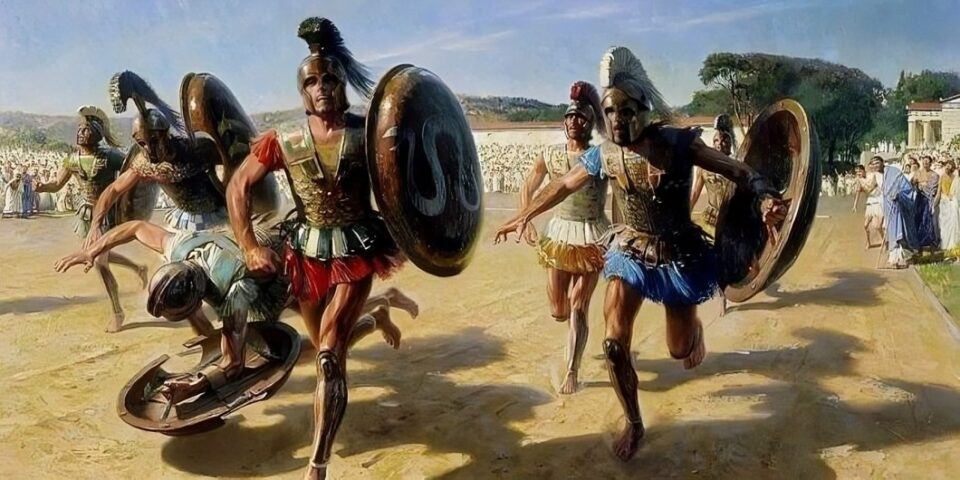
The modern marathon is one of the most iconic long-distance races in the world—26.2 miles of pure endurance. But this grueling event has a legendary origin: a story from ancient Greece that ends in both triumph and tragedy. According to popular legend, the very first “marathon” ended with a man collapsing and dying from exhaustion after delivering urgent news.
But who was this man? And did he really die after the run?
Let’s uncover the truth behind the legend of the Greek messenger—and why his fateful journey continues to inspire runners around the world.
The Legend of Pheidippides
The tale begins in 490 BCE, during the Battle of Marathon, when the small Greek city-state of Athens faced off against the powerful Persian Empire. According to ancient accounts, after the Greeks achieved a surprising victory, a soldier-messenger named Pheidippides was sent from the battlefield near Marathon to Athens, approximately 25 miles away, to deliver a single message:
“Rejoice, we are victorious!”
As the story goes, he arrived, gasped out the words—and then collapsed and died from exhaustion.
This dramatic moment became legend. In 1896, when the modern Olympic Games were revived in Athens, the marathon race was created to honor Pheidippides’ heroic run.
What Really Happened?
While the story is powerful, historians debate how much of it is fact and how much is myth.
According to the ancient historian Herodotus, who wrote closer to the time of the actual events, Pheidippides was a professional “day-runner” (called a hemerodromos) trained to carry messages across long distances. But Herodotus tells a slightly different version: Pheidippides ran from Athens to Sparta—a much longer journey of about 240 kilometers (150 miles)—to request help before the battle, not after it.
This journey was so intense, Herodotus notes, that it took two days to complete, which would have required extreme endurance. There is no mention in his account of a fatal post-battle run to Athens.
So where did the death-at-Marathon story come from?
A Myth That Evolved Over Time
The death-after-delivering-news version of the story seems to have been added by later writers—especially Plutarch and Lucian—who wrote centuries after the battle. Their accounts added drama and symbolic weight, possibly blending multiple runs into one single heroic moment.
The romanticized version likely stuck because it was inspiring and tragic—a perfect myth to represent sacrifice, patriotism, and human endurance.
And when the modern Olympics began, organizers chose to immortalize this version in the form of a race. The distance was later standardized to 26.2 miles during the 1908 London Olympics.
Could Someone Actually Die After Such a Run?
Yes—especially in ancient times. Running 25 miles or more in full armor, or without modern hydration and nutrition, would have been incredibly dangerous. Heat exhaustion, dehydration, and even cardiac arrest could occur. Even today, marathons pose serious health risks to those not properly prepared.
If someone like Pheidippides did make that run without rest after already fighting in a battle, it’s not unthinkable that it could have cost him his life.
Conclusion
Whether or not Pheidippides truly died after his run, the story has endured for over 2,500 years—not because of its historical accuracy, but because of what it represents: human courage, sacrifice, and the power of the message.
Today, millions of people run marathons around the world not just as a sport, but as a tribute to that ancient spirit of endurance. Every time someone crosses a marathon finish line, they echo the legacy of a lone messenger, running for something greater than himself.
Would you like this adapted into a classroom version, infographic script, or social media post? Let me know!
