
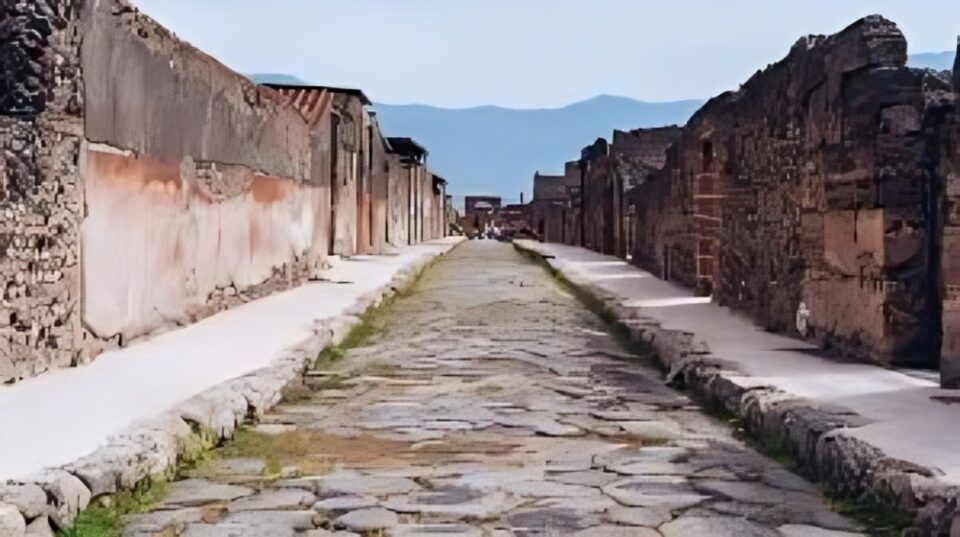
For nearly two thousand years, many Roman roads have withstood the passage of time, climate, wars, and the rise and fall of civilizations. Even today, remnants of these ancient highways stretch across Europe, North Africa, and the Middle East—some still walkable, some still used. What made them so enduring? How did engineers from a world without electricity, concrete mixers, or GPS create infrastructure that outlasted empires?
The secret lies not in one single innovation but in a genius blend of design, materials, and long-term thinking that modern builders are still studying today.
Built to Last, Not to Impress
Roman roads were not built for beauty or comfort—they were built for durability and military speed. The primary purpose was to allow Roman legions to march swiftly across the vast empire. That meant roads had to be straight, stable, and resilient. Roman engineers didn’t just pave a flat surface; they engineered from the ground up.
Each road typically had four to five layers, with each layer designed for strength and drainage:
- Statumen – A foundation of large stones.
- Rudus – A layer of smaller stones or gravel mixed with lime.
- Nucleus – Finer gravel and sand, sometimes mixed with volcanic ash.
- Summum dorsum – The final surface made of fitted paving stones or compacted gravel.
This layered system distributed weight efficiently and prevented water from pooling and weakening the structure.
Mastery of Materials
The Romans had access to a secret ingredient that gave their roads surprising longevity: pozzolana, a type of volcanic ash found in Italy. When mixed with lime and water, it created a type of hydraulic cement—one that could harden underwater and gain strength over time.
This material wasn’t used just in roads; it also played a key role in Roman concrete structures, many of which, like aqueducts and harbors, still stand today. In essence, the roads weren’t just laid—they were bonded together chemically, giving them a kind of ancient “concrete resilience.”
Drainage Was Everything
One of the greatest threats to any road—ancient or modern—is water. Erosion, frost, and flooding can break apart even the most solid surface. Roman engineers understood this deeply. That’s why nearly every road was cambered, meaning it was slightly arched in the center so water could run off to the sides.
Additionally, they often flanked roads with ditches or drainage channels, allowing rainwater to flow away from the structure entirely. This attention to water management dramatically extended the life of their roads and made them passable even in heavy storms.
Obsessed with Straight Lines
Roman roads are famous for cutting across landscapes in long, straight stretches—even if it meant tunneling through hills or building over marshes. Why? Because straight roads are not just efficient for movement—they’re also structurally stronger and more predictable to maintain.
This meant fewer turns, less chance of erosion at curves, and better weight distribution. Roman surveyors, called agrimensores, used tools like the groma and chorobates to map precise, straight routes over vast terrain. For the Romans, the shortest distance wasn’t just a principle of geometry—it was a military advantage.
Maintenance Was Not an Afterthought
Roman roads were not built and forgotten. The empire had a system of regular maintenance, sometimes by soldiers, sometimes by local communities under law. Roads were vital to the administration, economy, and defense of the empire. Their condition was a matter of state interest.
Milestones and markers often listed who was responsible for maintenance, and some cities or officials were held accountable for neglect. It was, in many ways, one of the first large-scale examples of state infrastructure management.
Built for the Whole Empire
Perhaps the most underrated reason for the long life of Roman roads is the fact that they were built to serve everyone—from soldiers and merchants to peasants and pilgrims. They unified the empire. The expression “All roads lead to Rome” wasn’t just metaphorical—it was based on the cursus publicus, the state-run courier system that depended on these roads to carry messages, taxes, and troops efficiently across thousands of miles.
This interconnectedness gave the roads cultural significance, which often led to them being preserved or reused, even after the fall of the Roman Empire. Many modern highways in Europe still trace the path of Roman roads laid millennia ago.
Conclusion
The secret behind the long life of Roman roads is not a mystery locked away in history. It’s a story of intelligent engineering, natural materials, and a culture that understood the power of infrastructure to shape empires.
In an age when some modern roads crumble in less than a decade, the Roman legacy serves as a humbling reminder: when you build for strength, plan for weather, and design for generations—not just profits—you build something that lasts.
And two thousand years later, the footsteps of Rome still echo in stone.
