
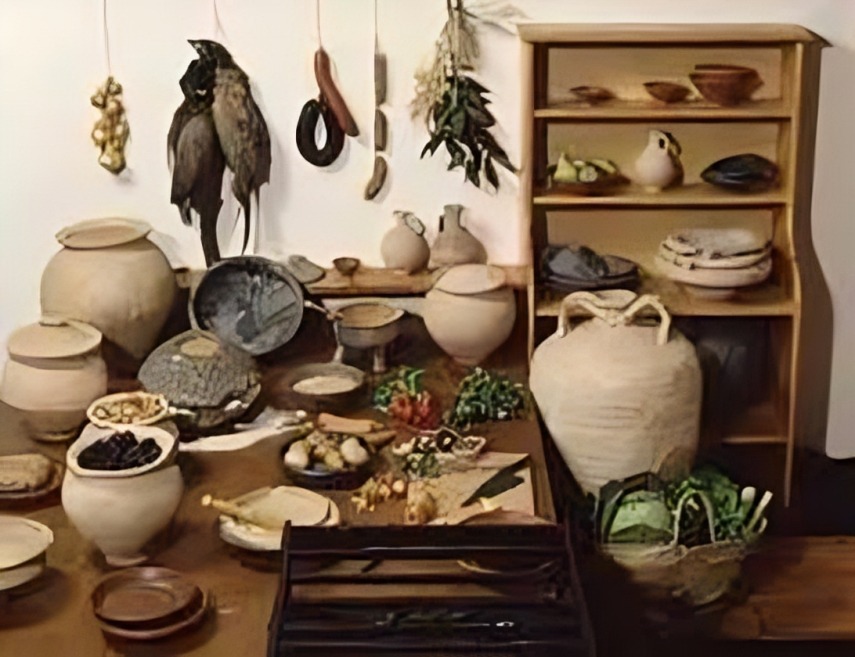
When we think of ancient Rome, images of lavish feasts, roasted meats, exotic fruits, and flowing wine often come to mind. Roman elites were famous for their banquets, where tables overflowed with delicacies from across the empire. But beneath this glittering surface was the labor of millions of enslaved people, whose daily meals were a stark contrast to the excesses of their masters.
Food was not just about sustenance in Rome—it was a marker of status. And for slaves, diet reflected their low position in society. So, what did slaves eat in ancient Rome?
The Basics of a Slave’s Diet
Slaves in Rome typically lived on what was known as the cibus vilicus, or “the overseer’s food”—the simplest, cheapest nourishment possible. Their diet was meant to keep them strong enough for work, not to satisfy taste.
The staples included:
- Grain (mostly barley) – While free Romans often preferred wheat bread, slaves were frequently fed barley, which was considered less desirable. Barley porridge, called puls, was a common meal.
- Legumes – Lentils, chickpeas, and beans provided much-needed protein.
- Vegetables – Cabbage, onions, turnips, leeks, and other hardy vegetables formed a large part of their meals.
- Olives and olive oil – Olive oil was cheap and could stretch meals while providing fat and energy.
- Vinegar-water (posca) – Instead of fine wine, slaves drank posca, a mixture of sour wine or vinegar diluted with water. It was refreshing, cheap, and thought to aid digestion.
For most slaves, meat and fish were rare luxuries. Their diet was functional, monotonous, and carefully rationed.
Differences Based on Work and Status
Not all slaves ate the same. Diets varied depending on the type of work they did and the wealth of their masters.
- Household Slaves – Those who worked inside elite households sometimes ate leftovers from their masters’ tables. While not given prime cuts, they might still enjoy more variety, such as scraps of meat, cheese, or bread made from wheat rather than barley.
- Field Slaves – Agricultural slaves, who endured the harshest labor, were given filling but coarse food to keep up their strength—large amounts of barley porridge, beans, and bread.
- Gladiators – Known as hordearii (“barley men”), gladiators were specifically fed barley and beans to bulk up their bodies. Their diet was rich in carbohydrates and plant-based proteins rather than meat.
- Skilled Slaves – Educated slaves, such as scribes or tutors, may have eaten slightly better, reflecting their value to their masters.
Comparisons to Free Romans
Free Roman citizens, even the poor, often had access to slightly better food. Wheat bread, cheap fish sauces like garum, and occasional cuts of pork or goat were available. Slaves, however, were typically restricted to the cheapest staples.
Yet, in some cases, the line blurred. Poor free citizens sometimes lived on a diet not so different from that of slaves. The difference was in autonomy—free people could make choices about their food, however limited, while slaves ate what was rationed to them.
Food as Control
The diet of slaves in Rome was more than just nutrition—it was also a form of control. Masters kept slaves dependent on their rations. By feeding them enough to work but not enough to thrive, owners reinforced their power.
Even in food, inequality was visible: elites dined on peacocks, honey cakes, and imported spices, while slaves ate barley gruel and beans. The contrast symbolized Rome’s deeply hierarchical society.
Conclusion
So, what did slaves eat in ancient Rome? Mostly barley porridge, legumes, vegetables, olives, and watered vinegar. Occasionally, some caught scraps of better food, but for most, meals were repetitive and designed to sustain labor rather than provide pleasure.
Food reflected the harsh realities of slavery: survival was prioritized over comfort, and nourishment was a tool of control. While Rome’s wealthy indulged in banquets that dazzled history, the enslaved millions who made such luxury possible endured diets as austere as their lives.
Would you like me to make a comparison chart of slave diets vs elite Roman diets to visually highlight the contrast?
