
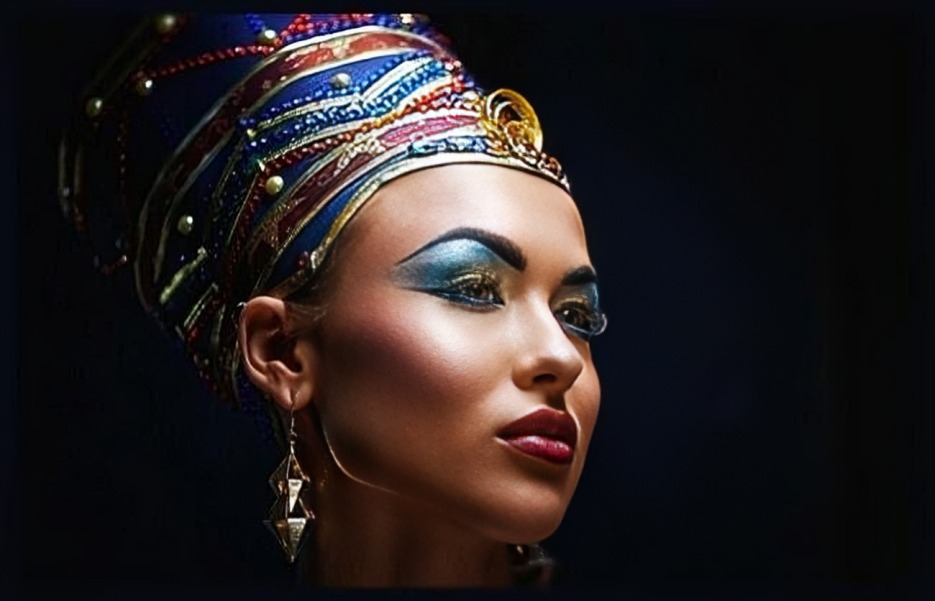
Beauty in the ancient world wasn’t just about appearance—it was power, mystery, influence, and legend. In times before photos and filters, beauty was recorded in poetry, sculpture, and whispered through generations. But the most beautiful women of the ancient world weren’t only admired for their looks—they were remembered for their presence, intelligence, charm, and the ripple effects they left in history.
Let’s explore some of the most celebrated women whose beauty—real or mythologized—captured the imagination of empires.
Cleopatra VII (69–30 BCE) – Egypt’s Enchanting Queen
Cleopatra wasn’t just beautiful—she was brilliant. The last active ruler of the Ptolemaic dynasty, Cleopatra’s allure was said to lie not only in her appearance but in her wit, charisma, and command of multiple languages. Roman historians like Plutarch claimed her voice and conversation were more captivating than her face.
She seduced both Julius Caesar and Mark Antony, not only romantically but politically, securing her power in a male-dominated world. Cleopatra was the kind of beauty that changed the course of history.
Helen of Troy – The Face That Launched a Thousand Ships
Whether she truly existed or not, Helen remains a symbol of idealized beauty in Western culture. In Greek mythology, she was said to be the most beautiful woman in the world. Her abduction (or elopement) with Paris of Troy sparked the Trojan War, immortalized in Homer’s Iliad.
To the ancient Greeks, Helen wasn’t just beautiful—she was divine. The daughter of Zeus and Leda, her beauty was considered dangerous, capable of inciting passion, jealousy, and war.
Nefertiti (c. 1370–1330 BCE) – The Queen with a Perfect Profile
The famous bust of Nefertiti housed in Berlin’s Neues Museum is perhaps the most iconic image of ancient Egyptian beauty. With high cheekbones, almond-shaped eyes, and a graceful neck, Nefertiti has come to represent timeless elegance.
She was queen alongside Pharaoh Akhenaten during a revolutionary period in Egypt’s religious history. Many believe she may have ruled briefly as a pharaoh herself. Her name means “the beautiful one has come”—and the world never forgot her.
Aspasia of Miletus (c. 470–400 BCE) – The Brain Behind the Beauty
Aspasia wasn’t a royal or a goddess, but her beauty and intellect made her unforgettable in ancient Athens. As the companion of statesman Pericles, she influenced politics, philosophy, and even the arts.
Socrates reportedly admired her mind, and her salon attracted the brightest thinkers of her time. In a world where women were often silenced, Aspasia was celebrated not just for her beauty—but for how she used it to gain a seat at the table.
Phryne (4th century BCE) – The Muse Who Stood Unashamed
Phryne was a famed courtesan in ancient Greece, known not only for her stunning looks but for her boldness. According to legend, she was put on trial for impiety and revealed her bare chest to the judges—who were so struck by her beauty that they acquitted her.
She was said to be the model for several statues of Aphrodite, including the one by sculptor Praxiteles. Phryne knew her power and used it to defy societal norms—and leave her mark on art and culture.
Livia Drusilla (58 BCE – 29 CE) – Rome’s Eternal Empress
Wife of Emperor Augustus, Livia was seen as the embodiment of Roman dignity, refinement, and poise. While her beauty was more subtle compared to others, Roman poets and historians often referenced her elegance and serene appearance.
She maintained influence behind the scenes, guiding the empire and shaping succession. Her legacy was so lasting that she was deified after death—her beauty paired with unmatched political longevity.
Roxana (c. 340–310 BCE) – Alexander the Great’s Beloved
Roxana was a Bactrian princess whose beauty reportedly captivated Alexander the Great upon first meeting her. Their marriage was both a love match and a political alliance, but ancient sources say her charm and grace stood out even in the court of one of history’s greatest conquerors.
She became a symbol of East-meets-West, and her story was romanticized in both Greek and Persian traditions.
What Beauty Meant in the Ancient World
In ancient times, beauty wasn’t defined by symmetry or skin tone alone. It was about presence. It was about how a woman carried herself, spoke, thought, and navigated a male-dominated world. Often, it was about the influence she wielded quietly—or boldly.
Many of these women were controversial, intelligent, powerful, or defiant. Their beauty was seen as both a gift and a weapon. And while the world has changed, their stories remain because beauty—when combined with character—leaves a lasting legacy.
Conclusion
The most beautiful women of the ancient world were more than their features. They were artists, rulers, thinkers, and survivors. Their stories challenge the idea that beauty is shallow—because in their world, beauty shaped destinies, inspired wars, and bent history in new directions.
And in remembering them, we remember that beauty, at its best, is not what’s seen—it’s what’s felt and remembered.
Would you like a visual list version of this for social media, or a more academic tone for a historical blog.
