
The ancient Romans had a complex and multifaceted view of death that was deeply influenced by their religious beliefs, cultural traditions, and philosophical schools of thought. Unlike modern societies, where death is often considered a taboo topic, the Romans confronted it openly, incorporating it into their daily lives, public spectacles, and even personal philosophy. This article explores the Roman perspective on death, their burial practices, beliefs about the afterlife, and the cultural significance of remembrance.
Death as a Part of Life
For the Romans, death was not something to be feared but rather an inevitable transition that had to be honored and accepted. They believed that a person’s actions in life determined their legacy and that remembrance was crucial to achieving a form of immortality. This attitude was reflected in the Roman saying memento mori (“remember you will die”), which served as a reminder of the transient nature of life and the importance of living virtuously.
Funeral Rites and Burial Practices
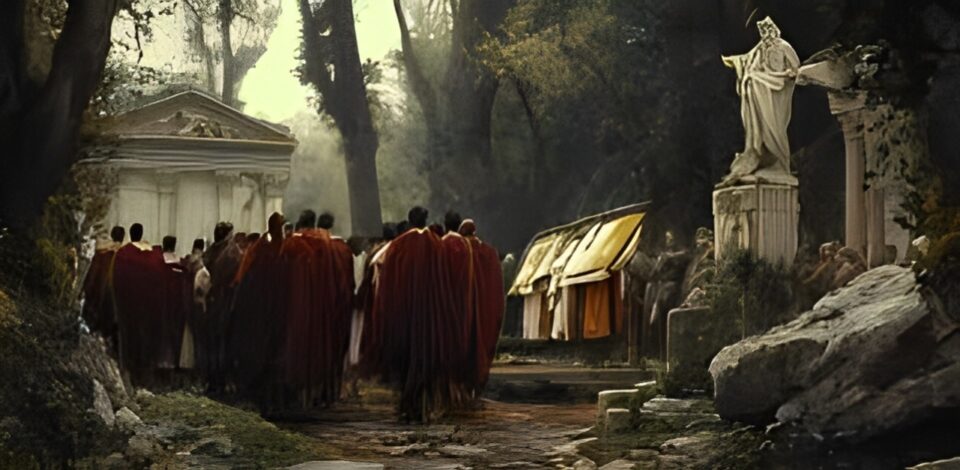
Roman funeral practices varied according to social status and wealth. The elite organized grand funeral processions, while common citizens had simpler burials. Some of the key elements of Roman funerals included:
Processions and Eulogies – Important individuals were honored with public funerals where family members and officials gave speeches about the deceased’s achievements.
Burial or Cremation – In earlier periods, burial was common, but by the time of the Republic and early Empire, cremation became the norm, with ashes stored in urns.
Tombs and Monuments – Romans placed great importance on tombs, inscribing epitaphs that reflected their values, achievements, and personal philosophies.
Feasts for the Dead – Rituals like the Parentalia and Lemuria were held to honor deceased ancestors and appease restless spirits.
Beliefs About the Afterlife
Roman beliefs about the afterlife were diverse, influenced by both mythology and philosophy. Some Romans adhered to traditional religious views, believing that the dead traveled to the underworld, ruled by Pluto. Others, especially followers of Stoicism and Epicureanism, saw death as a natural end with no existence beyond it.
The Underworld – The Roman afterlife was divided into different regions, such as the Elysian Fields (for the virtuous) and Tartarus (for the wicked).
Philosophical Perspectives – Stoic philosophers like Seneca believed in accepting death with dignity, while Epicureans dismissed the fear of death entirely, arguing that once life ends, consciousness ceases.
Deification and Apotheosis – Some Roman emperors were declared gods after their death, reinforcing the idea that exceptional individuals could transcend mortality.
Death in Roman Society
The Romans did not shy away from public displays of death. Gladiatorial combat, executions, and military victories often included spectacles of death, reinforcing ideas of honor, courage, and the power of Rome. These events served as both entertainment and political statements, demonstrating the Roman state’s control over life and death.
Additionally, ancestor worship played a crucial role in Roman culture. Families kept death masks (images) of their ancestors in their homes and displayed them during funerary processions, ensuring that the deceased remained a visible part of society.
Conclusion
The ancient Romans had a pragmatic yet deeply reverent attitude toward death. They saw it as an inevitable transition, one that demanded respect and careful ritual observance. Whether through elaborate funeral ceremonies, philosophical reflections, or public spectacles, death remained an integral part of Roman culture. While their perspectives varied—from the belief in an afterlife to the acceptance of death as the end—the Romans ultimately sought to ensure that their memory and legacy endured beyond the grave. Their practices and beliefs continue to influence how we view mortality today, reminding us of the importance of remembrance, honor, and the fleeting nature of life.
