
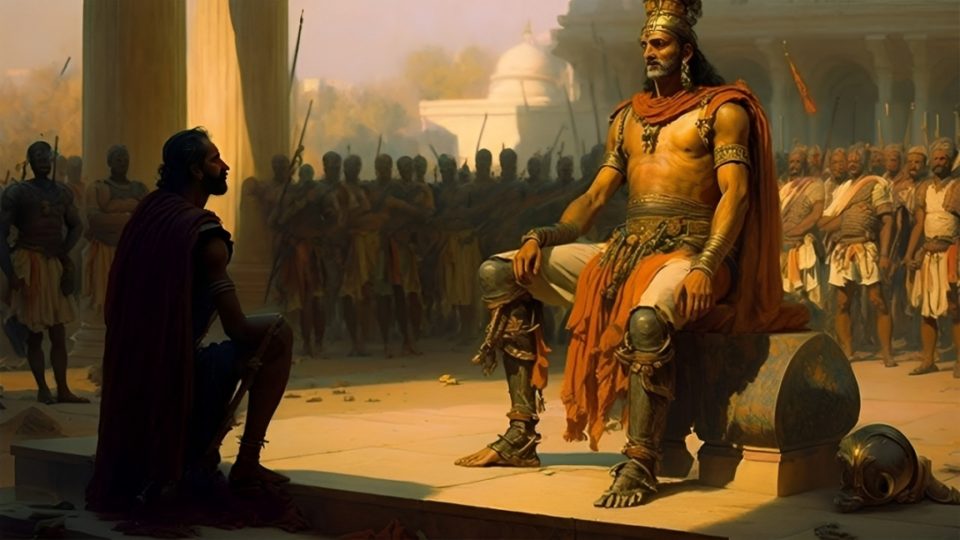
Alexander the Great, one of history’s most celebrated military leaders, achieved a remarkable feat by conquering the vast Persian Empire. His campaign, which lasted from 334 to 330 BCE, demonstrated his strategic brilliance, fearless leadership, and ability to unite diverse forces. The conquest of Persia was not merely a series of military victories but a testament to Alexander’s vision, tactics, and adaptability. This article explores the key factors that enabled Alexander to defeat the mighty Persian Empire.
The Background: The Persian Empire’s Strength and Weaknesses
Before Alexander embarked on his conquest, the Persian Empire, under King Darius III, was the largest and most powerful empire of its time. Stretching from the Indus Valley to the Mediterranean Sea, Persia had immense resources, a vast army, and a sophisticated administrative system. However, it also had weaknesses:
Decentralized rule: The empire relied on satraps (governors), some of whom were disloyal or ineffective.
Diverse populations: The vast empire was difficult to manage, with various ethnic and cultural groups.
Weakened military discipline: While Persia had a massive army, it lacked the training and coordination that Alexander’s forces possessed.
Alexander’s Key Strategies for Conquest
Superior Military Tactics
Alexander revolutionized warfare with innovative tactics, the most notable being the use of the phalanx formation. His troops were well-trained and disciplined, allowing them to execute complex maneuvers in battle. He also employed the companion cavalry, an elite unit that played a decisive role in flanking and breaking enemy lines.
Speed and Mobility
Unlike the slower-moving Persian armies, Alexander prioritized speed. He ensured his troops were always on the move, catching enemies off guard. By covering great distances quickly, he was able to strike before the Persians could properly organize their defenses.
Decisive Battles and Psychological Warfare
Alexander won key battles that weakened Persia’s morale:
Battle of Granicus (334 BCE): His first major victory in Asia Minor, which secured a foothold for further campaigns.
Battle of Issus (333 BCE): A turning point where Alexander defeated Darius III, forcing him to flee and exposing Persia’s vulnerability.
Battle of Gaugamela (331 BCE): The decisive battle that led to the collapse of Persian resistance and Darius’ eventual assassination by his own men.
In addition to his battlefield success, Alexander engaged in psychological warfare. He spread propaganda to weaken Persian morale and positioned himself as a liberator rather than a conqueror, gaining local support.
Adaptability and Diplomacy
Alexander was not just a warrior; he was a master diplomat. He adopted Persian customs, married a Persian princess (Roxana), and incorporated Persian soldiers into his army. This approach helped him gain the loyalty of local populations and ensure the stability of his newly acquired empire.
Strong Leadership and Charisma
Alexander led by example, often fighting on the front lines alongside his men. His unwavering confidence and ambition inspired loyalty among his soldiers. He also rewarded his troops generously, ensuring their continued support throughout the long campaign.
The Fall of Persia and Aftermath
After the Battle of Gaugamela, Alexander pursued Darius III, who was eventually killed by his own satrap, Bessus. With no central Persian authority left, Alexander took control of major cities, including Babylon, Susa, and Persepolis, solidifying his rule over the former Persian Empire.
Rather than destroying Persian culture, Alexander embraced it, appointing Persian officials and promoting a blend of Greek and Persian traditions. His vision of a unified empire, however, was short-lived, as he died in 323 BCE at the age of 32, leading to the division of his empire among his generals.
Conclusion
Alexander the Great’s conquest of Persia was not a mere stroke of luck but the result of superior military strategy, speed, and adaptability. His ability to win decisive battles, maintain troop morale, and integrate local populations set him apart from other conquerors. While Persia was vast and powerful, its internal weaknesses and Alexander’s tactical brilliance sealed its fate. His legacy endured long after his death, influencing military strategies and cultural exchanges for centuries to come.
