
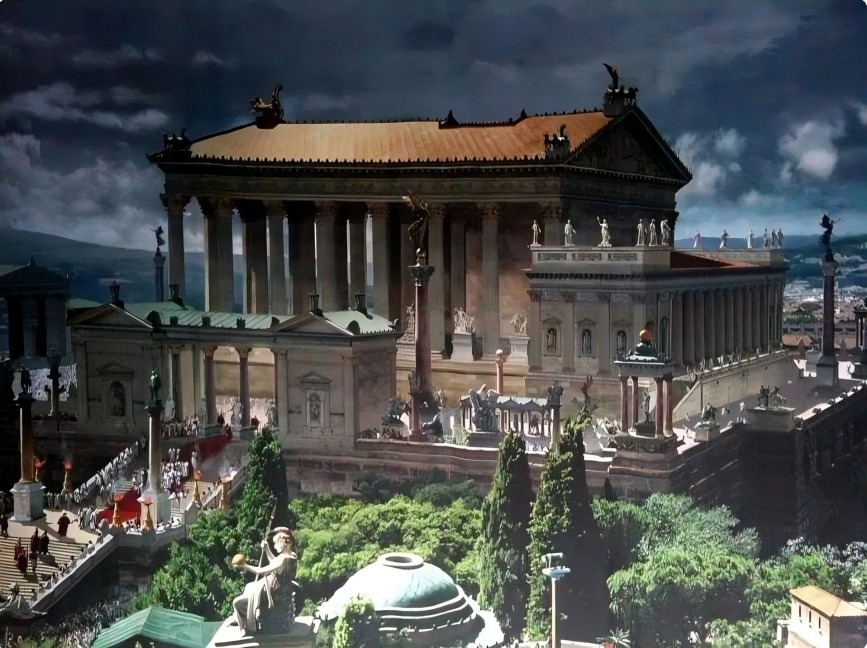
Before London, before Paris, even before Rome’s own imperial sprawl reached its peak, there stood a city in Europe that dwarfed them all — a vast settlement teeming with people, trade, and culture. That city was Carthage. And in one of the most brutal acts of ancient warfare, the Romans not only defeated it — they erased it.
This is the story of how the Romans leveled the largest city in Europe, not just with fire and steel, but with strategy, siege, and a chilling desire to make an example that would echo through history.
Carthage: The Jewel of the Western Mediterranean
Founded by Phoenician traders around 800 BCE in what is now Tunisia, Carthage became one of the greatest cities of the ancient world. At its height, it had a population of nearly half a million, rivaling any European city at the time. Carthage was a commercial powerhouse, dominating sea trade, controlling vast resources, and boasting a navy that rivaled Rome’s own.
Its influence stretched across North Africa, southern Spain, and parts of Sicily. It was rich, well-organized, and culturally sophisticated — and for the Romans, it was too powerful to ignore.
The Punic Wars: A Century of Hatred
Rome and Carthage clashed in a series of bitter conflicts known as the Punic Wars (264–146 BCE). The first two were costly, especially the Second Punic War, when the legendary Carthaginian general Hannibal brought elephants over the Alps and terrorized Italy for over a decade.
But despite their resilience, the Carthaginians were ultimately defeated. Rome didn’t forget Hannibal’s near victories. The Roman Senate, led by hardliners like Cato the Elder, began to push for a final reckoning — one that would remove Carthage from the map entirely.
Cato famously ended every speech with the phrase: “Carthago delenda est” — Carthage must be destroyed.
The Third Punic War: Rome’s Ruthless Final Blow
In 149 BCE, Rome launched the Third Punic War, a short but savage campaign with a single goal: annihilation.
Carthage, under siege, held out for three grueling years. The city was heavily fortified, and the Carthaginians fought with desperate determination, even crafting weapons out of women’s hair and household metal when supplies ran out.
But Rome was relentless. Under Scipio Aemilianus, the Romans breached the city walls in 146 BCE and began one of the most systematic destructions in ancient military history.
The Destruction of a Civilization
The final assault was apocalyptic. House-by-house, street-by-street, Roman soldiers slaughtered Carthaginian defenders and civilians alike. Fires raged across the city for days. When the city finally fell:
- Over 50,000 Carthaginians were sold into slavery.
- Every building of importance was torn down.
- Temples, homes, libraries, and monuments were leveled.
Legends claim the Romans salted the earth to ensure nothing would grow again — although historians now believe that’s more symbolic than factual.
Still, the psychological impact was absolute. Carthage wasn’t just defeated. It was erased.
Why Rome Went So Far
Rome didn’t just destroy Carthage for revenge. They wanted to send a message to the entire Mediterranean: resist Rome, and you don’t just lose — you disappear.
Carthage represented a rival model of power — one based on commerce, seafaring, and foreign alliances. Rome, on the other hand, built power through legions and colonies. By leveling Carthage, Rome cleared the last major obstacle to total dominance in the western world.
It wasn’t just war. It was rebranding the map of the ancient world.
Carthage Today: A Ghost of Greatness
Today, the ruins of ancient Carthage lie near the modern city of Tunis. Roman Carthage — a rebuilt version — would rise centuries later, but the original city, its culture, and its people were never truly restored.
Carthage stands as a silent reminder of how far empires will go not just to win — but to rewrite the future.
Conclusion
The destruction of Carthage wasn’t just a military victory — it was a historical erasure, one of the most brutal examples of total war in the ancient world. The Romans didn’t just beat their greatest rival — they made sure future generations wouldn’t even remember it properly.
In leveling Carthage, Rome became the uncontested power in Europe and the Mediterranean — but at the cost of an entire civilization, its voice silenced forever. And yet, in the echoes of its fall, Carthage reminds us: power unchecked doesn’t just conquer. It consumes.
