
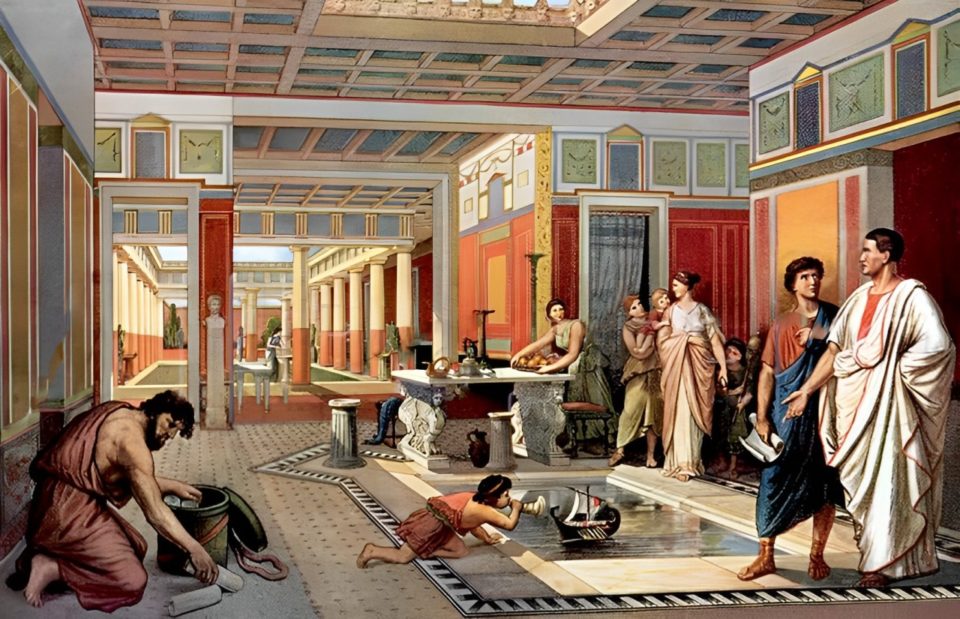
Saturnalia was the most anticipated and celebrated holiday of the year in ancient Rome, dedicated to Saturn, the god of agriculture and time. This festive period, which began on December 17th and eventually extended for up to a week, marked a time of revelry, social reversal, and the suspension of traditional Roman order. Saturnalia was not just a religious celebration but a cultural phenomenon that influenced many aspects of Roman life and left a lasting legacy on Western traditions.
Origins and Significance
Saturnalia honored Saturn, an ancient Roman deity associated with sowing seeds and the bounty of the harvest. The festival likely has its roots in earlier agricultural rituals, celebrating the end of the planting season and the promise of new growth in the coming year. The timing of Saturnalia, close to the winter solstice, also symbolized the gradual return of the sun and longer days, a reason for joy and celebration during the darkest time of the year.
For the Romans, Saturnalia was a time to give thanks to Saturn for the agricultural abundance that sustained their society. It also hearkened back to the mythological Golden Age, a time when Saturn ruled the world, and all people lived in peace and equality, free from toil and suffering.
Festivities and Customs
The celebration of Saturnalia was marked by a series of unique customs that upended the usual social order. One of the most notable traditions was the temporary reversal of roles between slaves and their masters. During Saturnalia, slaves were given unusual freedoms—they could dress in their masters’ clothes, were served by their owners, and were even allowed to express themselves more freely than usual. This role reversal was a symbolic gesture, reflecting the festival’s theme of equality and the mythical Golden Age.
Another key aspect of Saturnalia was the suspension of business and public activities. Schools were closed, courts were not in session, and no declarations of war could be made. This break from routine allowed all Romans to fully participate in the festivities, which included feasting, drinking, singing, dancing, and gambling.
Gift-giving was also an integral part of Saturnalia. Romans exchanged small presents, such as candles, pottery, and figurines, symbolizing light and good fortune. The giving of gifts during this time was an expression of goodwill and friendship, further enhancing the festival’s atmosphere of joy and generosity.
The Saturnalia Feast
At the heart of Saturnalia was the grand feast, which was enjoyed by all members of society, regardless of their status. The banquet was a time for indulgence and merriment, with tables laden with the best food and drink. The spirit of equality during the festival meant that everyone, from slaves to the most powerful citizens, dined together and shared in the celebration.
A highlight of the feast was the election of a “King of Saturnalia,” often a slave or a low-ranking individual chosen by lot. This mock king presided over the festivities, giving humorous commands that everyone was obliged to follow, adding a playful and anarchic element to the celebrations.
Lasting Influence and Legacy
The customs and spirit of Saturnalia had a profound influence on later holiday traditions, especially those associated with Christmas. Many of the practices from Saturnalia, such as feasting, gift-giving, and the reversal of social roles, found their way into the celebrations of Christmas in Europe. The timing of Saturnalia, close to the winter solstice, also influenced the eventual choice of December 25th as the date for Christmas, as early Christians sought to align their holy day with established pagan festivals.
Additionally, the spirit of equality and goodwill that characterized Saturnalia has resonated through the ages, reminding us of the importance of compassion, generosity, and unity during times of celebration.
Conclusion
Saturnalia was more than just a holiday for the ancient Romans—it was a time when societal norms were temporarily set aside in favor of celebration, equality, and joy. Its unique customs and lasting influence highlight the importance of tradition and communal celebration in human culture. Though the specific practices of Saturnalia have faded into history, the festival’s legacy lives on in the ways we continue to celebrate and come together during the winter season.
