
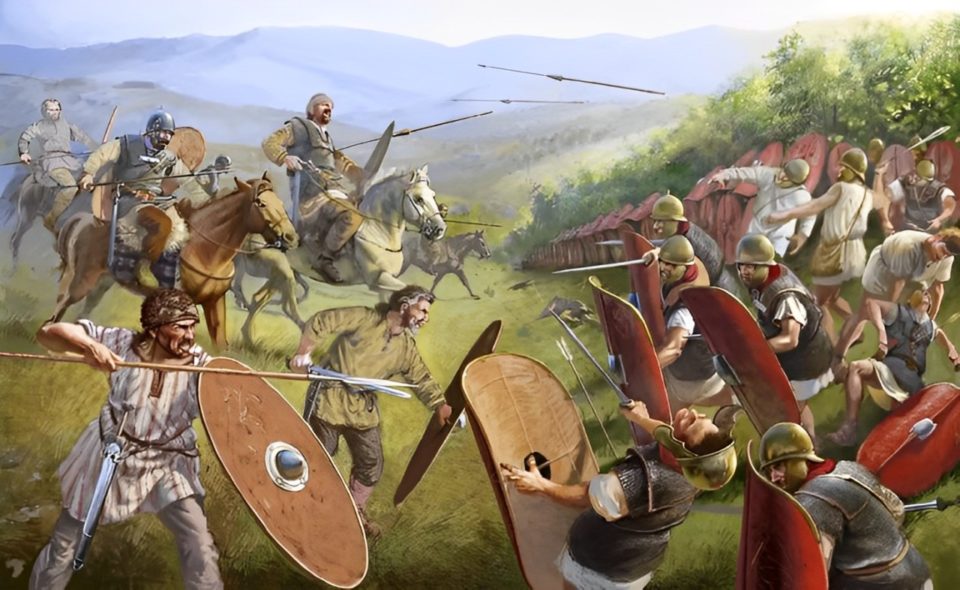
The Dacians, a fierce and resilient people, played a pivotal role in the history of ancient Europe. Known for their unique culture, impressive fortresses, and relentless resistance to Roman expansion, the Dacians became one of Rome’s most formidable adversaries. But who were the Dacians, and what drove the Romans to engage in prolonged conflicts with them?
The Dacians: People of the Carpathians
The Dacians were an ancient Indo-European people who inhabited the region corresponding to modern-day Romania and Moldova, as well as parts of Hungary, Bulgaria, and Ukraine. They were part of the larger Thracian cultural group but had developed distinct societal, military, and religious practices.
Culture and Society
Language and Identity: The Dacians spoke a language belonging to the Thracian family and had a rich oral tradition.
Religion: Their spiritual life centered around Zalmoxis, a deity associated with the afterlife and immortality. Religious leaders, such as priests and prophets, held significant influence.
Architecture: The Dacians were skilled builders, constructing hilltop fortresses like Sarmizegetusa Regia, their capital. These fortifications were strategically located and showcased advanced engineering.
Economy and Resources
The Dacians were prosperous due to their abundant natural resources, especially gold and silver. Their fertile lands and mineral wealth made them a desirable conquest for neighboring powers, including Rome.
The Dacian-Roman Wars: A Clash of Empires
The Romans fought the Dacians primarily to secure their borders and gain access to the region’s wealth. The conflict culminated in two major wars during the reign of Emperor Trajan (98–117 CE).
First Dacian War (101–102 CE)
Rome’s initial campaign against the Dacians was spurred by Dacian raids on Roman territories and their growing power under King Decebalus. Although the Romans achieved a costly victory, Decebalus retained his throne as a Roman client king, maintaining partial autonomy.
Second Dacian War (105–106 CE)
Decebalus, dissatisfied with Roman domination, resumed hostilities, prompting Trajan to launch a full-scale invasion. This time, Rome sought to permanently subjugate the Dacians. The campaign was marked by Trajan’s construction of a massive bridge over the Danube and relentless assaults on Dacian strongholds. Eventually, the Romans seized Sarmizegetusa Regia, prompting Decebalus to take his own life and resulting in Dacia becoming a Roman province.
Why Did the Romans Fight the Dacians?
Several factors drove Rome to war with the Dacians:
Geopolitical Security
The Dacians were a constant threat to Rome’s Danube frontier. Their frequent raids and alliances with Rome’s enemies destabilized the region.
Economic Gain
Dacia’s mineral wealth, particularly its gold mines, was a significant incentive. The spoils from the Dacian Wars helped finance Roman infrastructure projects, including Trajan’s Forum and Column in Rome.
Imperial Ambition
Conquering Dacia allowed Rome to expand its influence further into Eastern Europe, solidifying Trajan’s reputation as a military and political leader.
The Legacy of the Dacian Wars
The Dacian Wars left a profound mark on history. For Rome, the victory showcased its military might and enriched its treasury. Trajan’s Column, a monumental relief in Rome, immortalizes the campaign with detailed depictions of the battles and Roman engineering feats.
For the Dacians, the wars marked the end of their independence but not their cultural legacy. Elements of Dacian heritage persisted in the Romanized population of Dacia, contributing to the cultural foundation of modern Romania.
Conclusion
The Dacians, with their rich culture and fierce resistance, were more than just adversaries to Rome—they were a symbol of defiance and resilience. The wars they fought against Rome highlight the complex dynamics of imperial expansion and local resistance in antiquity. While the Romans emerged victorious, the Dacians left an enduring legacy that continues to fascinate historians and archaeologists today.
