
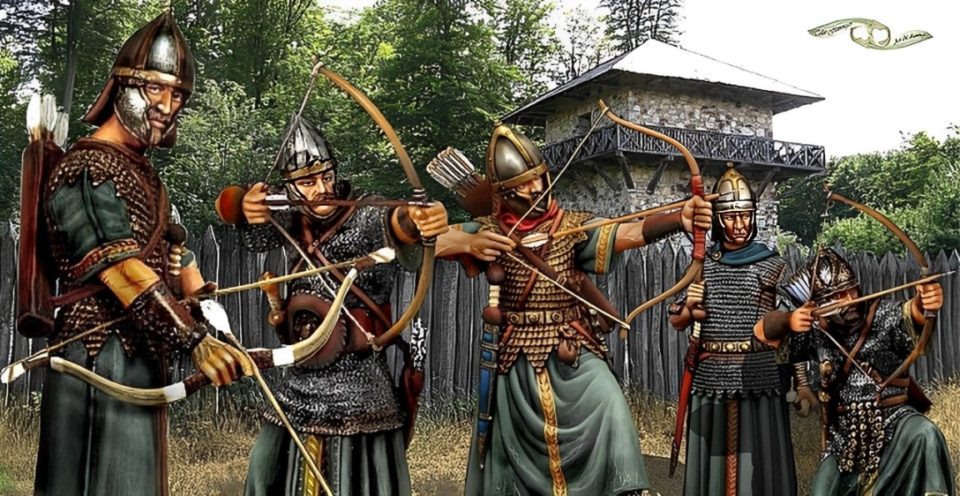
The Roman legions were one of the most formidable fighting forces in history, known for their adaptability, discipline, and advanced military strategies. However, throughout their long campaigns, they encountered unique challenges posed by diverse enemies, including the dreaded mounted archers. These fast, mobile warriors, often associated with steppe nomads such as the Parthians and Huns, brought a level of speed and precision that threatened the slow-moving, heavily armored Roman infantry. How did the Romans adapt and respond to this deadly threat? Let’s explore the tactics and strategies employed by Roman legions to counter mounted archers.
The Threat of Mounted Archers
Mounted archers were cavalry troops who rode swift horses while firing bows with remarkable accuracy and speed. Their hit-and-run tactics allowed them to stay out of range of Roman soldiers, attack from a distance, and quickly retreat before the legions could respond. This was particularly effective because:
Roman legions relied heavily on close combat with shields, swords, and spears.
Roman soldiers wore heavy armor, making it difficult to pursue fast-moving cavalry.
Mounted archers could disrupt formations and drain the morale of infantry troops over time.
The Parthians’ devastating use of mounted archers during battles, such as the infamous Roman defeat at Carrhae in 53 BCE, showcased how dangerous these troops could be. This defeat served as a wake-up call for Roman generals, who realized they needed new strategies to combat this unconventional threat.
Roman Adaptations and Tactics
Shield Formations: The Testudo (Tortoise) Formation
One of the key strategies Romans used against mounted archers was the testudo formation. In this defensive maneuver, soldiers would align closely together, interlocking their large rectangular shields to form a protective “shell.”
The shields in the front faced forward, while those at the top and sides protected against overhead or flanking arrows.
This formation significantly reduced casualties from volleys of arrows, making it difficult for mounted archers to inflict damage.
However, the testudo was not without its flaws. While it provided excellent defense, it slowed down movement, making it harder for the Romans to pursue retreating cavalry. Nonetheless, it bought time for the legions to reposition and plan their next move.
Auxiliary Cavalry Integration
Recognizing that mobility was key to dealing with mounted archers, the Romans began integrating auxiliary cavalry into their armies. These were often non-Roman soldiers recruited from regions where cavalry warfare was dominant, such as Gaul, Iberia, and Numidia.
Light cavalry: These fast-moving riders were equipped with javelins and swords, allowing them to chase down and engage mounted archers.
Horse archers: The Romans even recruited their own horse archers from allies like the Armenians, Syrians, and Thracians to fight fire with fire.
By combining heavy infantry with mobile cavalry units, Roman generals created more versatile armies capable of countering the mobility of mounted archers.
Adapting Terrain to Their Advantage
Romans were masters of exploiting terrain in battle. Against mounted archers, they often sought to fight on landscapes that limited cavalry effectiveness, such as:
Hilly or rocky ground, where horses could not maneuver easily.
Forested areas that restricted the movement and range of archers.
Additionally, the Romans often fortified their positions with temporary camps, ditches, and walls to create obstacles for cavalry and provide shelter from incoming arrows. These fortified positions forced mounted archers into less favorable conditions for their hit-and-run attacks.
Skirmishers and Specialized Troops
To counter the long-range threat posed by mounted archers, the Romans utilized light infantry skirmishers, such as velites. These troops carried javelins, slings, and small shields and could engage at a distance.
Skirmishers would throw javelins or use slings to disrupt enemy cavalry, forcing them to retreat or spread out.
Archers and ballista crews were often positioned behind Roman infantry to fire back at mounted archers.
These troops added an additional layer of defense and allowed the Romans to respond to long-range attacks more effectively.
Adopting Psychological Tactics
The Romans understood the importance of morale and discipline. When facing elusive enemies like mounted archers, they often used psychological tactics to break the will of their opponents:
Feigned retreats: Roman troops would pretend to flee, luring mounted archers into ambushes where Roman heavy infantry or cavalry were waiting.
Maintaining discipline: Roman soldiers were trained to resist panic and hold their formations, even when under heavy fire. This stoic approach often unnerved less organized cavalry forces.
Lessons Learned: From Parthia to the Huns
The Romans’ experiences against mounted archers were long-lasting. The devastating defeat at Carrhae against the Parthians highlighted the need for flexibility and innovation. Centuries later, the arrival of the Huns in Europe presented a similar challenge, but the Roman legions—now heavily reliant on cavalry auxiliaries—were better prepared.
Roman military reforms, including the use of mobile cavalry, fortified positions, and skirmish tactics, demonstrated their ability to adapt. By studying and borrowing techniques from their enemies, the Romans evolved into a more versatile fighting force.
Conclusion
Mounted archers presented a unique challenge to the Roman legions, combining speed, precision, and mobility in a way that traditional infantry struggled to counter. However, the Romans’ ability to adapt—through shield formations, cavalry recruitment, terrain exploitation, and specialized troops—allowed them to meet this threat head-on.
While battles like Carrhae exposed their vulnerabilities, the Romans learned from their defeats, showcasing their ingenuity and resilience. Their response to mounted archers reflects an enduring truth about military success: the ability to adapt to new challenges often determines victory or defeat. Through innovation, discipline, and strategic thinking, the Roman legions overcame one of their most formidable adversaries and cemented their reputation as masters of warfare.
