
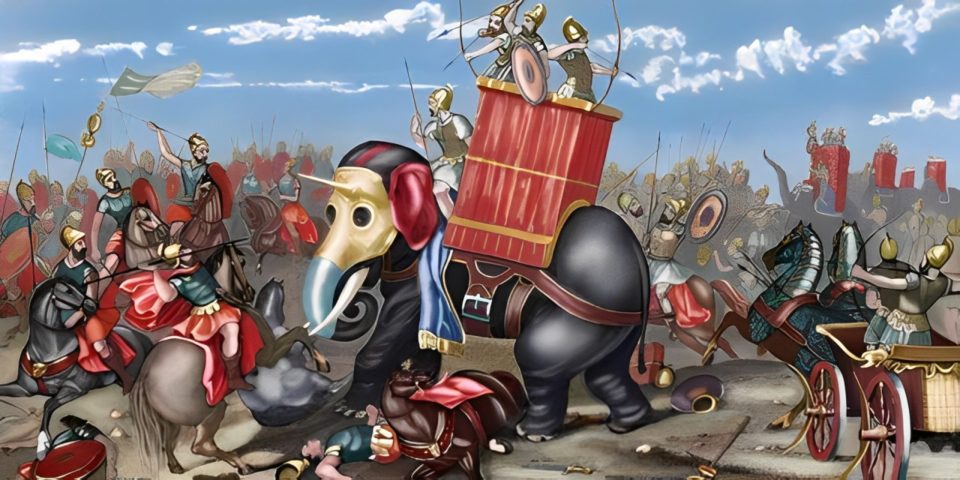
Hannibal Barca, the name that struck fear into the hearts of Romans, remains a monumental figure in history. His brilliance on the battlefield, particularly during the Second Punic War, earned him a reputation as one of the greatest military tacticians of all time. His stunning victories at battles such as Trebia, Lake Trasimene, and Cannae showcased his strategic genius. Yet, history often focuses on his wartime exploits and not on his equally fascinating life after Carthage’s defeat at the hands of the Romans at the Battle of Zama in 202 BCE. What happened to Hannibal after this pivotal loss reveals a man whose resilience, resourcefulness, and unyielding defiance defined him as much as his triumphs.
The Political Reformer: Hannibal’s Return to Carthage
After Carthage’s defeat in the Second Punic War, Hannibal returned to his city, but not as the celebrated war hero he once was. His return came at a time when Carthage was forced into submission by the harsh terms of the Roman peace treaty. Despite these setbacks, Hannibal did not wallow in defeat. Instead, he turned his attention to reforming Carthage from within.
Elected as sufferer, the chief magistrate of Carthage, Hannibal implemented sweeping reforms. His primary goal was to restore Carthage’s economic stability, which had been devastated by the war and the heavy reparations imposed by Rome. He cracked down on corruption among the Carthaginian elite, reduced the power of oligarchs, and introduced measures to ensure fairness and transparency in governance.
Hannibal’s reforms were effective, and under his leadership, Carthage began to recover. However, his success attracted the ire of both the Roman Senate and Carthage’s entrenched elite. To the Romans, Hannibal’s popularity and political skill represented a potential threat, as they feared he might rally Carthage for another rebellion. Meanwhile, Carthaginian aristocrats, whose corrupt practices he curtailed, conspired against him.
Fearing betrayal and aware of mounting pressure from Rome, Hannibal fled Carthage in 195 BCE, marking the beginning of his life in exile.
Exile: The Wanderer’s Journey
Hannibal’s exile took him across the Mediterranean world, where his reputation as a military genius preceded him. He first sought refuge in the court of Antiochus III, the Seleucid king who harbored ambitions of challenging Rome’s dominance. Hannibal, eager to continue his struggle against Rome, became a military advisor to Antiochus.
Hannibal proposed bold strategies to strike at Rome, including leading a naval assault on Italy. However, Antiochus largely disregarded his advice, choosing instead to engage Rome on his own terms. The Seleucid-Roman War (192–188 BCE) ended in disaster for Antiochus, culminating in the Treaty of Apamea, which imposed harsh terms on the Seleucid Empire. This defeat rendered Hannibal’s position in the Seleucid court untenable, forcing him to move on.
Service in Bithynia: The Snake Tactics
Hannibal next found sanctuary in the Kingdom of Bithynia, where he served King Prusias I in his conflict with Pergamon, a Roman ally. Even in this phase of his life, Hannibal’s strategic brilliance was on full display. One of his most ingenious tactics involved the use of jars filled with venomous snakes, which he hurled onto enemy ships during naval battles. This unorthodox strategy caused chaos among the enemy ranks and demonstrated Hannibal’s ability to think creatively, even in unconventional warfare.
However, Hannibal’s presence in Bithynia did not go unnoticed by Rome. The Roman Senate continued to pressure allied states to surrender him, viewing him as an eternal threat to their dominance.
Hannibal’s Final Stand
By 183 BCE, Rome’s relentless pursuit of Hannibal reached its climax. Cornered in Bithynia, King Prusias succumbed to Roman demands and agreed to hand him over. Hannibal, ever defiant, refused to allow himself to be paraded as a prisoner by his lifelong enemies.
According to legend, Hannibal carried a vial of poison with him at all times, prepared for such a moment. When Roman soldiers arrived to capture him, he reportedly ingested the poison, uttering his final words: “Let us relieve the Romans of their anxiety by the death of an old man.”
Thus, Hannibal’s life ended on his own terms. Even in death, he denied Rome the satisfaction of a public humiliation, preserving his dignity as a warrior.
Conclusion
Hannibal’s death marked the end of one of history’s most extraordinary lives, but his legacy lived on. He was more than just a military commander; he was a symbol of resistance, innovation, and determination against overwhelming odds. His tactical genius influenced countless military leaders, including Julius Caesar and Napoleon Bonaparte, who studied his campaigns as models of strategic brilliance.
Although Carthage itself was doomed to destruction in the Third Punic War (149–146 BCE), Hannibal’s spirit endured as a beacon of defiance. His story continues to inspire generations, reminding us that true greatness is not measured solely by victory but also by the courage to persist in the face of adversity.
In the annals of history, Hannibal Barca remains an immortal figure—a man who, even in exile, never surrendered his fight against the seemingly invincible power of Rome. His life, post-defeat, serves as a testament to resilience, adaptability, and the enduring power of legacy.
