
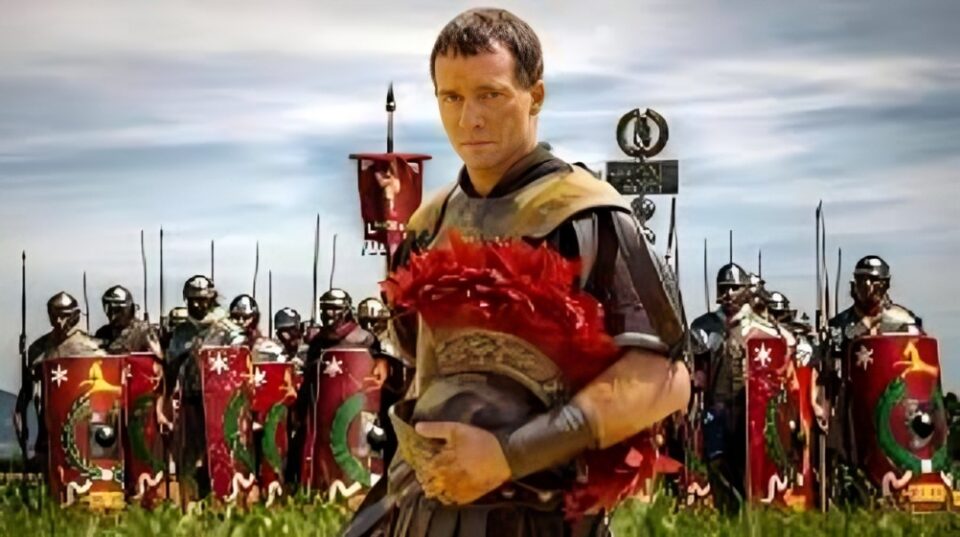
The Roman Empire expanded across Europe, North Africa, and the Middle East with remarkable success. They subdued the Celts, clashed with the Parthians, and eventually absorbed vast territories into their domain. Yet one group—the Scythians, the nomadic horse-riding people of the Eurasian steppe—remained unconquered. For all their military power and engineering brilliance, Rome never managed to bring the Scythians under its control. Why? The reasons reveal the limits of the empire and the resilience of nomadic cultures.
Who Were the Scythians
The Scythians were a collection of nomadic tribes who dominated the Eurasian steppe from roughly the 9th century BCE to the 3rd century CE. They were expert horsemen, master archers, and skilled in guerrilla-style warfare. Unlike the Romans, who thrived on urban centers and stone fortifications, the Scythians lived in mobility—moving with their herds across vast grasslands stretching from the Black Sea to Central Asia.
Rome’s Style of Conquest
Rome’s strength lay in systematic conquest. The legions excelled in pitched battles, siege warfare, and in holding territory through forts, roads, and colonies. They were most effective against enemies who had cities, farmland, and political centers to capture. Conquering the Scythians, however, posed an entirely different problem.
Why Rome Failed to Conquer the Scythians
1. Nomadic Mobility
The Scythians had no fixed cities for Rome to besiege. When threatened, they simply melted into the vast steppe, outpacing the slower, heavily armed Roman infantry. Even Rome’s cavalry struggled to match the speed and endurance of Scythian horse archers.
2. The Steppe Wasn’t Worth Holding
Roman expansion wasn’t just about winning battles—it was about securing land, resources, and taxable populations. The steppe offered little in this regard. Its harsh climate and endless grasslands held no cities to govern, no mineral riches to mine, and no farmland to sustain Roman settlers. From Rome’s perspective, conquering Scythian territory promised more cost than reward.
3. The Scythian Way of War
The Scythians perfected hit-and-run tactics. Their horse archers could harass Roman legions from a distance, whittling them down without ever engaging in close combat. This was the same strategy that later Huns, Avars, and Mongols would use with devastating effect against settled empires.
4. Geographical Challenges
The Roman frontier along the Danube and Black Sea was already stretched thin. To push further into the steppe meant overextending supply lines across vast, featureless plains—an impossible task for armies dependent on grain, water, and logistical support.
5. Other Priorities
Rome had more pressing enemies closer to home—the Germanic tribes, the Parthians, and later the Sassanids. The Scythians, while dangerous raiders, never posed the same existential threat. For the empire, it was more practical to defend its borders than to launch full-scale campaigns into the endless steppe.
A Clash of Civilizations That Never Was
Unlike the Gauls or the Carthaginians, the Scythians never became a civilization Rome could directly absorb. They were a moving target, both literally and culturally. While Rome thrived on walls, cities, and borders, the Scythians thrived on openness, movement, and freedom. Conquest required anchoring an enemy to the ground—something Rome could never do to the Scythians.
Conclusion
The Romans did not conquer the Scythians not because they couldn’t win individual battles, but because the Scythians were unconquerable by Rome’s methods. Their nomadic lifestyle, mastery of cavalry warfare, and the unforgiving geography of the steppe made them elusive. For Rome, expansion was always about balancing cost and benefit—and the Scythians simply weren’t worth the cost.
In the end, the Scythians remind us of a truth that even the mightiest empire had to acknowledge: not all peoples can be subdued, especially when their strength lies in never standing still.
Would you like me to also write a shorter, easy-to-read version of this (like a blog-style “5 reasons Rome never conquered the Scythians”), or keep it more like this history-feature style?
