
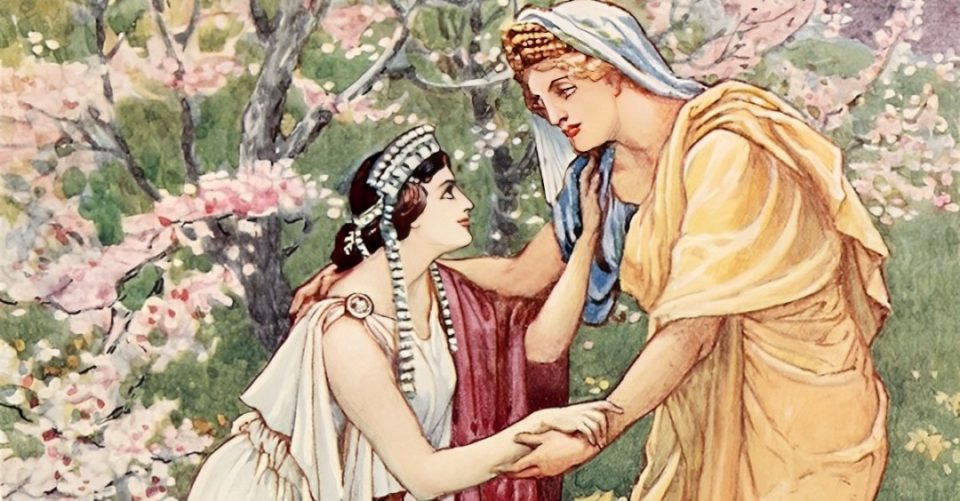
The myth of Demeter and Persephone, a cornerstone of ancient Greek mythology, tells the tale of a mother’s love, the cycle of seasons, and the delicate balance between life and death. This myth, steeped in themes of rebirth and nature’s rhythms, found a new life in Roman mythology with the characters of Ceres (Demeter), Proserpina (Persephone), and Pluto (Hades). The transformation from the Greek myth to its Roman counterpart reflects not only the adaptation of stories across cultures but also the subtle shifts in emphasis and interpretation that come with such transitions.
The Greek Myth: Demeter and Persephone
In Greek mythology, Demeter, the goddess of the harvest and agriculture, is devastated when her daughter Persephone is abducted by Hades, the god of the underworld. Hades takes Persephone to be his queen, and in her grief, Demeter causes the earth to become barren, leading to a severe famine. The other gods intervene, and a compromise is reached: Persephone will spend part of the year with Hades in the underworld and part with her mother on earth. This cycle of separation and reunion is used to explain the changing seasons, with Persephone’s time in the underworld corresponding to the barren months of winter and her return heralding the fertile months of spring and summer.
The Roman Adaptation: Ceres, Proserpina, and Pluto
When the Romans adopted this myth, they renamed the characters to fit their pantheon. Demeter became Ceres, Persephone became Proserpina, and Hades became Pluto. The core narrative remained largely the same, but the Romans infused the story with their own cultural values and religious practices.
In Roman mythology, Ceres was not just a goddess of agriculture but also a symbol of maternal care and the protector of plebeian laws and rights. Proserpina, as the daughter of Ceres, embodied the innocence and purity of youth, making her abduction by Pluto even more poignant. Pluto, on the other hand, was depicted less as a malevolent figure and more as a necessary ruler of the underworld, emphasizing the Romans’ pragmatic approach to death and the afterlife.
Cultural and Religious Contexts
The transition from the Greek to the Roman version of the myth also reflects the differences in how these cultures viewed the gods and their relationships with humans. Greek myths often focused on the whims and passions of the gods, highlighting their similarities to human beings. In contrast, Roman mythology tended to portray the gods as more distant and authoritative figures, with a greater emphasis on their roles in maintaining order and justice.
The Eleusinian Mysteries, ancient Greek rituals dedicated to Demeter and Persephone, played a significant role in the spiritual life of ancient Greece, promising initiates a more hopeful afterlife. When the Romans adopted these rituals, they integrated them into their own religious framework, which was deeply intertwined with state functions and the social order. The rites became less about personal spiritual experience and more about communal participation in the cycles of nature and society.
Artistic and Literary Transformations
The story of Demeter and Persephone, and its Roman counterpart, has been a rich source of inspiration for artists and writers throughout history. In Greek art, the abduction of Persephone is often depicted with intense emotion, capturing the drama of the moment. Roman art, however, tends to portray the scene with a more formal and ceremonial tone, reflecting their different approach to storytelling and representation.
Literature also reveals these shifts. Ovid’s “Metamorphoses,” a cornerstone of Roman literature, recounts the tale of Proserpina’s abduction with a focus on the transformation and continuity of life, themes that resonated deeply with Roman sensibilities. The story’s adaptation into Roman culture thus highlights the fluidity of myth and the ways in which stories evolve to reflect the values and beliefs of different societies.
Conclusion
The journey of the myth from Demeter and Persephone to Ceres, Proserpina, and Pluto illustrates the dynamic nature of mythological narratives. As these stories crossed cultural boundaries, they were reshaped to align with new values and contexts. While the core elements of the myth remained intact, the differences in emphasis and interpretation between the Greek and Roman versions reveal much about the societies that told them. These adaptations underscore the enduring power of myth to convey universal themes, even as they are continuously reimagined across time and place.
