
The Holy Roman Empire, a complex and multifaceted political entity, existed for over a millennium, from 800 to 1806. Its name alone invokes curiosity: How did it come to be considered both “holy” and “Roman”? This article explores the origins and evolution of this empire, shedding light on the religious and historical foundations that shaped its identity.
The Foundation of the Empire
The Holy Roman Empire’s roots lie in the fractured remains of the Western Roman Empire, which collapsed in 476 AD. As Europe descended into a period of fragmentation, new powers rose to fill the void. Among them was the Frankish Kingdom, led by Charlemagne, who played a pivotal role in shaping the empire’s future.
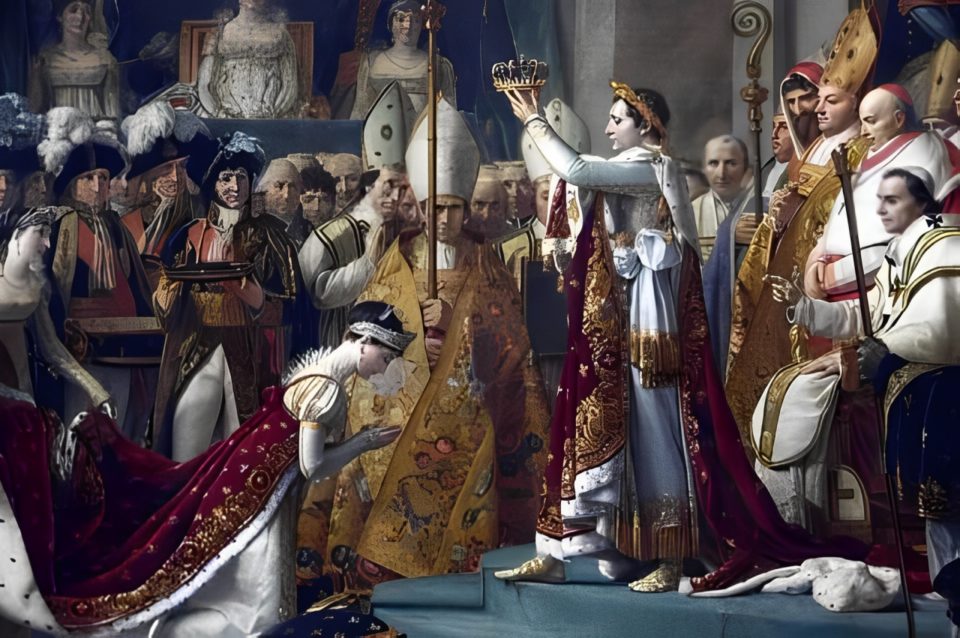
On Christmas Day in 800 AD, Pope Leo III crowned Charlemagne as “Emperor of the Romans” in St. Peter’s Basilica. This coronation was a strategic move to revive the Roman imperial tradition in the West. It also established a symbolic partnership between the church and the state, marking the empire as both “holy” and “Roman.”
The “Holy” Aspect
The empire’s holiness stemmed from its close relationship with the Catholic Church. By crowning Charlemagne, the pope asserted the church’s authority to legitimize rulers, signaling divine approval of the emperor’s reign. This bond between the empire and the church was further reinforced by the emperor’s role as a protector of Christendom.
Throughout its history, the empire maintained its holy character by promoting Christianity and defending the church’s interests. The emperors often acted as mediators in religious disputes, safeguarded Christian holy sites, and convened church councils. The idea of a “holy” empire was deeply intertwined with the belief that the emperor ruled by divine right, serving as God’s chosen representative on Earth.
The “Roman” Aspect
Although the Western Roman Empire had fallen centuries earlier, its legacy endured. The Holy Roman Empire sought to revive and claim continuity with the ancient Roman Empire. This connection was more symbolic than actual, as the Holy Roman Empire’s structure and culture were distinct from its ancient predecessor.
The term “Roman” reflected a desire to associate the empire with the grandeur and authority of ancient Rome. This association was evident in the use of Latin as the official language and the adoption of Roman legal principles. The empire’s rulers often styled themselves as heirs to Roman emperors, reinforcing their claim to universal sovereignty.
The Evolution of the Empire’s Identity
Over the centuries, the Holy Roman Empire’s character evolved. Its boundaries expanded and contracted, and its political structure became increasingly decentralized. Despite these changes, the empire retained its “holy” and “Roman” identity through symbolic practices and ideological continuity.
The Investiture Controversy of the 11th and 12th centuries highlighted tensions between the emperor and the pope, but it also underscored the enduring connection between the church and the empire. Similarly, the Renaissance and Reformation periods challenged the empire’s unity but did not erase its foundational ideals.
Conclusion
The Holy Roman Empire became both holy and Roman through a deliberate blending of religious and historical traditions. Its holiness derived from its alliance with the Catholic Church, while its Roman character was rooted in its claim to the legacy of ancient Rome. This dual identity shaped the empire’s role in European history, making it a unique and enduring institution. Though it ultimately dissolved in 1806, the Holy Roman Empire remains a fascinating example of how history and ideology can intertwine to create a lasting legacy.
