
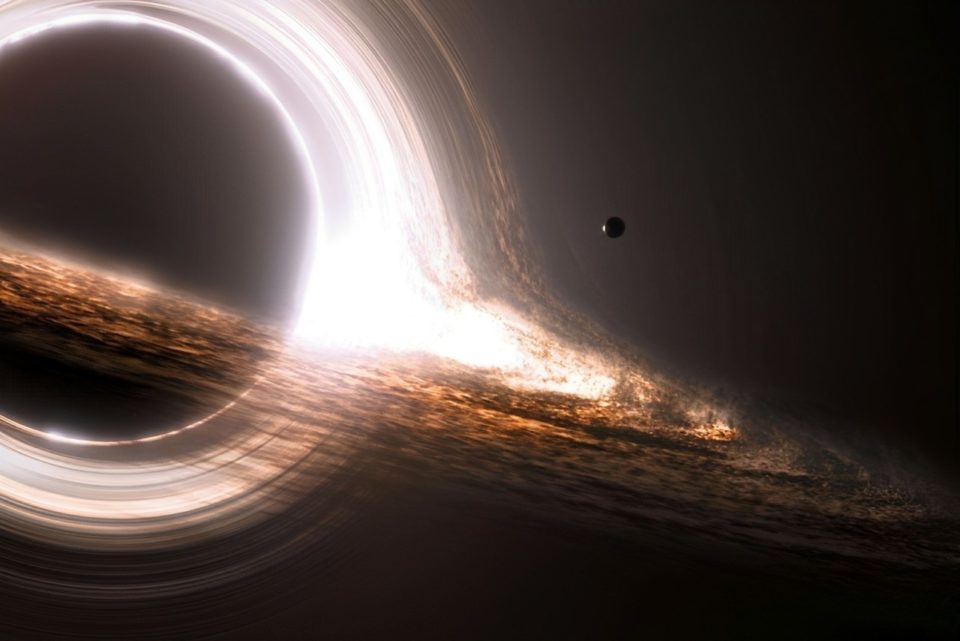
In the vast expanse of space, beyond the reach of our sun’s rays, lies an emptiness so profound that it defies our Earth-bound imaginations. Recent findings from NASA’s New Horizons mission provide compelling evidence that deep space is indeed almost entirely dark, offering new insights into the nature of our universe.
The New Horizons Mission
Launched in 2006, New Horizons’ primary mission was to perform a flyby of Pluto, which it successfully accomplished in 2015. After its historic encounter with Pluto, the spacecraft continued its journey into the Kuiper Belt, a distant region of our solar system filled with icy bodies and remnants from its formation. As New Horizons travels further from the sun, it has provided an unprecedented opportunity to study the properties of deep space.
Measuring the Darkness
To understand just how dark space is, scientists used the Long Range Reconnaissance Imager (LORRI) aboard New Horizons to capture images of the sky. By measuring the background light in these images, researchers aimed to quantify the amount of extragalactic background light (EBL) — the collective glow from all the stars and galaxies in the universe, excluding light from known stars and galaxies in our Milky Way.
The results were startling. The measurements showed that the EBL is extremely faint, suggesting that deep space is far darker than previously thought. This finding aligns with theoretical predictions that, beyond the glow of celestial bodies, the universe is a vast and mostly empty void.
Implications for Our Understanding of the Universe
These observations have significant implications for our understanding of the cosmos. One of the key insights is that the universe is largely composed of dark energy and dark matter, which do not emit light and are thus invisible to traditional telescopes. The profound darkness observed by New Horizons supports the notion that the visible matter — stars, galaxies, and other luminous objects — makes up only a small fraction of the universe’s total mass and energy.
Additionally, the darkness of deep space provides a clearer view for astronomers to study faint, distant objects. With minimal background light interference, telescopes can more easily detect and analyze the light from galaxies billions of light-years away, offering new opportunities to study the early universe and its evolution.
The Future of Space Exploration
The findings from New Horizons underscore the importance of continuing to explore the outer reaches of our solar system and beyond. As the spacecraft journeys further into the Kuiper Belt and eventually into interstellar space, it will continue to send back valuable data that can reshape our understanding of the cosmos.
Future missions may build on the discoveries made by New Horizons, using advanced technology to probe even deeper into space. These missions could help answer fundamental questions about the nature of dark matter and dark energy, the formation of galaxies, and the ultimate fate of the universe.
Conclusion
The darkness of deep space, as revealed by New Horizons, is a profound reminder of the vast and mysterious nature of the universe. This nearly complete absence of light highlights the predominance of dark matter and dark energy and opens new avenues for astronomical research. As we continue to explore the cosmos, each discovery brings us closer to unraveling the secrets of the universe and our place within it.
