
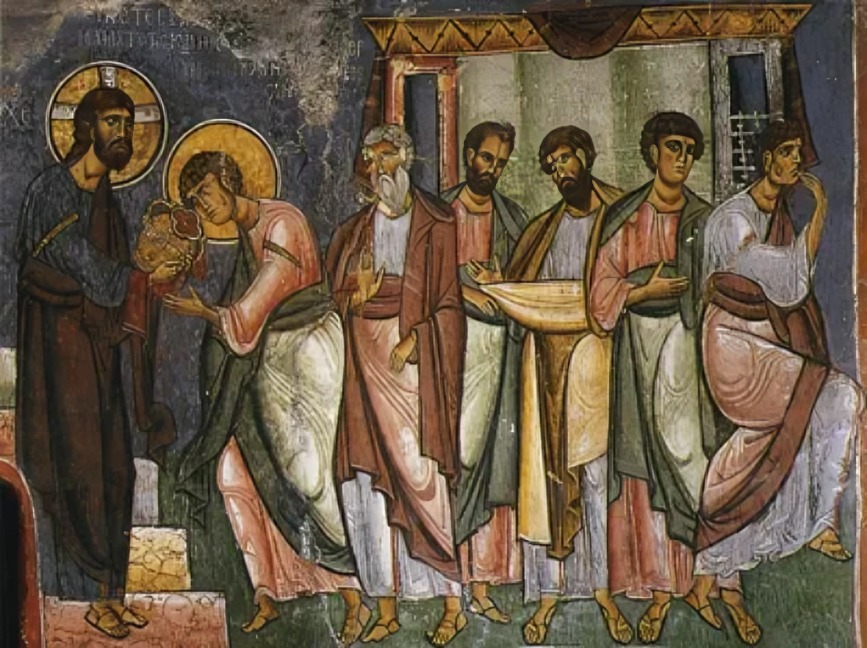
The Bible as we know it today is the result of centuries of debate, editing, and careful selection by early church leaders. While the four canonical gospels—Matthew, Mark, Luke, and John—form the heart of the New Testament, many other texts circulated among early Christian communities. One of the most intriguing of these is the Gospel of Thomas, a collection of sayings attributed to Jesus. But despite its fascinating insights, this gospel was excluded from the Bible. Why?
What Is the Gospel of Thomas?
Discovered in 1945 near Nag Hammadi in Egypt, the Gospel of Thomas is a non-canonical text that contains 114 sayings attributed to Jesus. Unlike the gospels in the Bible, it does not include narratives of Jesus’ life, miracles, or crucifixion. Instead, it presents Jesus more as a spiritual teacher, emphasizing wisdom and inner enlightenment.
Some sayings mirror those in the New Testament, while others are far more mystical, focusing on discovering divine truth within oneself.
Why It Was Left Out of the Canon
The early church didn’t dismiss the Gospel of Thomas without reason. Several factors led to its exclusion:
1. Different Theological Emphasis
The canonical gospels present Jesus as the Son of God whose death and resurrection are central to salvation. The Gospel of Thomas, however, stresses personal spiritual knowledge (gnosis) over faith in Christ’s sacrifice. This aligned more with Gnostic traditions, which the early church often considered heretical.
2. Lack of Apostolic Authority
One key criterion for inclusion in the New Testament was a strong connection to the apostles or their close followers. While the Gospel of Thomas is attributed to Didymos Judas Thomas, scholars believe it was likely written in the 2nd century, long after the apostles had passed. Its late origin made its authenticity questionable.
3. Absence of Core Christian Narrative
The canonical gospels emphasize Jesus’ death, resurrection, and the promise of eternal life. The Gospel of Thomas does not mention these pivotal events at all. Without these elements, early church leaders felt it failed to represent the central message of Christianity.
4. Concerns About Gnosticism
By the 2nd and 3rd centuries, the church was actively opposing Gnostic movements, which taught that salvation came through secret knowledge. Since the Gospel of Thomas echoed some Gnostic ideas, it was viewed with suspicion and ultimately rejected.
The Gospel of Thomas Today
Although not part of the biblical canon, the Gospel of Thomas remains a powerful and thought-provoking text. Scholars, theologians, and spiritual seekers study it for its unique portrayal of Jesus as a teacher of hidden wisdom. Some even argue it provides a window into how diverse early Christianity truly was before the canon solidified.
Conclusion
The Gospel of Thomas was excluded from the Bible because it didn’t fit the theological framework that the early church sought to establish. Its emphasis on inner knowledge, lack of apostolic authority, and ties to Gnostic thought made it too controversial to include in the New Testament.
Still, its rediscovery reminds us that early Christianity was not a single, unified movement but a rich tapestry of beliefs and interpretations. While the Gospel of Thomas may never be part of scripture, it continues to challenge, inspire, and broaden our understanding of the words attributed to Jesus.
Would you like me to also create a short, simple version of this article (almost like a quick explainer for general readers)?
