
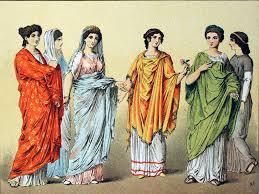
When you picture ancient Roman women, do you imagine flowing gowns and intricate hairstyles? You’re not far off. But Roman fashion was more than just aesthetics—it was a reflection of status, virtue, and cultural identity.
From the Republican era to the peak of the Empire, Roman women used clothing not only to dress, but to communicate their role in society. So, what exactly did they wear?
Let’s take a closer look.
The Tunica: The Everyday Base Layer
The tunica (or tunic) was the basic garment for Roman women, worn underneath other layers. It was a simple, loose-fitting dress made of wool or linen, usually reaching the ankles. Tunics could be sleeveless or have short sleeves, and were belted at the waist for shape.
While enslaved women and working-class women might wear only the tunic, wealthier women used it as an underlayer for more formal attire.
The Stola: A Symbol of Respectability
The stola was the hallmark of a respectable Roman matron. It was a long, sleeveless dress worn over the tunic, often made of higher-quality fabric like fine wool or imported silk. The stola was typically fastened at the shoulders with fibulae (decorative brooches) and belted under the bust to create a graceful drape.
The stola wasn’t just fashion—it was status. Married women wore it as a symbol of their honorable position in society. Women who weren’t Roman citizens, or those who had dishonored their marriage vows, were discouraged from wearing it.
The Palla: Draped Elegance
The palla was a large shawl or cloak, worn similarly to a toga but exclusively by women. It could be wrapped around the body and head when outdoors, serving both as modesty and protection from the sun or wind.
Women often matched their palla with their outfit, choosing colors and fabrics that suited the occasion. A rich crimson or deep purple palla signaled wealth, while more muted tones were worn by women of modest means.
Hairstyles, Jewelry, and Accessories
Roman women placed great emphasis on appearance, and hair was a major part of their identity. Hairstyles were often elaborate—braids, buns, and curls arranged in sophisticated styles, especially during the Imperial period. Wealthier women used hairpins, wigs, and sometimes slaves trained as hairdressers.
Jewelry was abundant—rings, earrings, necklaces, and bracelets made from gold, silver, pearls, and precious stones. The more ornate, the more status it conveyed.
They also used cosmetics: powders for whitening the face, rouge for cheeks, and even charcoal for eyeliner. Perfumes were popular, often imported from the East.
Fabrics, Colors, and Meaning
- Wool was the staple fabric, but linen, cotton, and silk (imported from Egypt and China) were used by the wealthy.
- Colors held symbolic weight. White was associated with purity, purple with nobility, and darker hues with mourning.
- Dyes were costly, especially Tyrian purple, reserved for the elite.
Clothing laws, or sumptuary laws, sometimes limited what women could wear based on their social class, to keep order in the class system.
Clothing as a Social Statement
Clothing for Roman women wasn’t just about covering the body—it was a form of self-expression and social communication. A woman’s dress could tell you whether she was married, wealthy, or in mourning. For example:
- Widows wore darker, planer clothing.
- Brides wore white tunics and orange veils.
- Vestal Virgins, the priestesses of Vesta, wore distinctive white robes and simple hairstyles.
Through their dress, women navigated the expectations placed upon them in a male-dominated society, using fashion to express virtue, wealth, and identity.
Conclusion
Ancient Roman women dressed with care, not just for beauty, but for meaning. Every fold of fabric, every bracelet, and every shade of dye was tied to their place in the world. From the humble tunic to the noble stola and graceful palla, Roman fashion was a tapestry of class, culture, and personal dignity.
In the folds of their garments, we see not just fashion—but the fabric of a civilization that still captivates us today.
