
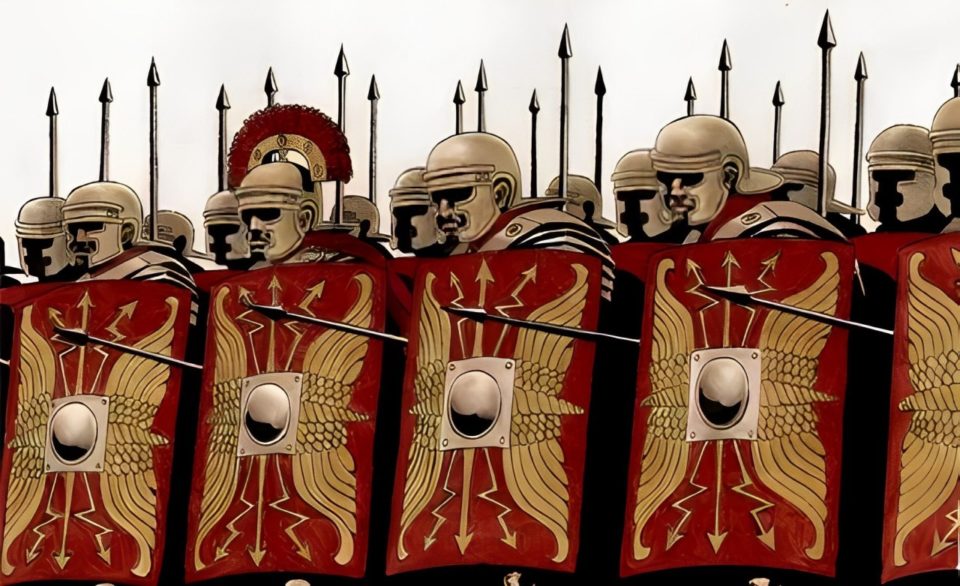
The Roman legion was the heart of the Roman army, a formidable fighting force that allowed Rome to dominate much of Europe, the Middle East, and North Africa for centuries. Its structure was the result of centuries of military evolution, designed to maximize flexibility, discipline, and effectiveness in combat. Let’s explore the structure of the Roman legion and understand how its organization contributed to the empire’s success.
The Legion: Basic Overview
A Roman legion was a large military unit, typically consisting of around 4,500 to 6,000 soldiers, though the size varied over time. Each legion was a self-sufficient and highly organized military force, capable of performing a range of tasks from combat to construction. It was divided into smaller units to ensure flexibility, speed, and efficiency in battle.
Key Elements of Roman Legion Structure
Legionary (Soldiers):
The backbone of the Roman legion were the legionaries — heavy infantry who made up the bulk of the force. They were Roman citizens, enlisted for a term of 25 years, during which they received regular pay, training, and were provided with food and equipment.
Legionaries were armed with a gladius (short sword), pilum (throwing spear), and a large scutum (shield). They wore armor made of metal and leather to provide protection while maintaining mobility.
Legate (Legatus):
At the top of the legionary hierarchy was the legatus, a senior officer appointed by the Roman emperor or the Senate. The legatus was responsible for the legion’s overall strategy and leadership and reported directly to higher command.
Tribunes (Tribuni):
Beneath the legatus were the tribunes, who were the next tier of officers. There were typically five or six tribunes per legion, and they were responsible for overseeing different aspects of the legion’s operations. The tribunes were often young men from the Roman aristocracy who were receiving military experience in their career.
Centurions (Centuriones):
The centurions were the most important officers in the Roman legion, with each commanding a century (a smaller unit of about 80 men). They were responsible for the training, discipline, and direct leadership of their soldiers. Centurions were well-respected, experienced soldiers who led by example and often served as the key enforcers of Roman discipline.
Each century was further organized into contubernia, groups of 8 men who shared a tent, meals, and duties. These small groups promoted camaraderie and efficient coordination in combat.
Cohorts:
The Roman legion was divided into ten cohorts, which were the primary fighting formations. The first cohort was the largest and most prestigious, often consisting of veterans or elite soldiers.
A cohort typically consisted of 480 soldiers, though this number varied. The cohort was led by a tribune or centurion and was the primary combat unit during battles.
Auxiliary Troops:
In addition to the legionaries, the Roman army included auxiliaries, non-citizen soldiers recruited from Roman provinces or allied regions. These soldiers were often lighter infantry, cavalry, or archers, filling gaps that the legionaries could not cover.
The auxiliaries were crucial in providing specialized skills and support for the legions, and after serving for a number of years, they were granted Roman citizenship.
Support Staff:
A Roman legion didn’t just consist of fighting soldiers. It also included engineers, medics, cooks, blacksmiths, and other support personnel. These individuals were essential for maintaining the legion’s logistical needs and ensuring the legions could be sustained during long campaigns.
The legion’s baggage train was a well-organized part of its structure, ensuring that soldiers had the necessary supplies, from food to siege equipment.
Tactical Organization and Battle Formation
The Roman legion’s structure was not only about administrative hierarchy; it also extended to its tactical formations, which were key to its success on the battlefield. Roman legions were often arranged into a checkerboard formation called the manipular formation, which allowed them to respond rapidly to changing battle conditions.
The First Line: Consisted of the hastati, young and relatively inexperienced soldiers.
The Second Line: Made up of the principes, older and more experienced soldiers.
The Third Line: Comprised the triarii, seasoned veterans who formed a strong reserve, used as a last resort in battle.
The ability to rotate units in and out of battle, with fresh soldiers always available, was one of the Roman legion’s key advantages over other armies.
Training and Discipline
Roman soldiers were rigorously trained, both physically and mentally. The training focused on building endurance, precision, and teamwork. Discipline was paramount; soldiers were expected to maintain order and adhere to strict regulations. The legion was known for its ability to march long distances, construct fortifications, and maintain its discipline even in the face of adversity.
Conclusion
The Roman legion was an incredibly sophisticated military unit, built for efficiency and adaptability. Its hierarchical structure, emphasis on discipline, and flexibility in battle made it one of the most formidable fighting forces in history. The Roman legions not only conquered vast territories but also maintained order and control across an empire that lasted for centuries. Understanding the structure of the Roman legion helps explain why the Roman Empire was able to achieve such dominance and maintain it for so long.
