
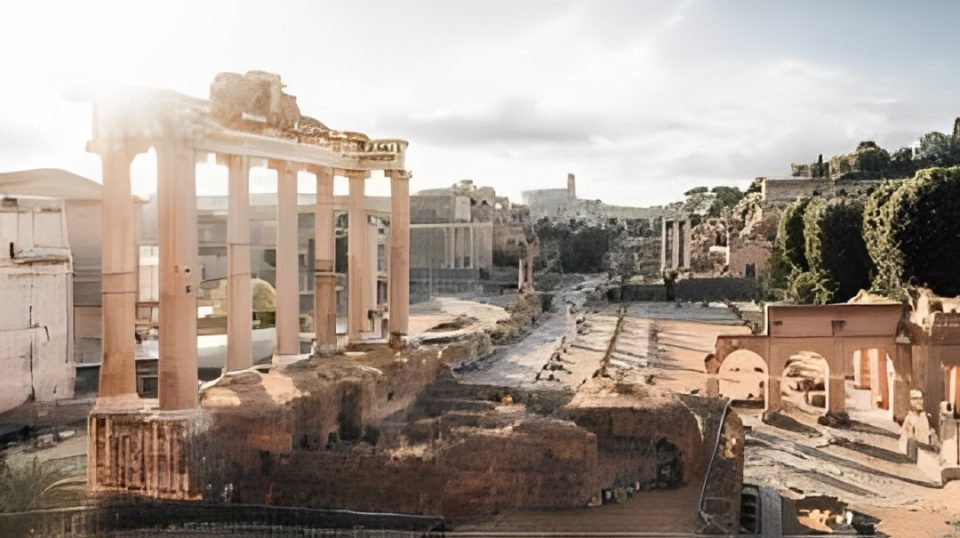
The fall of Rome is one of the most significant events in world history, marking the transition from the ancient to the medieval era. While historians debate the precise causes of Rome’s collapse, from economic instability to military defeats, one of the lesser-discussed aspects is the fate of its population. What happened to the millions who lived in the Roman Empire after its fall?
The Decline of Rome’s Urban Population
At its height, Rome was home to over a million people, making it one of the largest cities in the ancient world. However, by the time the Western Roman Empire fell in 476 AD, its population had drastically declined. Several factors contributed to this:
Economic Hardship – Heavy taxation, reliance on slave labor, and a declining trade network made life increasingly difficult for the common people.
Plague and Disease – Epidemics, such as the Antonine Plague and the Plague of Cyprian, significantly reduced Rome’s population.
Barbarian Invasions – The repeated sackings of Rome, most notably by the Visigoths in 410 AD and the Vandals in 455 AD, led to the displacement of many residents.
Famine and Food Shortages – Rome depended on grain shipments from Africa. As the empire weakened, food shortages became frequent, leading many to leave the city in search of better conditions.
By the early Middle Ages, the population of Rome had dwindled to as low as 30,000, a mere fraction of its former size.
Migration and Adaptation
As Rome declined, many of its citizens fled to the countryside, where life was more sustainable. Villas and rural estates, previously owned by Roman elites, became self-sufficient communities that would later form the foundation of medieval feudal society.
Others moved to more stable regions within the Eastern Roman Empire (Byzantium), which continued to thrive for nearly a thousand more years. Cities like Constantinople, Antioch, and Alexandria absorbed displaced Roman citizens and maintained many aspects of Roman culture and governance.
Meanwhile, in the western provinces, local populations adapted to the rule of invading Germanic tribes, such as the Visigoths, Ostrogoths, and Franks. Over time, Roman and Germanic traditions blended, forming the early medieval European culture.
The Legacy of Rome’s Population
Despite the empire’s political collapse, Roman culture, language, and institutions did not vanish overnight. Latin remained the dominant language in Europe for centuries, eventually evolving into modern Romance languages such as Italian, French, and Spanish.
Many Romans who integrated into new societies continued to practice their traditions, influencing the development of medieval European laws, architecture, and governance. Even the Catholic Church, which had grown in prominence during Rome’s later years, preserved and spread many Roman customs throughout the continent.
Conclusion
The collapse of Rome was not the end of its people, but rather a transformation. Some perished, some fled, and others adapted to new rulers and ways of life. While the great empire fell, its citizens played a vital role in shaping the medieval world. The legacy of Rome’s population lives on in the languages, cultures, and institutions that still influence us today.
