
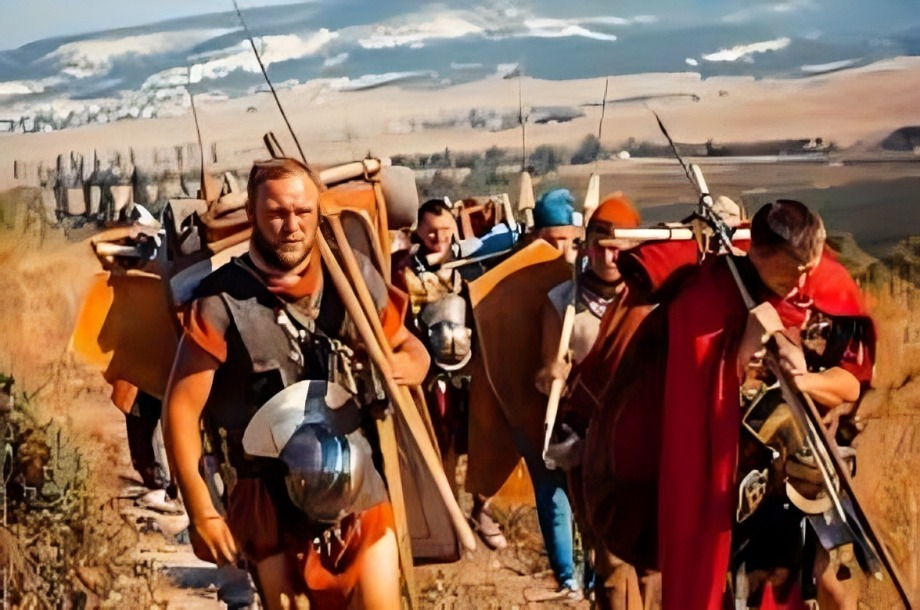
For over a thousand years, the Roman Empire stood as a military titan, expanding across continents and enduring brutal conflicts. At the heart of its strength were the Roman legionaries — elite soldiers who could march over 20 miles a day in full gear, build fortified camps by night, and still fight relentlessly in battle. But how did they do it? What gave these men such extraordinary physical and mental endurance?
Modern historians and military analysts now agree: the secret of the Roman legionaries’ endurance wasn’t just discipline or armor — it was a powerful combination of training, lifestyle, strategy, and mindset that made them one of the most formidable military forces in history.
Rigorous and Ruthless Training
From the moment a recruit joined the Roman army, their body was no longer their own. Training was constant, brutal, and non-negotiable. Recruits were drilled to march long distances, wield heavy weapons, and carry gear weighing over 80 pounds — all while maintaining precise formation.
What made Roman training exceptional was its realism. Soldiers didn’t just practice—they practiced as if it were war. Wooden swords were intentionally heavier than real ones, so that when combat came, the real weapons felt almost light.
The motto was simple: “Sweat saves blood.”
A Spartan Lifestyle
Roman legionaries lived with discipline. Their diet was basic but effective: grains like wheat, barley, and spelt made up most meals, often consumed as porridge (puls). It was high in carbs for energy, and low in fat to avoid sluggishness. They supplemented it with lentils, cheese, oil, and occasional meat.
Drunkenness, laziness, or softness were harshly punished. Everything — from grooming to gear maintenance — was regimented. Even in peacetime, soldiers had to dig ditches, construct roads, or build walls. The Roman lifestyle forged men who were not just warriors, but workers — strong, tough, and tireless.
Superior Gear Design
Unlike the heavy iron suits of medieval knights, Roman legionary equipment was smartly designed for balance and mobility. The lorica segmentata (segmented armor) offered strong protection while allowing flexibility. The short gladius sword was ideal for close-quarter thrusting in tight formation — efficient and lethal.
Shields (scutum) weren’t just for defense — they were offensive tools in formation, helping create the iconic “turtle” (testudo) that protected from all sides. This integration of tools into combat techniques allowed legionaries to fight longer, smarter, and in perfect coordination.
Strategic Rest and Rotation
Unlike modern myths of endless combat, the Roman army understood the importance of rest. Commanders often rotated units, giving them time to recover and regroup. After long marches, soldiers constructed fortified camps every night, giving them safety and structured routines even in foreign territory.
This constant cycle of movement, rest, and discipline preserved their energy and morale — a system that few enemies could match.
Mental Conditioning and Brotherhood
Perhaps the most overlooked part of the Roman legionary’s endurance was his mind. Soldiers swore a sacred oath — the sacramentum — to serve Rome with loyalty unto death. This oath created an unshakable bond not only with the state but with each other.
Cohorts trained, marched, ate, and fought side by side. They developed a deep sense of camaraderie and identity. A soldier didn’t just fight for Rome — he fought for the man beside him.
And unlike armies made up of conscripted peasants, Roman legionaries were career soldiers, proud of their status. They fought not out of fear, but out of fierce pride and loyalty.
Conclusion
The legendary endurance of the Roman legionary wasn’t due to genetics, brute strength, or luck. It was the result of a system—one that meticulously shaped the body, mind, and soul of every soldier.
They trained like it was war.
They lived like survival depended on routine.
They marched with purpose and fought with unity.
Modern armies still study the Roman model, not just for tactics, but for the discipline and structure that made them last for centuries. In a world that changes constantly, the lesson from the Roman legionary is timeless: true endurance is not natural—it’s built.
