
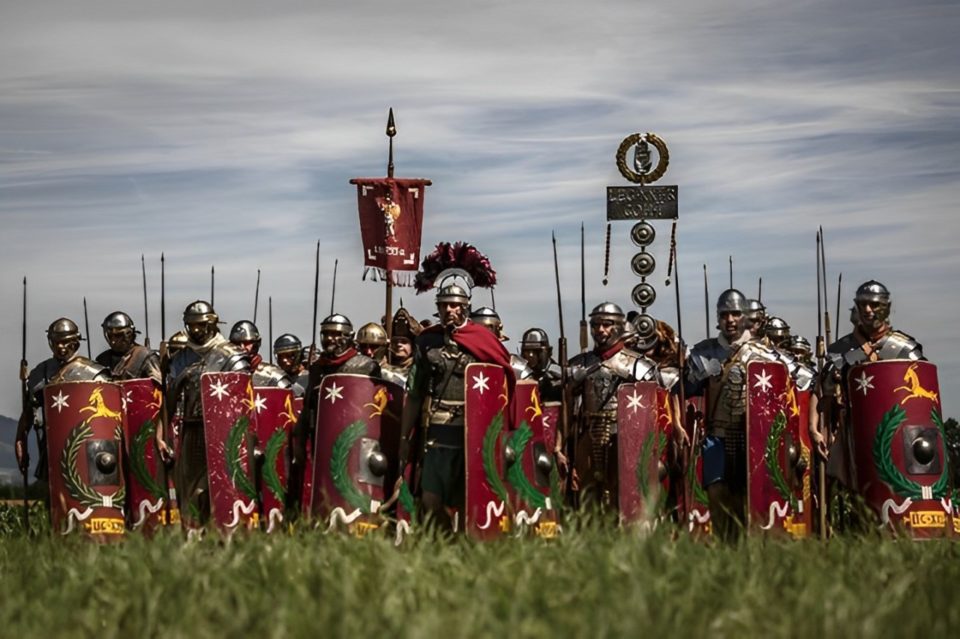
The hypothetical battle between a Roman legion and a samurai army is one of the most intriguing “what-if” scenarios in military history. Both groups are legendary, representing the epitome of martial prowess, strategy, and innovation in their respective eras. To determine who would prevail in such a clash, we must delve into their strengths, tactics, and philosophies of warfare.
The Roman Legions: Masters of Organization and Tactical Dominance
The Roman legions were the foundation of one of history’s most enduring empires, dominating the ancient world from 27 BCE to 476 CE. These soldiers exemplified discipline, strategy, and adaptability, enabling Rome to conquer diverse territories and defend its empire against formidable adversaries.
Structure and Organization
A typical Roman legion consisted of 4,000 to 6,000 soldiers, divided into smaller units called cohorts and further broken down into centuries led by centurions. This hierarchical system allowed for efficient command and control, making the legions highly adaptable on the battlefield.
Strength in Numbers: With large, well-organized formations, the legions could overwhelm smaller or less coordinated forces.
Cohesion: Roman soldiers trained rigorously in collective maneuvers, ensuring each unit operated seamlessly within the larger army.
Weapons and Armor
The Gladius: A short, double-edged sword optimized for close combat and thrusting.
The Pilum: A heavy javelin designed to penetrate enemy shields and disrupt formations.
The Scutum: A large rectangular shield providing superior protection and enabling the formation of the testudo (tortoise) for defense against projectiles.
Armor: Lorica segmentata (plate armor) and chainmail offered excellent defense while maintaining mobility.
Tactical Prowess
The Roman legions excelled at battlefield tactics and siege warfare:
Formations: From the testudo to wedge formations, Roman tactics were designed for flexibility and protection.
Adaptability: The Romans could adjust their strategies to counter different enemy styles, whether it was guerrilla tactics, cavalry charges, or pitched battles.
The Samurai Armies: Warriors of Skill and Honor
The samurai armies of feudal Japan, flourishing between the 12th and 17th centuries, were a product of a warrior culture deeply rooted in honor and martial excellence. The Bushido code emphasized loyalty, discipline, and mastery of combat skills.
Organization and Leadership
Samurai armies were smaller and less rigidly structured than Roman legions, relying on the skill and initiative of individual warriors. Units were often organized around a daimyo (feudal lord) and his vassals.
Flexibility: Samurai armies operated in loose formations, allowing for rapid movement and decentralized decision-making.
Small Unit Tactics: Samurai often fought in smaller groups, relying on ambushes, skirmishes, and precision strikes.
Weapons and Armor
The Katana: A razor-sharp, curved sword renowned for its craftsmanship and effectiveness in close combat.
The Yumi: A longbow with exceptional range, ideal for softening enemy ranks before melee engagements.
The Yari: A spear used for thrusting and defense against cavalry.
Armor: Lightweight and flexible, samurai armor combined lacquered plates and silk bindings, offering mobility and adequate protection.
Battlefield Strategies
Samurai armies excelled in both individual combat and large-scale battles:
Cavalry Charges: Swift and powerful, samurai cavalry could disrupt enemy lines.
Archery: Skilled archers could rain arrows on the enemy from a distance, creating chaos and softening formations.
Guerrilla Tactics: The samurai’s ability to use the terrain to their advantage often gave them an edge in uneven or forested battlegrounds.
Head-to-Head Analysis
Battlefield Environment
Open Terrain: Roman legions would dominate in a flat, open battlefield, leveraging their disciplined formations and superior numbers to overwhelm the samurai.
Rugged Terrain: In forests, hills, or narrow passes, the samurai’s mobility and guerrilla tactics could neutralize the Roman advantage, enabling them to strike with precision and retreat swiftly.
Discipline vs. Individual Skill
Romans: Unified command and collective tactics would allow them to sustain heavy losses while maintaining operational effectiveness.
Samurai: Exceptional individual skill and adaptability would shine in smaller skirmishes but might falter against the coordinated might of a Roman assault.
Weapons and Armor
Roman shields and armor provided unmatched protection, particularly in close formations. However, the katana’s cutting power could exploit weaknesses in exposed areas.
The pilum could disrupt the samurai’s initial charge, while the yumi might challenge Roman shields with sustained volleys.
Tactical Adaptability
The Romans’ ability to adapt to new foes, from Carthaginian elephants to Germanic tribes, might give them the upper hand. The samurai, though less experienced in large-scale warfare, were highly innovative and could exploit any Roman overextension.
The Verdict: Who Would Win?
Roman Victory
On a large, open battlefield with room for formations, the Roman legions would likely prevail. Their superior organization, defensive capabilities, and overwhelming force would overpower the less cohesive samurai army.
Samurai Victory
In a fragmented or rugged environment, the samurai’s agility, ranged capabilities, and guerrilla tactics could dismantle Roman formations, allowing for a decisive victory.
Conclusion
The hypothetical clash between a Roman legion and a samurai army is not just a battle of warriors but a meeting of two worlds with vastly different philosophies of war. The Romans prioritized discipline, organization, and collective strength, while the samurai celebrated individual skill, honor, and adaptability.
Ultimately, the outcome would hinge on the battlefield’s conditions and the leadership of each force. Regardless of who emerged victorious, such a battle would be a testament to the ingenuity and resilience of both cultures, leaving an indelible mark on military history.
