
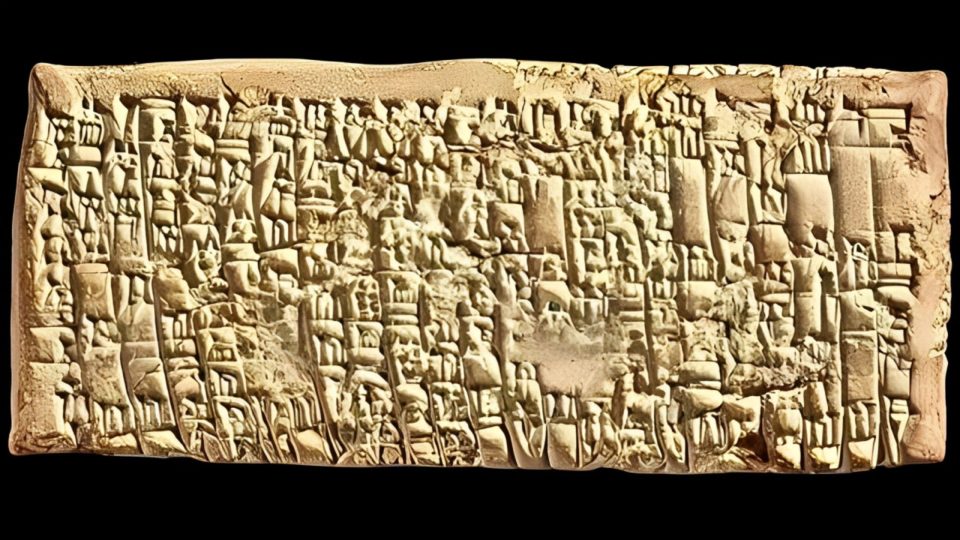
Customer complaints are as old as commerce itself, and evidence of this can be found in the world’s oldest written customer complaint, a remarkable artifact from ancient Mesopotamia. This complaint, inscribed on a clay tablet, provides a fascinating glimpse into the early practices of trade and the enduring nature of customer dissatisfaction.
The Historical Context
Ancient Mesopotamia: This region, known as the cradle of civilization, is where writing was invented around 3,500 BCE. The Sumerians, who lived in Mesopotamia, developed cuneiform script, one of the earliest systems of writing.
Trade and Commerce: Mesopotamia was a bustling hub of trade. Merchants conducted business locally and with distant regions, exchanging goods such as grains, textiles, metals, and pottery. This vibrant commercial activity led to the development of sophisticated trade networks and business practices.
The Tablet
The Artifact: The world’s oldest customer complaint is inscribed on a small clay tablet, measuring about 11.6 cm by 5 cm. It dates back to approximately 1750 BCE and is written in Akkadian, a Semitic language used in ancient Mesopotamia.
The Complaint: The tablet contains a complaint from a merchant named Nanni to a supplier named Ea-nasir. Nanni’s grievance pertains to a shipment of copper ingots that were of substandard quality. The text reveals that Nanni was dissatisfied with the quality of the copper and the service he received from Ea-nasir, who had not only provided inferior goods but also treated Nanni’s messenger rudely.
The Content of the Complaint
Translation: The translated text of the complaint reveals Nanni’s frustration and demands for rectification. Here is a portion of the translated text:
Tell Ea-nasir: Nanni sends the subsequent message:
When you came, you stated to me as follows: ‘I will provide Gimil-Sin (while he comes) great best copper ingots.’ You left then, however you probably did now no longer do what you promised me.You positioned ingots which have been now no longer desirable earlier than my messenger (Sit-Sin) and said: ‘If you need to take them, take them; in case you do now no longer need to take them, pass away. Why do you treat someone like that? I actually have dispatched as messengers gents like ourselves to accumulate the bag with my money (deposited with you), but you’ve dealt with me with contempt via means of sending them lower back to me empty-exceeded numerous times, and that via enemy territory.
The Importance of the Complaint
Early Business Practices: This complaint illustrates that even in ancient times, there were established norms and expectations in trade. Merchants like Nanni expected fair dealings and quality goods, and they had mechanisms for voicing their grievances.
Written Records: The use of written records for business transactions and disputes highlights the advanced administrative systems in place. Written contracts, receipts, and complaints were vital for maintaining accountability and transparency in trade.
Customer Rights: The tablet demonstrates that the concept of customer rights and fair treatment in business transactions is ancient. Nanni’s insistence on receiving what he was promised and his detailed complaint reflect an early understanding of consumer protection.
Legacy
Historical Insight: The tablet provides valuable insight into the economic and social life of ancient Mesopotamia. It sheds light on the complexities of trade, the challenges faced by merchants, and the methods they used to resolve disputes.
Timeless Nature of Complaints: This ancient complaint resonates with modern readers because it highlights the timeless nature of customer dissatisfaction. Despite the technological and societal advancements over millennia, the fundamental issues of quality, service, and fair treatment in commerce remain relevant.
Conclusion
The world’s oldest written customer complaint is a testament to the enduring nature of commerce and human interactions. This ancient artifact not only enriches our understanding of Mesopotamian civilization but also reminds us that the principles of fair trade and customer rights have deep historical roots. As we navigate modern consumer landscapes, this ancient complaint serves as a poignant reminder of the longstanding quest for quality and fairness in business dealings.
