
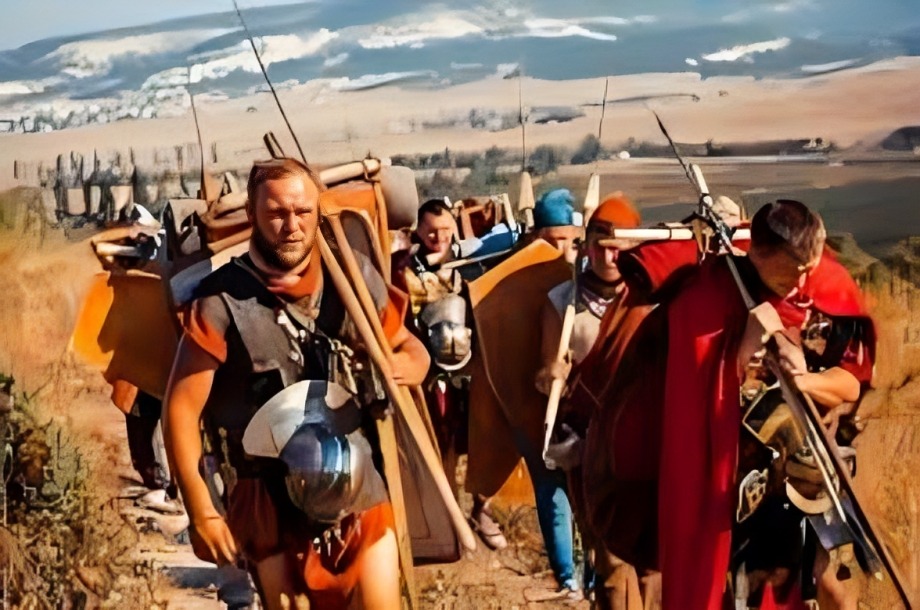
When we think of ancient Rome’s military dominance, images of shining armor, disciplined ranks, and legendary battles come to mind. But behind the victories, the real power of Rome’s military machine lay in something far less glamorous—and far more essential: endurance.
The Roman legionary wasn’t just a warrior. He was a human engine, trained to march, fight, build, and survive under the harshest conditions. So what was the secret behind the incredible endurance of the Roman legionary?
Let’s uncover the physical, mental, and cultural factors that forged the toughest soldiers of the ancient world.
Relentless Training and Discipline
The foundation of a legionary’s endurance began with rigorous training. From the moment a recruit joined the legions, he was subjected to drills that would break most modern athletes.
- Marching 20 miles a day in full gear was considered routine.
- Training involved mock battles with wooden weapons that were intentionally heavier than real ones to build strength and stamina.
- Soldiers were expected to dig trenches, build camps, and fortify defenses daily—even during long marches.
The Roman belief was simple: “Sweat in training to avoid blood in battle.” Their bodies became machines through repetition, and their minds became sharp through discipline.
Strict Diet and Practical Nutrition
The Roman legionary’s diet was simple but effective, built for sustaining energy rather than indulging taste.
Their food typically included:
- Grain-based meals, especially a porridge called puls, made from barley or wheat
- Dried fruits and vegetables
- Occasional meat, cheese, or fish when available
- Water, vinegar-water mix (posca), or thin wine to stay hydrated and kill bacteria
This no-frills diet kept their bodies lean and fueled for long marches and labor, without relying on rich or heavy foods.
Engineering Meets Endurance
Legionaries weren’t just fighters—they were also builders. Every night, they constructed a fortified camp complete with ditches, palisades, and organized streets.
This constant physical labor, combined with long marches, kept them in peak physical condition year-round. It also taught them the value of teamwork, planning, and resilience.
Many modern historians believe the discipline of engineering and daily structure was just as important to their endurance as their battle skills.
Mental Toughness and Unity
The Roman military wasn’t built on brute strength alone—it was sustained by mental resilience.
- Legionaries trained as units, not individuals, learning to rely on each other for survival.
- They shared tents, meals, and dangers together. This created a powerful sense of brotherhood and mutual accountability.
- Discipline was enforced through strict punishments, but also through shared pride in the legion and Rome itself.
Their strength came from within. They weren’t just fighting for themselves—they were fighting for order, honor, and empire.
A Culture That Glorified Endurance
In Roman society, endurance was a virtue.
To endure pain, hunger, fatigue, or injury without complaint was a mark of strength and masculinity. Heroes were praised not just for victories, but for how much they could endure without breaking.
This mindset trickled down into every legionary. Endurance wasn’t a burden—it was a badge of honor.
The Gear That Made It Possible
Though not lightweight by today’s standards, Roman gear was strategically designed for mobility and long-term use.
A typical legionary carried:
- Lorica segmentata (segmented armor) which balanced protection with movement
- A shield (scutum), two javelins (pila), a short sword (gladius), and sometimes a dagger (pugio)
- A sarcina, or marching pack, with tools, rations, and personal items
Despite the weight (over 40kg), soldiers were expected to carry everything themselves. This constant load-bearing built incredible stamina and physical resilience.
Rotation and Rewards
Endurance wasn’t just about pushing limits—it was also about sustainability.
Rome built a system where:
- Soldiers had rest days, especially in peacetime.
- After years of service (often 20+), they were rewarded with land, money, or Roman citizenship, depending on their origin.
The promise of reward kept many going, and regular rotation between garrison duty, campaign work, and engineering projects gave their bodies and minds time to recover.
Conclusion
The secret of the Roman legionary’s endurance wasn’t just superior genes, brute force, or lucky strategy. It was a carefully built system—a combination of training, nutrition, mindset, equipment, and cultural pride.
Each legionary was molded by his environment to become more than a man—he became a living cog in one of history’s most powerful military machines. And through endurance—not just of body, but of will—he helped build and defend an empire that lasted for centuries.
Would you like a shorter version for social media, or a visual timeline of Roman legionary training?
