
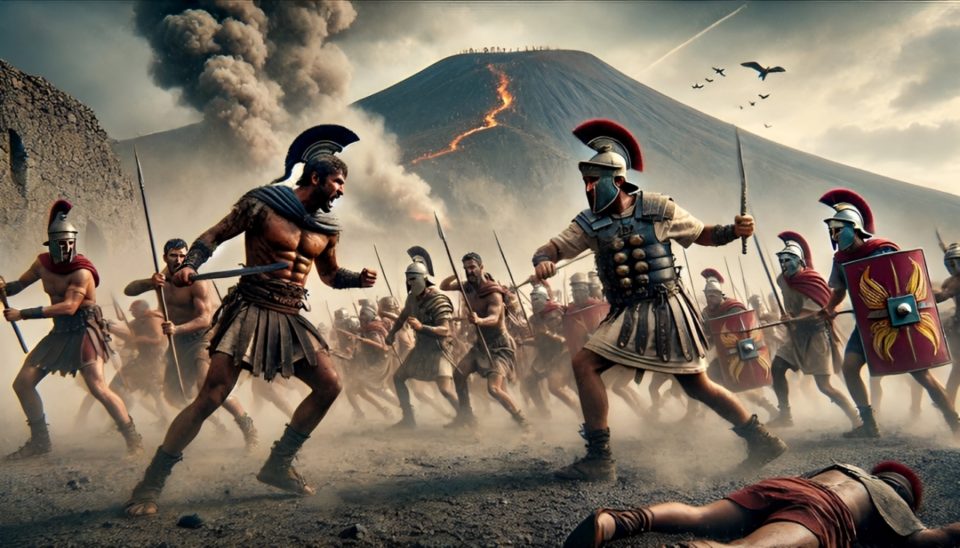
Few historical figures have captured the imagination quite like Spartacus, the Thracian gladiator who led a massive slave rebellion against the Roman Republic. His legend has been romanticized in literature, film, and popular culture, often blurring the line between historical fact and myth. One of the most famous episodes of his rebellion was his escape to Mount Vesuvius, where he and his followers launched a series of stunning victories against Roman forces. But how much of this story is rooted in historical reality, and how much has been exaggerated over time? This article explores the myths and realities surrounding Spartacus on Vesuvius, piecing together the truth from ancient sources and modern scholarship.
The Historical Context
The Third Servile War (73–71 BCE) was the last and most significant of Rome’s slave uprisings. Spartacus, along with fellow gladiators Crixus and Oenomaus, escaped from a gladiatorial training school in Capua, gathering a force of disaffected slaves, laborers, and disenfranchised people. Their rebellion grew rapidly, alarming the Roman authorities who initially underestimated the threat.
Escape to Mount Vesuvius
According to ancient sources, after their initial escape, Spartacus and his followers took refuge on Mount Vesuvius. The strategic high ground gave them an advantage, allowing them to train, organize, and plan their next moves while keeping an eye on Roman movements. The Roman praetor Gaius Claudius Glaber, tasked with suppressing the rebellion, marched his forces to Vesuvius and laid siege to the rebels, hoping to starve them out.
The Rope Escape: Fact or Fiction?
One of the most famous elements of Spartacus’ Vesuvius campaign is his daring escape. Ancient writers such as Plutarch and Appian describe how Spartacus and his men, instead of surrendering or being trapped, used vines to climb down the cliffs of Vesuvius and launch a surprise attack on Glaber’s forces. The Romans, completely unprepared for such an audacious maneuver, were routed, and the rebels gained access to much-needed weapons and supplies.
While the exact details remain debated, many historians agree that Spartacus’ victory at Vesuvius was a combination of tactical ingenuity and the complacency of the Roman military. The terrain of Vesuvius at the time was more forested than today, making such a descent feasible. However, whether the rebels specifically used vines or simply exploited an unguarded route remains uncertain.
Strategic Brilliance or Luck?
Spartacus’ ability to turn a desperate situation into a strategic advantage was a hallmark of his leadership. By outmaneuvering the Romans at Vesuvius, he transformed a defensive retreat into an offensive strike. This pattern continued throughout his rebellion, where he frequently used unconventional warfare tactics to outwit Rome’s legions. Some historians argue that Spartacus’ victories were not just the result of luck but demonstrated remarkable military acumen, comparable to some of the greatest tacticians of the ancient world.
The Myth of Spartacus the Liberator
Modern portrayals often depict Spartacus as a freedom fighter, a champion of justice and equality. However, ancient sources present a more complex figure. While he certainly fought against the oppression of slavery, his primary goal may not have been to end slavery altogether but to lead his followers to safety beyond Rome’s reach. Some accounts suggest he considered marching north to escape Italy, while others claim he sought to challenge Rome directly. The lack of firsthand accounts from Spartacus himself leaves much of his true intentions speculative.
Conclusion
The story of Spartacus on Vesuvius is a fascinating blend of historical fact and legendary embellishment. His escape from the mountain and victory over Roman forces showcase his tactical brilliance and ability to inspire those around him. While myths surrounding his character and motivations have grown over the centuries, the reality remains that he was one of the most formidable opponents Rome ever faced. By examining the sources critically, we can appreciate both the man and the myth, understanding Spartacus not just as a legendary figure but as a real historical force who momentarily shook the foundations of the Roman Republic.
