
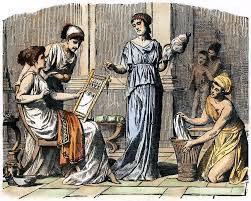
When we think of Ancient Greece, the spotlight usually falls on the male philosophers, warriors, and politicians who shaped Western civilization. But in the militarized society of Sparta, women played a surprisingly unique and powerful role that set them apart from their peers in other Greek city-states.
While Athenian women were largely confined to the home and excluded from political life, Spartan women were educated, outspoken, and influential. They didn’t fight in wars, but they helped shape the warriors who did—and their social and economic power made them some of the most liberated women in the ancient world.
Trained for Strength, Not Silence
Unlike the rest of Greece, where female education was rare or non-existent, Spartan girls were formally educated, physically trained, and encouraged to be strong. The reasoning was deeply tied to the militaristic values of the society: strong women would give birth to strong warriors.
Girls engaged in running, wrestling, discus throwing, and even javelin. They weren’t cloistered in homes; they were visible, active, and fit. This approach shocked other Greeks, who considered such behavior unseemly—but in Sparta, it was expected.
Marriage and Motherhood Were Sacred Duties
In Sparta, a woman’s most important social role was to bear and raise warriors. But unlike other Greek women, Spartan women married later (typically around 18), giving them more time for education and physical development. Their marriages were less about male dominance and more about duty to the state.
Mothers were revered for raising brave sons—and sometimes scorned if their sons showed cowardice. The famous Spartan saying: “Come back with your shield—or on it”, was reportedly taught by Spartan mothers to their sons before battle.
Property Owners and Power Brokers
Spartan women weren’t just mothers—they were landowners, too. In fact, by the 4th century BCE, it’s estimated that women owned nearly 40% of Sparta’s land.
Why? Because Spartan men spent most of their lives in military service, away from home. As a result, women managed estates, made financial decisions, and passed wealth through matrilineal lines. This made Spartan women economically powerful, a status almost unheard of in other Greek states.
Politically Vocal (Though Not Political Citizens)
While Spartan women didn’t vote or hold office, they were far from politically invisible. Their influence in Spartan society was informal but substantial. They were known for their bold speech, public presence, and moral authority.
Aristotle even criticized the Spartans for giving women too much freedom, calling them a source of weakness for the state. But in reality, their influence helped sustain the Spartan system—especially during crises or transitions of power.
Cultural Symbols of Spartan Identity
Spartan women came to symbolize the ideal of discipline, sacrifice, and courage. They represented the values that Sparta most cherished: strength, resilience, loyalty to the state, and personal honor.
Their harsh reputation also helped Sparta maintain its aura of toughness. Foreigners and rival Greeks often viewed them with a mix of awe, fear, and confusion—which only added to Sparta’s mystique.
Conclusion
Spartan women may not have fought on the battlefield, but their role was essential to the survival and success of Sparta. They gave birth to warriors, ran estates, managed wealth, and reinforced the values of discipline and strength that defined Spartan life.
In a world where most women were denied power, Spartan women held a unique and influential position. Their story is a reminder that even in the most patriarchal societies, women have always found ways to shape history—sometimes behind the scenes, and sometimes boldly in the open.
