
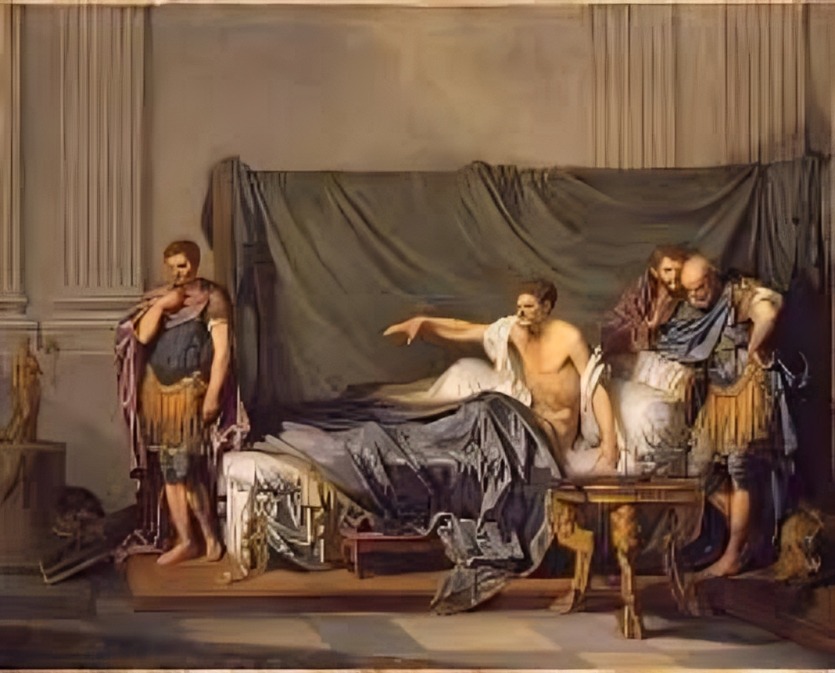
Few Roman emperors have left behind a legacy as contradictory as Caracalla. Rising to power in the early 3rd century CE, he was both admired and despised, remembered for sweeping reforms that shaped Rome for centuries—and for his cruelty that made him one of history’s most hated rulers.
So, what exactly made Caracalla famous, and why was his name cursed long after his death?
His Claim to Fame
The Edict of Caracalla (Constitutio Antoniniana)
Caracalla’s most enduring legacy was his decree in 212 CE that granted Roman citizenship to nearly all free men in the empire. Before this, citizenship was a privilege reserved for a minority—offering legal rights, tax benefits, and social status.
By extending it to millions, Caracalla redefined what it meant to be Roman. Historians debate his motives—some say it was a move to increase tax revenue, others see it as a genuine step toward unifying a diverse empire. Either way, the impact was monumental.
The Baths of Caracalla
Caracalla also became famous for his massive public works, especially the Baths of Caracalla in Rome. These sprawling baths were not just places for bathing but centers of culture, with libraries, gardens, and exercise areas.
The complex was one of the largest architectural achievements of its time, a symbol of imperial grandeur that still stands as a ruinous marvel today.
A Ruthless Warrior Emperor
Caracalla cultivated an image of himself as a soldier first and emperor second. He spent much of his reign on campaign, personally leading his armies and trying to emulate Alexander the Great.
Among his soldiers, this earned him loyalty and respect. He introduced the “Antonine Constitution” pay raise, ensuring soldiers were well-compensated, which strengthened his ties to the military—though it strained Rome’s treasury.
Why He Was Hated
Murder of His Brother Geta
Caracalla shared power briefly with his younger brother Geta after their father, Septimius Severus, died. But the rivalry turned deadly. In 211 CE, Caracalla had Geta murdered—reportedly in their mother’s arms—and then carried out a brutal purge of Geta’s supporters.
Tens of thousands were killed in the aftermath. To many Romans, this fratricide marked him as a tyrant.
His Cruelty and Paranoia
Caracalla ruled through fear. Ancient sources describe him as erratic and merciless, ordering executions at the slightest suspicion. His cruelty was not only political—he massacred the population of Alexandria in 215 CE after being mocked by its citizens.
Such acts made him infamous across the empire.
Heavy Taxation
While his citizenship edict was groundbreaking, many believed it had a darker purpose: to expand the pool of people subject to certain taxes. Combined with the costly military pay raises and grand construction projects, this burdened ordinary people and made Caracalla deeply unpopular with the public.
His Assassination
Ultimately, Caracalla’s reign ended in betrayal. In 217 CE, while traveling to a temple near Carrhae, he was stabbed to death by one of his own bodyguards—likely on orders from the Praetorian Prefect Macrinus, who then seized power.
His death was celebrated by many who had suffered under his rule.
Conclusion
Caracalla remains a paradox in Roman history. He is remembered for expanding Roman citizenship and leaving behind the iconic Baths of Caracalla, achievements that gave him lasting fame. Yet he was equally despised for his violence, cruelty, and oppressive rule, which earned him hatred during and after his lifetime.
In the end, Caracalla’s story is a reminder that even emperors who achieve greatness can be undone by fear, bloodshed, and the abuse of power.
Would you like me to also create a short “Did You Know?” box of fun facts about Caracalla (like his obsession with Alexander the Great or his unusual habits) to make the article more engaging?
