
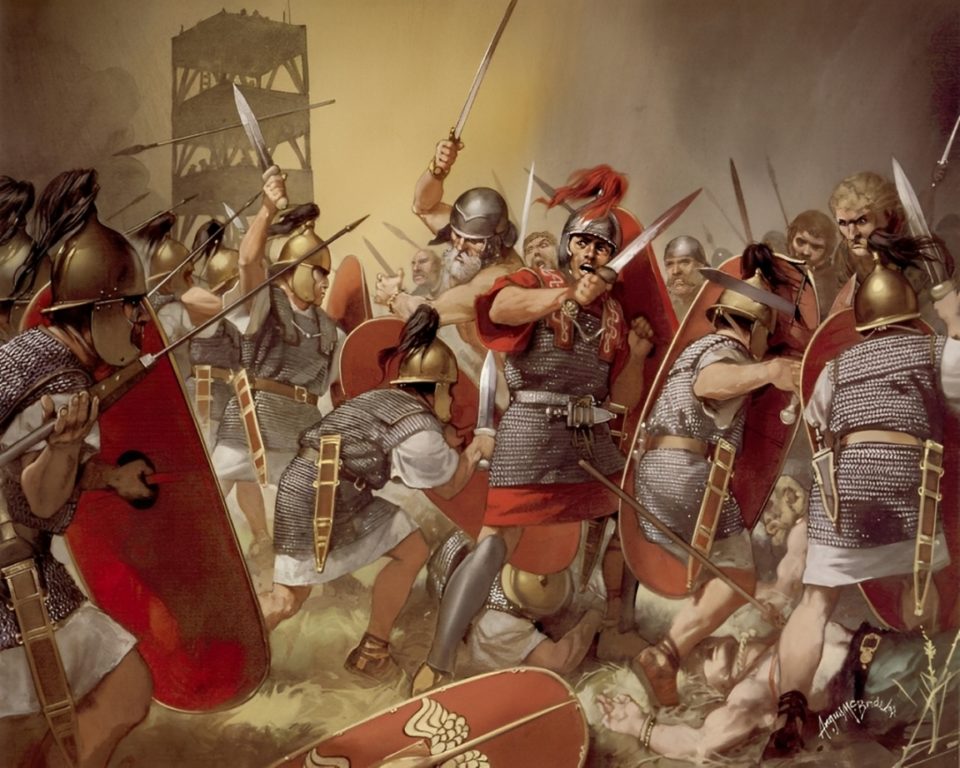
The Roman Empire is renowned for its vast territorial expansions, military prowess, and legendary generals who led Rome to dominance. Among the numerous great military leaders, one stands out as the most successful in terms of conquests: Gaius Julius Caesar. While several Roman generals achieved remarkable victories, including Scipio Africanus, Pompey the Great, and Trajan, Julius Caesar’s campaigns expanded Rome’s borders significantly and left a lasting legacy in world history.
The Rise of Julius Caesar
Julius Caesar was born in 100 BCE into the prestigious but politically weakened Julian family. Despite early setbacks, his political acumen and military genius propelled him to power. His early career saw him rise through the ranks, serving as a military tribune and later as governor of several provinces, where he honed his strategic capabilities. However, it was his campaign in Gaul (modern-day France, Belgium, and parts of Germany) that cemented his reputation as Rome’s most accomplished conqueror.
The Gallic Wars: Rome’s Expansion into Western Europe
Between 58 BCE and 50 BCE, Julius Caesar led the Roman legions in a series of campaigns known as the Gallic Wars. Over nearly a decade, he subdued various Gallic tribes, including the powerful Arverni, led by Vercingetorix, whom Caesar ultimately defeated at the Battle of Alesia in 52 BCE.
Through his military tactics, engineering feats, and psychological warfare, Caesar brought Gaul under Roman control, adding a vast territory to the empire. This conquest not only enriched Rome but also secured its western borders, paving the way for its dominance in Europe.
The Civil War and Expansion of Rome’s Influence
Following his success in Gaul, Caesar’s ambitions led to a confrontation with his former ally, Pompey the Great, in a civil war (49–45 BCE). After crossing the Rubicon River in 49 BCE, Caesar marched on Rome, leading to a decisive conflict that saw Pompey defeated at Pharsalus in 48 BCE. With control over Rome, Caesar pursued Pompey’s remaining supporters, conquering territories in Egypt, North Africa, and Spain.
Caesar’s Egyptian campaign also played a crucial role in Roman history, as he became involved with Cleopatra VII, further solidifying Rome’s influence in the eastern Mediterranean.
Caesar’s Impact on Rome and His Assassination
Beyond his conquests, Caesar’s influence reshaped Rome’s political landscape. He introduced reforms that expanded citizenship, centralized power, and laid the groundwork for the transition from Republic to Empire. However, his growing power alarmed the Senate, leading to his assassination on March 15, 44 BCE. Despite his death, the expansion he initiated would be continued by his heir, Augustus (Octavian), who became Rome’s first emperor.
Other Notable Conquerors: Trajan’s Expansion
While Julius Caesar’s conquests were unparalleled in the late Republic, Emperor Trajan (98–117 CE) expanded Rome to its greatest territorial extent. Trajan’s campaigns in Dacia (modern Romania), Parthia, and Arabia further solidified Rome’s dominance, but his conquests were not as personally driven as Caesar’s military leadership.
Conclusion
Though Rome produced many formidable generals, Julius Caesar stands out as the greatest in terms of personal military achievements and territorial expansion. His conquest of Gaul, victories in civil wars, and influence on Rome’s transformation into an empire make him the most consequential Roman general in history. His legacy endures, shaping military strategy, governance, and the very fabric of Western civilization.
