
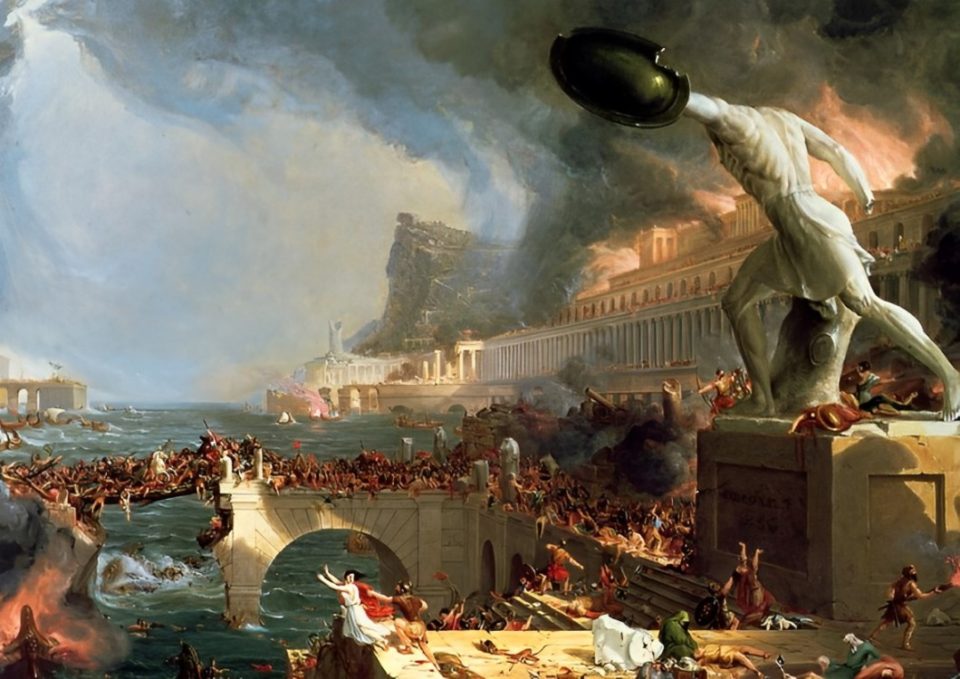
The fall of the Roman Empire is one of history’s most intriguing and studied events. While often attributed to military defeats, political instability, and economic troubles, recent research has highlighted an additional factor that may have contributed significantly to the empire’s decline: climate change. Understanding how environmental shifts impacted the Roman Empire provides valuable insights into the complex interplay between climate and civilization.
The Roman Empire and Its Climate
At its height, the Roman Empire spanned three continents, stretching from Britain to North Africa and from Spain to the Middle East. This vast territory experienced a range of climatic conditions, from temperate in the north to arid in the south. The empire’s stability and prosperity were deeply tied to the climate of the Mediterranean basin, where agricultural productivity was crucial for sustaining its large population.
The Climate of the Roman Empire
During the Roman Empire’s zenith, the climate was relatively stable and favorable for agriculture. The period from around 27 BCE to 250 CE is often referred to as the “Roman Warm Period,” characterized by mild winters and warm, dry summers. This climate allowed for productive farming, which in turn supported a robust economy and a growing population.
However, starting in the late 2nd century CE, evidence suggests that the climate began to shift. This period, known as the “Late Antique Little Ice Age,” saw a cooling trend that had profound effects on the Roman Empire.
The Impact of Climate Change on Agriculture
Agriculture was the backbone of the Roman economy, providing the surplus necessary to feed both the urban population and the military. Climate change had a direct impact on agricultural productivity through altered weather patterns, such as cooler temperatures and increased rainfall in some areas, and prolonged droughts in others.
Decline in Crop Yields
Cooler temperatures and shifting precipitation patterns led to shorter growing seasons and reduced crop yields. The Roman Empire relied heavily on grain production, particularly wheat, which thrived in the warm Mediterranean climate. As the climate cooled, grain production declined, leading to food shortages and higher prices. The empire struggled to maintain its vast urban centers and military outposts without a reliable food supply.
Disruption of Trade Routes
The Roman economy was not only dependent on local agriculture but also on a complex network of trade routes that spanned the empire. The changing climate affected these trade routes, causing disruptions in the supply of essential goods and resources. For example, the cooling climate led to more severe winters and flooding, which damaged infrastructure and made travel and trade more difficult.
Societal and Economic Stress
The economic strain caused by declining agricultural productivity and disrupted trade had significant repercussions on Roman society and governance.
Economic Instability
As food prices rose and shortages became more common, economic instability ensued. The empire faced inflation, and the cost of maintaining the military and administration became increasingly burdensome. This economic stress weakened the empire’s ability to respond to external threats and internal conflicts.
Social Unrest
Food shortages and economic hardship led to social unrest. Riots, strikes, and general dissatisfaction became more common as people struggled to cope with rising prices and declining living standards. This unrest further destabilized the empire and strained its already overstretched resources.
Migration and Invasions
The pressures of climate change and economic instability contributed to migration and invasions. Germanic tribes and other groups, facing their own climate-related challenges, moved into Roman territories. The empire’s weakened military and economic position made it increasingly difficult to defend its borders effectively.
The Interplay Between Climate and Collapse
The fall of the Roman Empire was not solely due to climate change, but rather a combination of factors where climate played a crucial role. The empire’s decline was a complex process involving economic, social, and political dimensions, all of which were exacerbated by environmental changes.
Integrated Factors
Climate change interacted with other stressors, such as political corruption, military overreach, and economic mismanagement. While no single factor caused the collapse, the changing climate was a significant contributing factor that amplified existing vulnerabilities.
Lessons for Modern Times
The Roman experience underscores the importance of understanding how climate can impact societies. Modern civilizations, facing their own climate challenges, can learn from the past. Adapting to environmental changes, diversifying economies, and ensuring food security are crucial strategies to mitigate the impact of climate change on contemporary societies.
Conclusion
The story of how climate change contributed to the decline of the Roman Empire offers valuable insights into the complex relationship between environmental factors and societal stability. As we face our own climate challenges, examining historical precedents can help us better understand and prepare for the impacts of climate change. While the fall of the Roman Empire was driven by multiple factors, the role of climate change in straining the empire’s resources and exacerbating its vulnerabilities is a poignant reminder of the delicate balance between human societies and their environment.
