
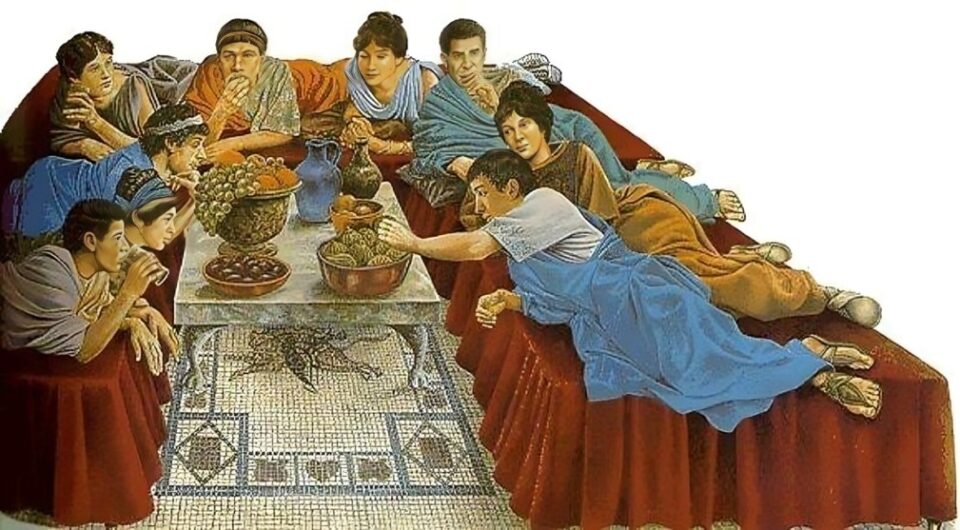
Picture this: a lavish Roman banquet, gold-trimmed dishes piled high, wine flowing freely, and guests stretched out on couches, leaning on one elbow as they eat. It might seem strange to modern eyes—eating while lying down? But in ancient Rome, reclining during meals wasn’t just common; it was a symbol of power, luxury, and status.
So, why did the ancient Romans eat while reclining? The answer reveals a lot about their social structure, cultural values, and even their views on health and digestion.
The Origins: A Tradition Borrowed
The practice of reclining while eating didn’t start with the Romans. They borrowed it from the ancient Greeks, who themselves had adopted elements of the custom from Eastern cultures, like the Persians. But the Romans didn’t just copy—they turned it into a cultural institution.
By the time of the Roman Republic and especially during the Empire, reclining at the dinner table had become a clear marker of elite society. You weren’t just relaxing—you were displaying your social rank.
The Triclinium: Where Meals Became Theater
In wealthy Roman homes, meals were served in a specially designed dining room called the triclinium. The word itself comes from Greek, meaning “three couches.” These U-shaped arrangements allowed for nine people to dine at once—three per couch—while servants moved through the center, serving food and wine.
Guests would recline on their left side, propping themselves up with cushions and using their right hand to eat. This posture wasn’t just about comfort—it was a performance of leisure, wealth, and status. If you could afford to lie around while others fed you, you were clearly someone of importance.
Who Got to Recline?
Not everyone. Reclining was a privilege reserved for freeborn Roman men of the upper classes. Women were generally expected to sit upright, especially in earlier Roman history. Over time, elite women were sometimes allowed to recline at private banquets, but this was still seen as a sign of unusual status or a progressive host.
Slaves and the lower classes? They served the meal. They didn’t eat reclining—they might not have eaten at all.
Digestion and “Wellness” in Ancient Rome
Interestingly, some Romans believed that reclining aided digestion. While modern science doesn’t exactly support this (lying down after eating can actually cause indigestion), the ancients thought that reclining allowed the stomach to better process food. This belief, combined with their love of long, multi-course feasts, made lying down the ideal position for the upper class Roman diner.
Banquets could last for hours, and being in a semi-reclined position certainly helped guests stay comfortable through multiple courses of meats, fruits, cheeses, and wine.
More Than Just Eating: A Social and Political Affair
Roman meals were rarely just about food. They were social rituals, political gatherings, and opportunities to show off wealth, alliances, or influence. Reclining emphasized that the meal wasn’t rushed—everything about it was meant to project leisure, luxury, and refinement.
To be invited to recline at someone’s table was an honor. To host a reclining dinner was a power move.
Conclusion
Reclining while eating in ancient Rome wasn’t laziness—it was a language. It spoke of wealth, class, power, and cultural identity. It was about showing that you had the time, means, and freedom to enjoy life’s pleasures slowly and publicly.
So the next time you stretch out on your couch with a plate of food, remember: you’re echoing a practice once reserved for the elite of a powerful empire. You might not be in a Roman triclinium, but in a small way, you’re part of a very old tradition.
