
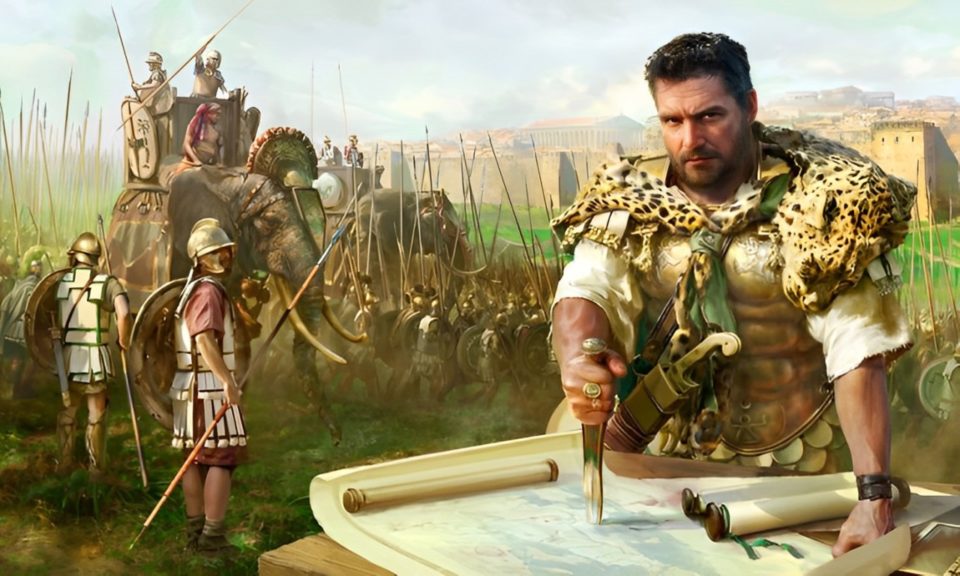
The city of Carthage, once Rome’s bitter rival in the Punic Wars, was left in ruins after its defeat in 146 BCE. For over a century, the name Carthage symbolized the might of Rome’s military triumph. However, in an intriguing twist of history, Julius Caesar, Rome’s most powerful leader, chose to rebuild Carthage during his reign. This decision, seemingly contradictory given Carthage’s legacy as Rome’s enemy, was deeply rooted in strategic, political, and economic factors. Understanding why Caesar revived Carthage sheds light on his vision for Rome’s expansion and the pragmatism that defined his leadership.
The Historical Context: Carthage’s Fall and Rome’s Rise
To grasp why Caesar rebuilt Carthage, it is essential to understand the history leading up to its destruction. Carthage, a powerful Phoenician city-state located in modern-day Tunisia, posed the greatest threat to Roman dominance in the Mediterranean during the Punic Wars (264–146 BCE). After three brutal wars, the Romans finally crushed Carthage in 146 BCE, leveling the city and sowing its land with salt—a symbolic act to ensure that nothing would grow there again.
For over a century, Carthage remained desolate, its ruins a reminder of Rome’s supremacy. But the city’s location, perched on a prime spot in North Africa near valuable trade routes, meant it was too strategic to remain abandoned indefinitely.
Caesar’s Vision for a Roman Empire
By Julius Caesar’s time, Rome had already established itself as the dominant power in the Mediterranean.But as the empire grew, so too did its economic demands and the need for more territories to support its expanding population. North Africa, with its fertile land and strategic position along the Mediterranean, represented untapped potential. Carthage’s location made it ideal for trade, agriculture, and control of key routes.
Caesar’s decision to rebuild Carthage was part of his broader vision to strengthen Rome’s economy, expand its influence, and ensure a stable empire. As a pragmatic leader, Caesar understood that Rome needed prosperous cities to maintain its economic and military might, and Carthage could serve as a vital hub for both.
Economic Motivations: Carthage’s Fertile Land and Trade Routes
One of the primary reasons Caesar chose to rebuild Carthage was its immense economic potential. Despite the symbolic devastation of its land, the area surrounding Carthage remained fertile, ideal for growing crops and supporting agriculture. North Africa had long been known as a breadbasket, producing grain, olive oil, and other essential resources. Reviving Carthage would allow Rome to tap into these resources, feeding the growing empire and fueling its military campaigns.
Additionally, Carthage’s proximity to key Mediterranean trade routes made it a natural center for commerce. By restoring the city, Caesar could enhance Rome’s control over trade between Europe, Africa, and the East, ensuring a steady flow of wealth into Roman coffers. This economic boom would also help Caesar solidify his popularity among the Roman people, as a prosperous empire benefited everyone.
Political Strategy: Strengthening Roman Influence in North Africa
Caesar’s decision to rebuild Carthage was not just about economics; it was also a calculated political move to secure Roman dominance in North Africa. While Carthage had been destroyed, North Africa was still home to other powerful kingdoms and tribes. Re-establishing Carthage as a Roman city would serve as a statement of Rome’s authority, creating a Roman stronghold in the region.
By founding a colony at Carthage, Caesar also helped settle thousands of veterans who had fought in his campaigns. This was a common practice in the Roman Empire, where veterans were given land in newly conquered or rebuilt areas as a reward for their service. This had the dual benefit of both stabilizing the region and ensuring loyalty to Caesar’s regime.
Caesar’s Legacy: A Pragmatic Leader Focused on Expansion
Caesar’s decision to rebuild Carthage reflects his pragmatic approach to leadership. Unlike earlier Roman leaders who might have been motivated by revenge or pride, Caesar was focused on what would benefit the empire in the long term. He understood that rebuilding Carthage could help solidify Rome’s economic and political power, rather than leaving a symbol of destruction that no longer served any purpose.
It’s also important to note that Caesar’s rebuilding efforts extended beyond Carthage. He had a vision of expanding Rome’s influence through urban development, founding colonies in places like Corinth and Gaul. This policy of urbanization helped transform Rome from a city-state into a sprawling empire that dominated the ancient world.
The Rebirth of Carthage: From Ruins to Prosperity
After Caesar’s assassination in 44 BCE, his plans to rebuild Carthage were carried out by his successor, Augustus. Carthage was officially refounded as Colonia Julia Carthago, in honor of Julius Caesar. The new city quickly grew into one of the most prosperous cities in the Roman Empire, rivaling Alexandria and Rome itself in terms of wealth and population.
Carthage became an essential part of the Roman Empire’s infrastructure, producing grain, olives, and other goods that were shipped across the empire. It also served as a cultural and administrative hub, showcasing Roman architecture, culture, and governance in North Africa.
Conclusion
The decision to rebuild Carthage was one of the many examples of Caesar’s forward-thinking and strategic mind. By reviving a once-great enemy city, Caesar demonstrated that Rome’s power was not just about military conquest but also about economic growth, cultural influence, and pragmatic expansion. Carthage, once a symbol of resistance to Rome, became a testament to the empire’s resilience and adaptability. Through Caesar’s vision, the ruins of Carthage were transformed into one of the shining jewels of the Roman Empire, proving that even history’s greatest enemies can become assets under the right leadership.
