
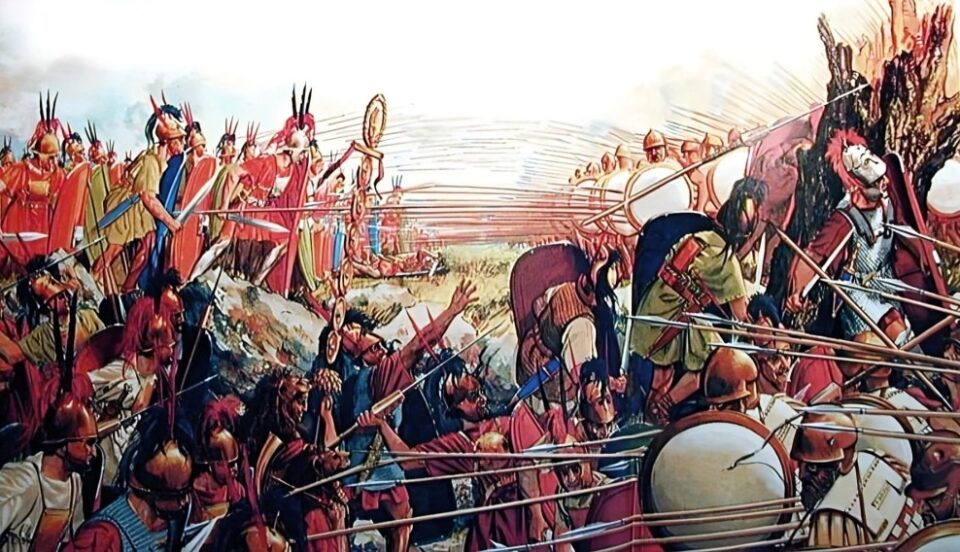
Sparta—the legendary Greek city-state famed for its disciplined warriors, unbreakable phalanx, and the iconic stand at Thermopylae. For centuries, it stood as a symbol of military power and cultural pride. But even Sparta, with all its strength and history, eventually fell to a rising superpower: Rome.
So, how did this happen? How did the most feared warriors of ancient Greece come under the control of the Roman Republic?
Let’s explore the key events and political shifts that led to Sparta’s fall to Rome.
Sparta After Its Golden Age
By the time Rome began expanding into Greece in the 2nd century BCE, Sparta was long past its prime. The glory days of Leonidas and hoplite dominance had faded. After suffering defeat in the Battle of Leuctra in 371 BCE against Thebes, Sparta’s power declined rapidly. Its rigid social system was breaking down, its population was shrinking, and it no longer held the military edge it once did.
By the 3rd century BCE, Sparta had become a regional power at best, often caught in the middle of larger Greek conflicts and no longer the feared hegemony it once was.
The Roman Invasion of Greece
Rome began its involvement in Greek affairs during the Macedonian Wars (215–148 BCE), where it fought against the powerful Kingdom of Macedon. As Rome defeated one Greek power after another, it gradually established dominance over the entire region.
Sparta, however, was not Rome’s initial target. The real flashpoint came with the Achaean League, a Greek confederation of city-states in southern Greece that was aligned with Rome—until tensions boiled over.
Sparta vs. the Achaean League
By the mid-2nd century BCE, Sparta had become increasingly isolated and resistant to Achaean control. The Achaean League wanted to absorb Sparta fully and strip it of its independence. In response, Sparta pushed back, seeking to regain autonomy—even appealing to Rome for protection at one point.
Ironically, Sparta’s appeal to Rome helped spark further conflict between Rome and the Achaean League.
Rome Crushes the Achaean League (146 BCE)
Tensions between Rome and the Achaeans escalated into full-scale war. In 146 BCE, the Roman general Lucius Mummius led a campaign that destroyed Corinth, one of the Achaean League’s most powerful cities, and effectively ended Greek independence.
With the Achaean League dissolved and Greece brought under Roman control as the province of Achaea, Sparta was subdued as part of that broader conquest.
Rome didn’t need to storm Sparta in a dramatic siege. By this time, Sparta was politically weak, militarily outdated, and unable to resist the sheer power of Rome.
What Happened to Sparta Under Roman Rule?
Interestingly, Rome allowed Sparta to retain some local autonomy for a while. The city became something of a curiosity—a tourist attraction for wealthy Romans fascinated by its legendary warrior culture.
Spartan traditions like agoge training and public rituals were preserved more as historical performances than real political or military power. Sparta became a shadow of its former self—respected for its past, but no longer feared in the present.
Conclusion
Sparta’s fall wasn’t marked by one great battle with Rome—it was the result of gradual decline, shifting alliances, and changing times. Rome didn’t need to conquer Sparta with brute force. By the time it extended its power across Greece, Sparta was already weakened and politically isolated.
In the end, the mighty Spartan legacy was absorbed into a much larger empire—one that valued order, control, and expansion more than the fierce independence of a once-unbreakable city-state.
Let me know if you’d like this turned into a classroom worksheet, timeline, or social media history reel!
Tools
