
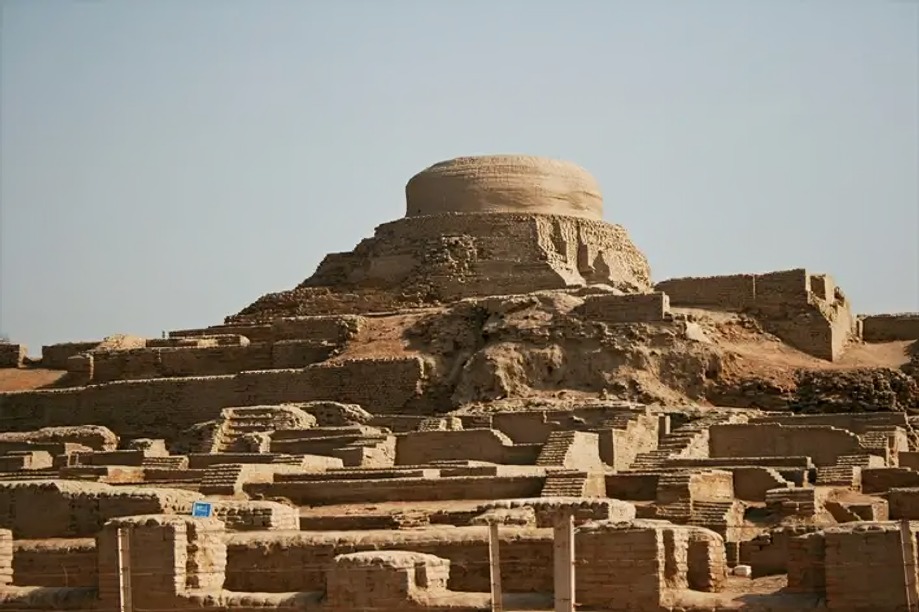
Over 4,000 years ago, the cities of Mohenjo-Daro and Harappa flourished in the fertile Indus River Valley. As part of the great Indus Valley Civilization, these cities boasted advanced urban planning, complex drainage systems, and vibrant trade networks. Their people lived in well-built brick houses, traded with distant lands, and enjoyed a level of organization rare for the ancient world.And then—without clear explanation—they vanished.
No deciphered written records remain to tell us why. But clues uncovered by archaeologists and scientists have helped form compelling theories about the causes behind this mysterious decline.
A Civilization Ahead of Its Time
Mohenjo-Daro (“Mound of the Dead”) and Harappa were urban masterpieces. Streets were laid in perfect grids, drainage systems carried waste away, and standardized brick sizes ensured uniformity in construction. Trade connected them to Mesopotamia, and their craftsmanship in beads, seals, and pottery was unmatched.
But around 1900 BCE, these thriving cities began to fade into history.
Climate Change and Drought
Evidence from ancient climate studies suggests that the monsoon rains weakened during this period. With less rainfall, agriculture suffered. The once-lush plains turned dry, and food shortages may have driven people away from the urban centers in search of better resources.
Shifting Rivers and Floods
While drought may have been a long-term issue, flooding could have caused sudden destruction. Excavations at Mohenjo-Daro reveal layers of silt, hinting at repeated floods. If the Indus River or its tributaries changed course, it could have disrupted farming, water supply, and trade.
Decline in Trade Networks
The Indus Valley Civilization thrived on long-distance trade with regions like Mesopotamia. Archaeological evidence shows that these trade routes weakened or collapsed around the same time the cities declined—possibly due to instability in neighboring civilizations or environmental changes affecting travel and shipping.
Social and Political Changes
With environmental and economic pressures mounting, the social structure of these cities may have broken down. Without strong leadership or cooperative systems, urban centers could have been abandoned in favor of smaller, rural settlements where survival was easier.
Conclusion
The fall of Mohenjo-Daro and Harappa was probably not caused by a single event. Instead, it was likely the result of a combination of factors—climate change, river shifts, economic decline, and social upheaval. Over time, these pressures made large city life unsustainable, leading to gradual abandonment rather than sudden destruction.
Although their disappearance remains a mystery, their legacy continues. The urban planning, craftsmanship, and trade systems of the Indus Valley Civilization still inspire admiration today, reminding us of a people who mastered city life thousands of years before the modern era.
If you want, I can also write you a “Step-by-Step Timeline of the Rise and Fall of Mohenjo-Daro and Harappa” so the story becomes even more engaging for readers who prefer chronological history. Would you like me to prepare that?
