
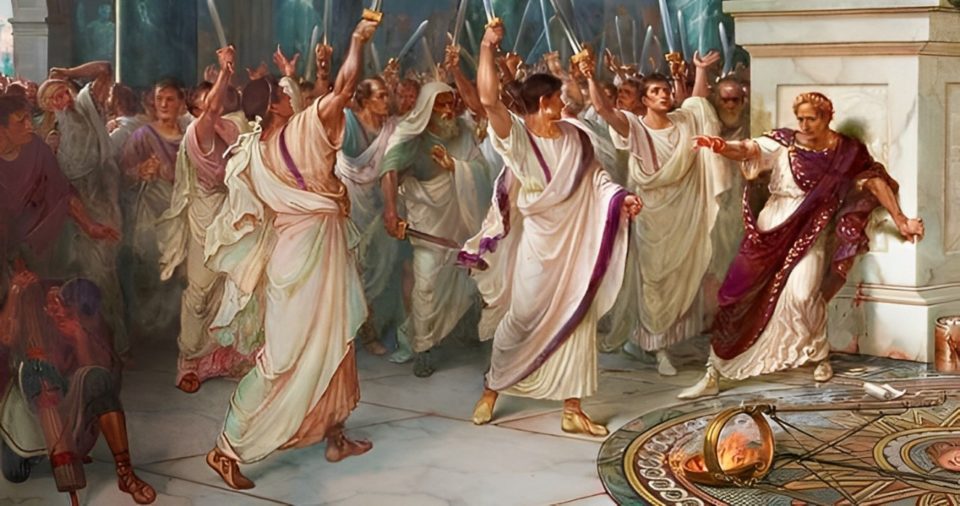
The assassination of Julius Caesar on March 15, 44 BCE, known as the Ides of March, sent shockwaves throughout Rome and the wider Roman Empire. This pivotal moment in history not only marked the end of Caesar’s reign but also ignited a series of events that would reshape the political landscape of Rome. The reactions of Roman citizens to Caesar’s assassination were varied and complex, influenced by their social standing, political affiliations, and personal beliefs.
Shock and Disbelief
For many Roman citizens, the news of Caesar’s assassination was met with shock and disbelief. Caesar had been a dominant figure in Roman politics, revered by some as a leader who brought stability and reforms to a chaotic society. Many citizens had supported him during his rise to power and had come to see him as a champion of the people. Thus, the sudden news of his violent death left them grappling with uncertainty and fear regarding the future of their city.
As rumors spread throughout Rome, confusion reigned. Citizens wondered who was responsible for this act and what it meant for their own safety and well-being. The chaotic atmosphere in the immediate aftermath of the assassination demonstrated the deep emotional ties many had to Caesar, regardless of their political views.
Supporters’ Outrage
Caesar had cultivated a strong following among the common people, and his assassination ignited outrage among his supporters. The populares, a political faction that advocated for the rights of the lower classes, rallied around the memory of Caesar, seeing him as a martyr for their cause. Many citizens who benefited from his reforms—such as land redistribution, debt relief, and grain handouts—expressed their anger towards the conspirators, viewing them as traitors who had betrayed the will of the people.
Public displays of mourning and anger filled the streets of Rome. Supporters gathered in large numbers, demanding justice for Caesar and vowing to avenge his death. The atmosphere was charged with emotion, as the citizens felt that they had lost a leader who truly represented their interests.
Skepticism and Caution
Conversely, not all citizens mourned Caesar. Some members of the senatorial class and those who had opposed his rule viewed the assassination as a necessary act to restore the Republic’s traditional values and authority. For them, Caesar had accumulated too much power, undermining the Senate’s role and threatening the balance of governance in Rome.
These skeptics adopted a cautious approach, recognizing that while Caesar’s death might eliminate one source of tyranny, it could also lead to further instability and chaos. They were aware that the political landscape in Rome was shifting rapidly and understood that the power vacuum left by Caesar’s assassination could lead to conflict among rival factions.
Public Gatherings and Mourning
In the days following the assassination, public gatherings and protests erupted throughout Rome. Citizens mourned not only for Caesar but also for the ideals he represented. They held ceremonies and memorials, commemorating him as a hero who had fought for their rights and welfare.
At Caesar’s funeral, delivered by Marc Antony, a passionate oration stirred the emotions of the crowd, further fueling their grief and anger. Antony’s speech painted Caesar as a beloved leader who had been unjustly murdered, igniting a wave of public sentiment against the conspirators. This event marked a turning point in public opinion, transforming Caesar’s legacy into that of a martyr.
Aftermath and Division
The immediate aftermath of Caesar’s assassination saw the Roman populace divided. While many rallied in support of Caesar’s memory, others began to align with the conspirators, seeking to preserve their own political interests. The ensuing power struggle led to civil war, and the public’s sentiments shifted once again as they navigated the turbulent political landscape.
The conflict ultimately culminated in the rise of Augustus, Caesar’s adopted heir, who would bring an end to the Republic and establish the Roman Empire. The reactions of Roman citizens to Caesar’s assassination set the stage for a dramatic transformation in Rome, illustrating the complex interplay between loyalty, power, and public sentiment.
Conclusion
The assassination of Julius Caesar elicited a wide range of reactions from Roman citizens, reflecting the deep divisions and complexities within Roman society. Shock, outrage, skepticism, and mourning characterized the responses to this pivotal event, each shaping the course of history in different ways. Ultimately, the legacy of Caesar and the aftermath of his assassination would resonate through time, influencing not only the political landscape of Rome but also the future of governance and leadership across the world.
