
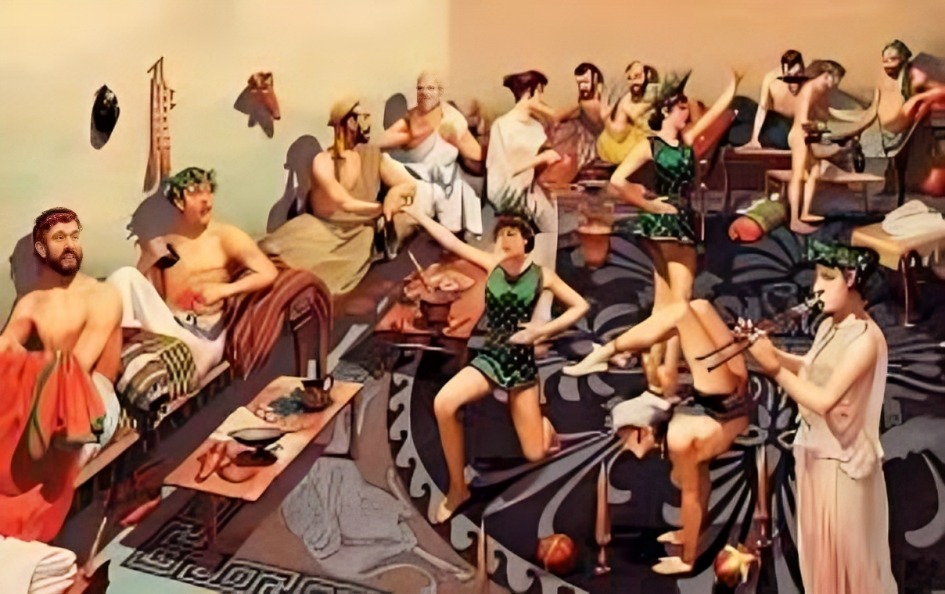
Imagine a grand Roman feast. Platters of roasted meats, bowls of olives and dates, flowing wine, poetry recitals, and soft music. But one thing stands out: no one is sitting at a table. Instead, they’re lying down—leaning on one elbow, half-reclined on couches, plucking food from low tables.
To modern eyes, it might seem strange—even lazy. But in ancient Rome, reclining while dining wasn’t just about comfort. It was a deeply symbolic act, rich in cultural, social, and political meaning.
So, what’s the real reason ancient Romans dined lying down? Let’s dig into the history—and the message behind the posture.
A Tradition Borrowed from the Greeks
The Romans didn’t invent this practice—they borrowed it. The custom of reclining while eating came from the ancient Greeks, especially among the elite. For both cultures, reclining symbolized freedom and status.
To recline at a meal was to say:
“I am not a slave. I am not a laborer. I have time to enjoy life.”
In Greek symposia and Roman convivia (dinner parties), only free men—and eventually elite women—could recline. Slaves, workers, and the poor had to eat sitting upright or standing, if they had the time or space to eat leisurely at all.
Reclining Was a Power Move
In Roman society, everything had meaning—especially posture. Reclining while eating was a way to display wealth, leisure, and privilege. Only the upper classes had the time and space to eat slowly, socialize, and enjoy entertainment while dining.
Meals could last for hours. The triclinium—a formal Roman dining room—was arranged with three couches in a U-shape around a low table. Guests reclined on their left side, propped up on their elbow, while eating with their right hand. The fourth side was left open for slaves to serve food and wine.
Reclining said:
“I am educated.”
“I don’t rush.”
“I have people who serve me.”
Food Was Only Part of the Experience
In Roman culture, dinner wasn’t just about eating—it was an event. Music, philosophy, poetry, gossip, and debate filled the hours. Reclining encouraged this kind of interactive, social atmosphere. It allowed diners to relax, shift positions, and converse easily with neighbors.
In short, it turned eating into a performance of status and sophistication.
The Role of Gender and Changing Norms
Early on, Roman women were expected to be modest and were often excluded from reclining at meals. However, as Rome grew more cosmopolitan—especially under Greek influence—wealthy women began to recline at feasts alongside men.
This shift in dining customs reflected larger changes in gender roles, class identity, and cultural blending within the Empire.
Spiritual Symbolism and the Afterlife
Reclining at meals even carried a spiritual significance. In Roman funerary art, the dead are often shown reclining and enjoying a feast—symbolizing a peaceful, eternal banquet in the afterlife.
To recline while dining wasn’t just worldly—it was divine.
So Why Don’t We Recline Today?
As empires faded and dining customs changed, the formal, slow-paced feasts of the Roman elite gave way to more practical, upright meals. Reclining became associated with indulgence and decay—especially as later Christian culture emphasized humility and moderation.
Today, we prefer the ergonomics of chairs and dining tables. But the Roman way of dining lives on in our idea of dinner parties, where the focus is as much on conversation and atmosphere as on food.
Conclusion
The real reason Romans dined reclining wasn’t laziness or convenience. It was a powerful cultural signal. To recline was to say: “I have made it. I live well. I am free.”It was posture as performance, dining as theater, and food as a backdrop to status, identity, and connection.
So the next time you stretch out on the couch with a snack in hand, know this: you’re participating in a tradition that once belonged to emperors, senators, and philosophers.
Would you like a visual version of this article or a short script for social media? Let me know!
