
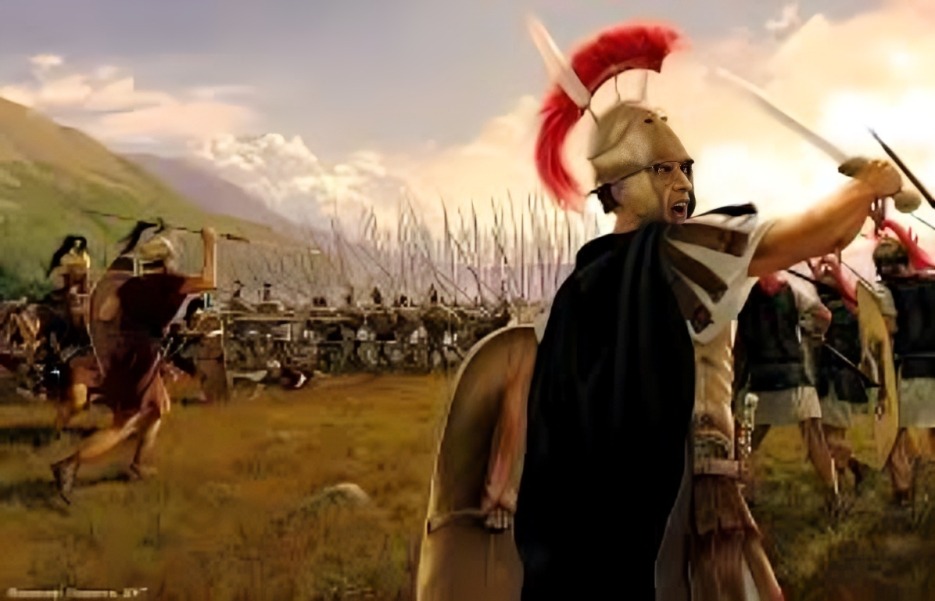
In the late 2nd century BCE, the Roman Republic was facing both internal instability and external threats. Amid this turmoil, one military reformer emerged who would leave a lasting mark on the structure and strategy of Rome’s most powerful institution: the Roman army. Gaius Marius, a general and statesman, initiated sweeping reforms that fundamentally restructured Rome’s military, laying the foundation for the professional armies of the Roman Empire.
This article explores how Marius transformed the Roman army—from its composition to its chain of command—and how his decisions influenced Rome’s rise to dominance and the eventual fall of the Republic.
Rome Before Marius: A Citizen-Militia
Before the Marian Reforms, Rome’s army operated on a citizen-militia model. Only property-owning citizens could enlist, as soldiers were expected to supply their own weapons and armor. Military service was seasonal and temporary, and soldiers returned to their farms between campaigns.
This model was effective when Rome’s enemies were local and campaigns brief, but as conflicts extended into distant territories and dragged on for years, the limitations became obvious. Fewer men qualified for service, and extended campaigns disrupted agriculture and trade. Rome needed a solution—and Gaius Marius provided one.
The Marian Reforms: A New Roman Army
Gaius Marius introduced several crucial reforms around 107 BCE that forever changed the structure and nature of the Roman military.
Opening the Ranks to the Capite Censi (Landless Poor)
Marius abolished the property requirement for military service. Now, even the poorest Roman citizens—the capite censi—could enlist. This dramatically increased the recruitment pool and gave Rome a standing, professional army.
State-Supplied Equipment
Because many new recruits could not afford their own gear, the state began providing standardized weapons, armor, and supplies. This created uniformity in the army and ensured all soldiers were adequately equipped.
Cohort System Replaces the Manipular Legion
Marius reorganized the army into cohorts rather than the older, more flexible manipular formations. A legion was now made up of 10 cohorts, each consisting of around 480 soldiers. This simplification made the army easier to manage and more cohesive in battle.
Standardized Training and Discipline
With professional soldiers came professional standards. Soldiers trained year-round, followed strict routines, and became more experienced. Marius emphasized mobility, stamina, and discipline—hallmarks of future Roman military success.
The Eagle Standard (Aquila)
Marius introduced the aquila, or eagle standard, as the sacred emblem of each legion. This fostered unit pride and loyalty, making the eagle a symbol of Roman military honor and morale.
Retirement and Rewards (Land Grants)
To incentivize long-term service, Marius promised land to retiring soldiers. Although controversial, this practice became common and bound soldiers’ loyalty more to their generals—who secured their rewards—than to the state itself.
Political Consequences and the Rise of the Warlord
While the Marian Reforms made the Roman army more powerful, they also created unintended consequences. By making soldiers dependent on generals for their post-service rewards, loyalty shifted from the Senate to individual commanders. This paved the way for the rise of political warlords like Sulla, Pompey, and eventually Julius Caesar—each with personal armies willing to defy the state.
Marius himself clashed with Sulla in a deadly power struggle that foreshadowed the civil wars that would end the Republic.
Conclusion
Gaius Marius was both a visionary and a cautionary figure. His military reforms professionalized Rome’s legions, enabling centuries of dominance and territorial expansion. Yet, in doing so, he also shifted the center of military power from the Senate to the generals—planting the seeds of internal conflict.
The army Marius created was no longer a seasonal militia of citizen-farmers, but a full-time, loyal fighting force that could conquer continents—and challenge the very government that commanded it.
