
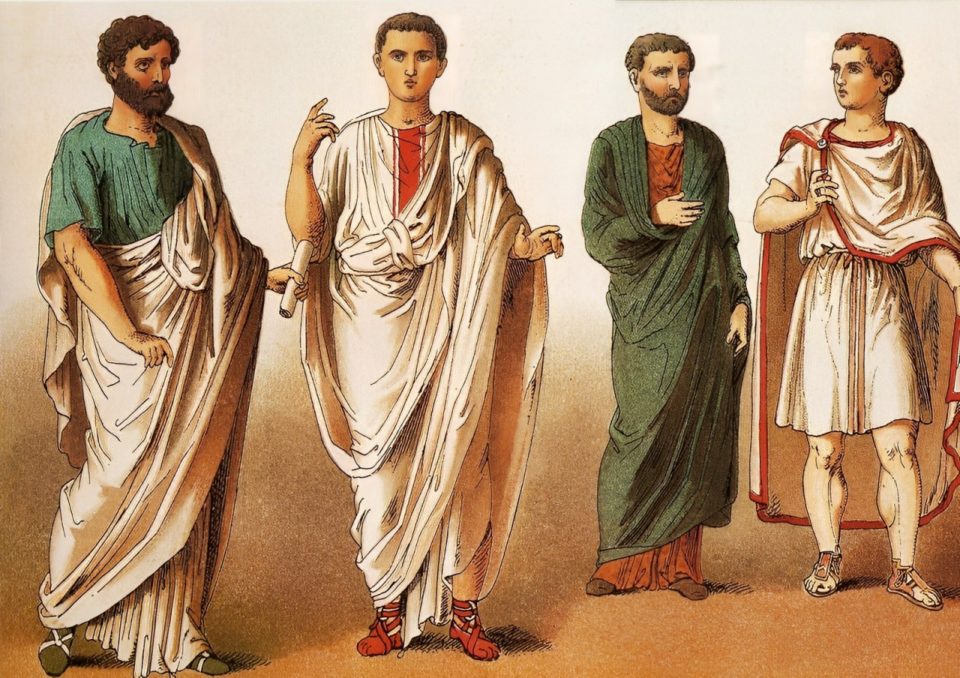
The toga is one of the most iconic symbols of ancient Roman culture, often depicted in art, movies, and literature. It was more than just a piece of clothing; the toga held significant cultural, political, and social meaning in ancient Rome. But why did the Romans wear togas, and what made this garment so important in their society? In this article, we’ll explore the origins, significance, and symbolism behind the toga, and why it became an essential part of Roman life.
The Origins of the Toga
The toga originated from the Etruscans, a civilization that predated the Romans in Italy. It was initially a simple piece of fabric, draped over the body, and used by both men and women. When the Romans adopted the toga, it evolved into a distinctly Roman garment, reserved mainly for men and used in formal and public settings.
The toga was typically made from wool and was an oversized, semi-circular cloth that could be up to 20 feet (6 meters) long. It required careful draping, making it a garment that was both challenging to wear and a display of status.
Symbolism and Social Status
In Roman society, the toga became more than just an article of clothing; it was a symbol of Roman citizenship and authority. Only freeborn Roman male citizens were allowed to wear a toga. Slaves, foreigners, and women (with few exceptions) were excluded, which made the garment a clear marker of one’s status and legal rights.
The toga was also used to signal different social ranks:
Toga Virilis: This plain white toga was worn by adult male citizens to signify manhood and full citizenship. Boys would wear a toga praetexta (with a purple border) until they came of age, around 14-16 years old.
Toga Praetexta: Worn by senators, magistrates, and certain priests, this toga had a purple stripe along the edge. It signified authority and was also worn by young boys before they entered adulthood.
Toga Candida: Candidates for public office wore this brilliant white toga, which was treated with chalk to make it brighter. The word “candidate” actually comes from “candidus,” meaning bright or shining, due to this toga’s color.
Toga Pulla: This dark-colored toga was worn during times of mourning. It reflected somber occasions or times of personal or national grief.
Toga Picta: Reserved for emperors and victorious generals during triumphs, this toga was richly embroidered and dyed purple, a color associated with royalty and divinity in Roman culture.
Why Was the Toga So Important?
The toga was significant for several reasons:
Expression of Citizenship: The toga was a visual representation of a person’s legal status as a Roman citizen. Wearing a toga in public was a way to display one’s citizenship rights, especially in a society where legal and social hierarchies were rigid.
Public Office and Authority: The toga, particularly the toga praetexta and toga picta, was used by those in positions of power. It visually communicated authority, dignity, and the responsibilities associated with public office.
Ceremonial and Formal Wear: The toga was not worn daily due to its impracticality and size. Instead, it was reserved for formal events, such as public speeches, religious ceremonies, court appearances, and public festivals. Wearing a toga at these events was a sign of respect for the Roman customs and institutions.
Cultural Identity: For the Romans, the toga was a unique garment that set them apart from other cultures. Other ancient civilizations had their own distinct clothing styles, but the toga was a uniquely Roman invention. It became a symbol of Rome’s cultural identity and tradition, distinguishing Roman citizens from others.
Practical Challenges of Wearing a Toga
Despite its symbolic importance, wearing a toga was not an easy task. The toga was large and heavy, requiring careful draping and assistance to put on correctly. Due to its size and the effort needed to maintain it, the toga was impractical for daily use. Romans preferred simpler tunics for everyday wear, reserving the toga for special occasions.
It was also considered improper for a Roman citizen to be seen in public without the toga during formal events, which added a layer of social pressure. The effort involved in wearing a toga properly further emphasized the privilege of those who could afford to have one and wear it regularly.
Decline of the Toga
As the Roman Empire expanded and evolved, the toga gradually became less common. By the later stages of the Roman Empire, togas were seen as cumbersome and outdated, especially as other forms of clothing became more practical. Eventually, the toga was worn almost exclusively during official ceremonies, and by the time the Roman Empire fell, it had largely disappeared from everyday fashion.
Conclusion
The toga was much more than just a piece of fabric; it was a symbol of Roman identity, citizenship, and power. Reserved for men and used in formal public life, the toga communicated social status and authority, playing a crucial role in Roman society. While it may seem impractical by modern standards, the toga’s legacy as a cultural and political symbol lives on as an iconic representation of ancient Rome.
