
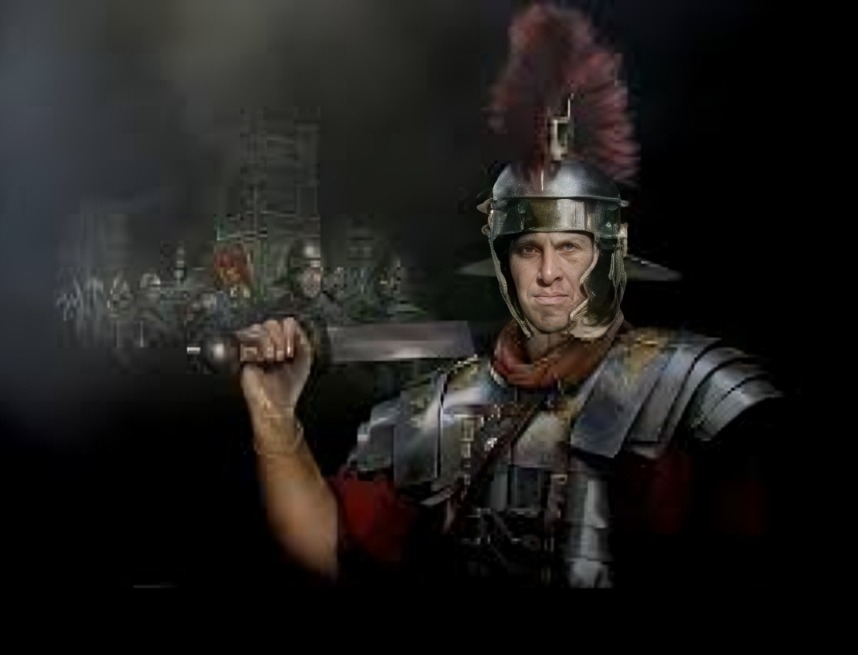
When we think of the Roman Empire, one of the most iconic images that comes to mind is that of the Roman legionary—disciplined, armored, and nearly unstoppable. For centuries, Roman legions formed the backbone of the Empire’s military power, helping Rome expand its reach across Europe, North Africa, and the Middle East. But after the fall of the Western Roman Empire in 476 AD, a question lingers: what happened to those legendary legions?
Did they vanish overnight? Were they destroyed? Or did they evolve into something else entirely? Here’s what history tells us.
The Empire Didn’t Fall All at Once
First, it’s important to understand that the “fall of Rome” wasn’t a single dramatic event, but rather a slow decline over many years. By the time the last Western Roman Emperor, Romulus Augustulus, was deposed in 476 AD, many legions had already been disbanded, defeated, or absorbed by local powers.
In fact, many Roman soldiers had long been non-Roman recruits—Germans, Gauls, and other groups who had been hired or granted citizenship in exchange for service. These soldiers had more loyalty to their local commanders or tribes than to Rome itself by the 5th century.
Some Legions Became Local Armies
As the Western Empire lost control over its territories, regional generals, governors, and even local warlords began to take charge of whatever troops remained. These former legions became private armies, defending small kingdoms or cities. Some commanders declared themselves kings or dukes, using their Roman-trained forces to build new powers.
For example:
- In Gaul (modern-day France), Roman military traditions survived in the early Frankish kingdoms.
- In Italy, some Roman units fought for the Ostrogothic and later Lombard rulers.
- In Spain, former Roman soldiers served new Visigothic rulers.
Many Were Absorbed Into Barbarian Armies
By the time Rome fell, many “barbarian” groups such as the Visigoths, Vandals, Ostrogoths, and Franks had fought both against and alongside Roman forces. After the Empire’s collapse, many Roman soldiers simply switched sides, either by choice or by force.
In these new barbarian-led kingdoms, former Roman legions provided:
- Military training
- Tactics and organization
- Latin-language command structures
This blend helped shape the early medieval European armies that would emerge in the centuries that followed.
The Eastern Roman Empire (Byzantine Empire) Continued the Legacy
While the Western Roman Empire fell in the 5th century, the Eastern Roman Empire, also known as the Byzantine Empire, lived on for almost another thousand years. Its capital was Constantinople (modern-day Istanbul), and it continued using Roman military structures and tactics.
Many Roman legions from the East simply continued their duties under the new name. Over time, the Byzantine army evolved, but the influence of Roman discipline and command structure remained.
The Roman Identity Didn’t Die
Even after the legions themselves faded, the idea of being Roman didn’t disappear. Many medieval leaders—from Charlemagne to the Holy Roman Emperors—claimed to be successors of Rome. Roman military traditions, engineering knowledge, and law were preserved and adapted, especially in the Byzantine world and the Latin West.
The Roman legion may have disappeared in form, but in spirit, it lived on in knights, mercenary bands, feudal levies, and even modern military organization.
Conclusion
The Roman legions didn’t vanish—they transformed. Some became the armies of barbarian kings. Others merged into the structure of the Byzantine Empire. A few simply faded into local militias. But their tactics, discipline, and influence stretched far beyond the fall of Rome.
Though their eagle standards may have been lowered, the memory of the Roman legions marched on—quietly shaping the future of Europe’s armies for centuries to come.
