
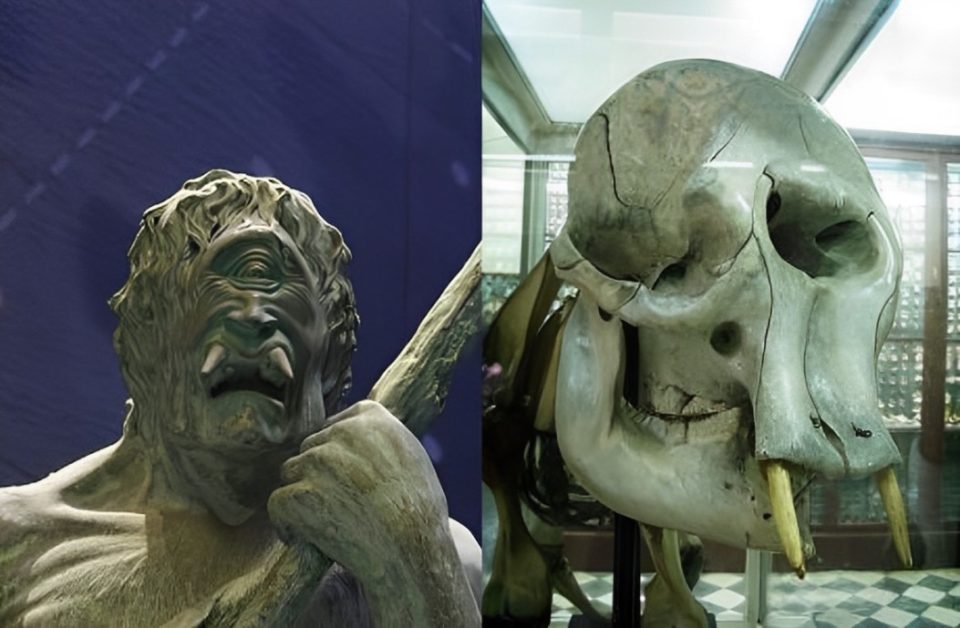
The Cyclops, one of the most enduring figures in Greek mythology, has captured the imagination of people for centuries. These one-eyed giants are often depicted as formidable creatures with immense strength and a penchant for violence. But where did this intriguing figure originate, and what role did it play in the ancient Greek narrative? In this article, we will explore the origins of the Cyclops, their representation in mythology, and their cultural significance in ancient Greece.
Origins in Mythology
The roots of the Cyclops can be traced back to ancient Greek mythology, where they are often described as the offspring of Uranus (the sky) and Gaia (the earth). According to Hesiod’s Theogony, there were three original Cyclopes: Brontes, Steropes, and Arges. These Cyclopes were not the savage giants commonly portrayed in later myths; instead, they were skilled craftsmen who forged Zeus’s thunderbolts and created other divine weapons. This association with craftsmanship suggests that the Cyclopes held a significant place in the pantheon of Greek gods, representing a bridge between the natural world and the divine.
The Cyclops in Homeric Literature
The most renowned Cyclops in Greek mythology is Polyphemus, featured prominently in Homer’s Odyssey. In this epic, Odysseus and his men encounter Polyphemus while journeying home from the Trojan War. The story unfolds as Odysseus devises a clever plan to escape the giant’s cave after Polyphemus captures them. By blinding the Cyclops with a sharpened stake and tricking him into revealing his name, Odysseus manages to flee with his crew. This encounter serves as a metaphor for human ingenuity overcoming brute force and highlights the complexities of civilization versus barbarism.
Symbolism of the Cyclops
The Cyclops embodies various themes in ancient Greek culture. As a representation of brute strength and savagery, the Cyclops often symbolizes the dangers of unchecked power and the potential for violence inherent in nature. This reflects the ancient Greeks’ struggles with the chaos of the natural world and their attempts to impose order through civilization.
Moreover, the Cyclops can be seen as a metaphor for the human condition itself. With one eye, the Cyclops represents a limited perspective and the inability to see the whole picture. This theme resonates throughout Greek literature, where characters often face challenges stemming from their narrow views or flawed perceptions.
Cultural Significance and Legacy
The Cyclops’s legacy extends beyond ancient Greece, influencing art, literature, and popular culture throughout the ages. In classical art, Cyclopes were depicted in sculptures and pottery, often representing the struggle between man and nature. Their portrayal evolved over time, and they became synonymous with the primal forces of chaos and destruction.
In modern culture, the Cyclops has made appearances in various forms, from literature to films and video games. This enduring interest highlights the Cyclops’s role as a symbol of the timeless human struggle against overwhelming odds and the journey of self-discovery.
Conclusion
The Cyclops of ancient Greece is a fascinating figure whose origins lie in the rich tapestry of Greek mythology. From their beginnings as skilled craftsmen to their evolution as symbols of brute strength and limited perspective, Cyclopes play a vital role in understanding ancient Greek culture. Their legacy endures, reminding us of the complex interplay between humanity, nature, and the divine. Whether through the tales of Polyphemus in the Odyssey or the myriad interpretations in contemporary culture, the Cyclops continues to captivate our imagination, embodying both the wonders and dangers of existence.
