
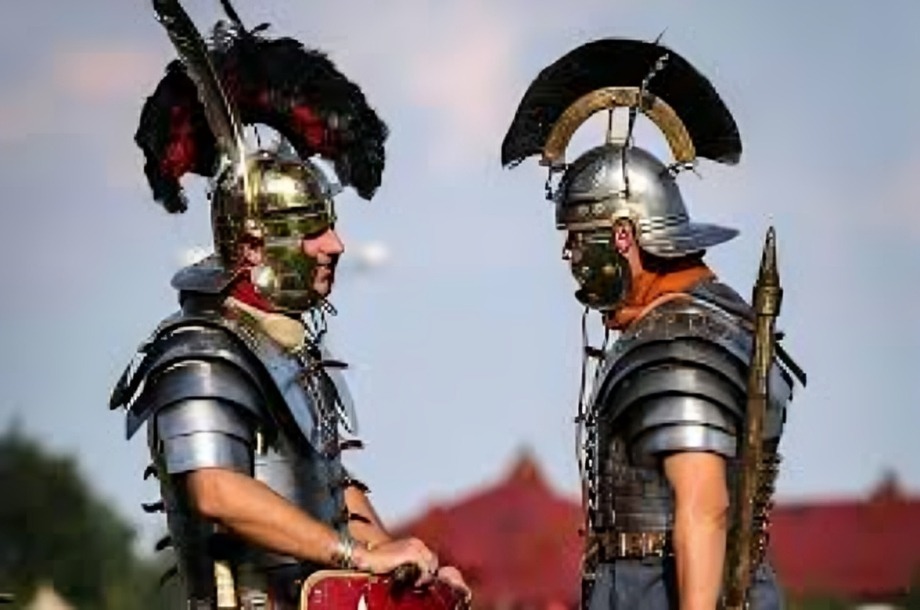
The Roman army was once the most formidable fighting force the world had ever seen—disciplined, organized, and proud of its status as the sword of civilization. But beneath its polished armor and strict ranks lies a lesser-known truth: even slaves, Rome’s lowest class, were at times recruited into its military ranks.
This wasn’t the norm—but when Rome faced existential threats, tradition gave way to necessity. The story of slaves in the Roman military is a tale of desperation, shifting values, and the limits of power.
Rome’s Ideal Soldier: Free, Male, and Roman
At the height of the Republic and early Empire, the Roman military was composed mainly of citizen soldiers. Service in the legions was a privilege tied to citizenship, land ownership, and honor. Slaves—deemed property, not people—were generally excluded from such roles.
The auxilia (non-citizen forces) were often recruited from the provinces, but even these men had more status than slaves. So why would the Roman military machine break with its own rules?
The Pressure of Crisis: Rome Turns to the Unthinkable
Desperate times call for desperate measures. And Rome had no shortage of crises.
During the Second Punic War (218–201 BCE), when Hannibal threatened the very heart of the Republic, Rome faced a severe manpower shortage. So in 217 BCE, the Senate authorized the recruitment of slaves into the army.
These slaves were promised freedom in exchange for service. Thousands joined—not necessarily out of loyalty, but for a chance at liberation and survival. They became known as volones, a word derived from voluntarius (volunteer), but with a distinct undertone: they had volunteered from bondage.
The Volones: Fighting for Freedom
The volones served valiantly during Rome’s darkest hours, and though they were initially kept in separate units, many were eventually integrated into the regular legions. After the war, many were granted manumission—freedom earned through bloodshed.
But this experiment didn’t become policy. After the crisis passed, Rome returned to its more rigid social and military norms. Recruiting slaves was considered a last resort, not a strategy.
Later Examples: Empire Under Siege
As the centuries wore on and the empire weakened, slave recruitment resurfaced periodically.
- During the Third Century Crisis, when invasions and internal chaos tore at Rome’s borders, emperors again dipped into the slave population for troops.
- In the late 4th and 5th centuries, as the empire faced mounting pressure from Gothic and Germanic invasions, even more unorthodox recruitment practices—including slaves and foreign mercenaries—became common.
The line between citizen, soldier, and slave blurred as Rome fought to hold itself together.
A Tool of War, A Taste of Freedom
For slaves, enlistment was not just an escape from chains—it was a pathway to personhood. In a society that often viewed them as tools, the chance to wear a soldier’s cloak, carry a gladius, and earn a name was nothing short of revolutionary.
But their service also revealed Rome’s vulnerability. The inclusion of slaves in the army signaled a loss of control, a fraying of the old order. As military standards slipped and tradition gave way to necessity, the Roman army became less Roman and less disciplined.
Conclusion
The recruitment of slaves into the Roman army didn’t cause the fall of Rome—but it was a symptom of the decline. It marked a moment when ideals gave way to survival, and when the most rigid hierarchy in the world began to crack under the weight of its own ambition.
Yet it also revealed something enduring: that even in the darkest corners of an empire built on conquest and control, freedom could be earned—not given, and even a slave could one day be called a Roman soldier.
