
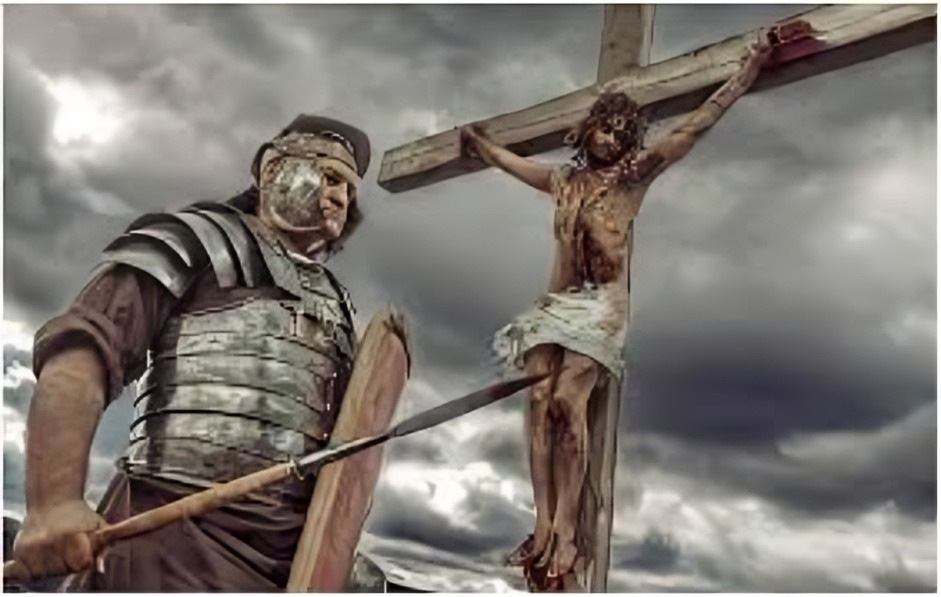
The crucifixion of Jesus Christ remains one of the most pivotal and controversial events in human history. While theological debates, religious reverence, and philosophical interpretations have long dominated the conversation, one aspect often escapes attention: what became of the Roman soldiers who physically carried out the execution?
Let’s take a closer look at what history, scripture, and legend tell us about the legionaries involved in the crucifixion—and how the echoes of that day followed them for the rest of their lives.
The Soldiers at Golgotha
According to the Gospel accounts, Roman soldiers were responsible for many key actions during the crucifixion: mocking Jesus, placing the crown of thorns on His head, nailing Him to the cross, dividing His garments, and piercing His side with a spear. These soldiers were likely members of a Roman cohort stationed in Jerusalem, under the authority of the prefect Pontius Pilate.
Though they remain unnamed in the canonical Gospels, their role was central and brutal. Roman crucifixions were meant to be public warnings—brutally efficient, emotionally humiliating, and spiritually damning.
Who Were These Men?
These weren’t elite legionaries from the frontiers of Gaul or Germania. Most likely, they were auxiliary soldiers—non-citizen recruits from Syria, Samaria, or other nearby provinces—serving the Roman Empire in Judea. These soldiers were trained in execution methods and desensitized to violence, their loyalty directed only upward, not toward the local populations they often suppressed.
One name does emerge from the Gospels: Longinus. He is traditionally identified as the centurion who pierced Jesus’ side with a spear and famously declared, “Surely this was the Son of God.” While not mentioned by name in the Bible, Christian tradition later gave him an identity—and a remarkable story.
The case of longinus – Soldier turned saint
According to early Christian tradition, the centurion Longinus was deeply affected by what he witnessed at the crucifixion. His reported words suggest a moment of spiritual awakening, a recognition of divine truth amid state-sanctioned violence. Some accounts claim he later converted to Christianity, left the Roman army, and became a preacher.
In various versions of the legend, Longinus was martyred for his faith, eventually venerated as a saint in both the Catholic and Eastern Orthodox churches. Relics associated with him—including the so-called Spear of Destiny, believed by some to be the very spear he used—became objects of fascination and legend throughout medieval Europe.
What of the Others?
As for the rest of the soldiers involved—those who cast lots for Jesus’ garments or drove the nails into his wrists—history provides no clear record. But within early Christian circles, there was a prevailing belief that no one could remain unchanged after witnessing the death of Christ.
Some early Christian writings and apocryphal texts suggest a spectrum of outcomes. A few soldiers are said to have converted in secret. Others, hardened by duty and unmoved by the execution, simply disappeared into the shadowy anonymity of Rome’s massive military machine.
There’s also the darker narrative: some early theologians and writers claimed that those who participated in the crucifixion met violent or cursed ends. Though these stories often served as moral warnings rather than historical accounts, they reflected the belief that divine justice would find even the most protected soldiers.
The Silence of Rome
It’s important to note that from an official Roman perspective, the crucifixion of Jesus was just another routine execution. Pilate, the soldiers, and even the Jewish authorities of the time likely had no idea the event would ripple through history with such magnitude. Because of this, Roman archives—if they ever mentioned it—did not preserve the names or fates of the soldiers involved.
Rome was not in the business of remembering its executioners. The men who carried out the crucifixion likely faded into obscurity, their identities lost to time, their legacy preserved only by association with the man they executed.
Conclusion
The Roman soldiers who crucified Jesus likely thought they were performing a standard duty. Yet that singular act, committed on a hill outside Jerusalem, reverberated across the world and centuries. Whether they converted, were cursed, or remained anonymous, their role in one of history’s most defining moments ensures they are never completely forgotten.
In a twist of fate, the ones who tried to erase a man with nails and wood became forever etched into the narrative of salvation—and mystery.
