
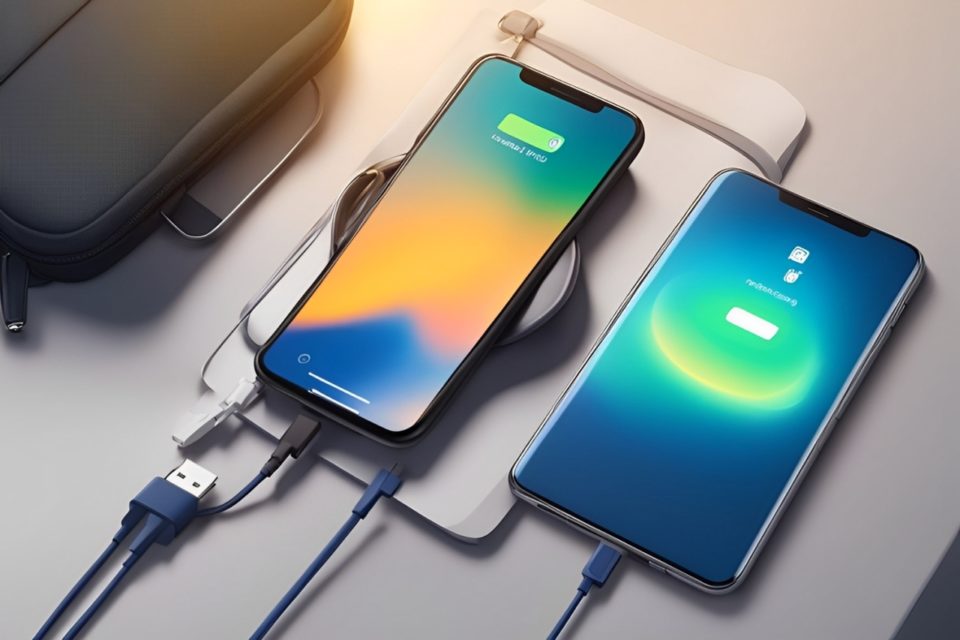
Anyone who’s taken a long flight knows the struggle of watching their phone’s battery percentage slowly tick down as time passes. With limited access to charging ports and the lure of inflight entertainment, there’s nothing more stressful than realizing you’re about to run out of juice. However, there’s a simple solution that could help you avoid that dreaded moment—the right charging cable.
More specifically, one cable in particular can significantly improve your ability to keep your phone charged during your travels: the USB-C to USB-C cable.
The Problem with Traditional Cables on Flights
Many of us rely on the old standby: the charging cable that connects to a USB port or a wall adapter. While this may work just fine in a hotel room or at home, it often falls short when traveling by air. Airplanes, especially older ones, might only have USB-A ports available on their power outlets, leaving passengers to rely on their own adapters or power banks. This becomes a hassle when the right cable or charging port is out of reach.
Moreover, the ability to charge multiple devices—laptops, tablets, and phones—using a combination of different cables and adapters can sometimes lead to confusion, lost time, or incompatible connections. With so many cables in play, you might end up using the wrong one, leading to slow or inefficient charging.
Enter the USB-C to USB-C Cable
The USB-C to USB-C cable could be the solution to your inflight charging woes. Here’s why this cable is becoming the go-to for travelers:
Faster Charging Speeds
USB-C is a newer standard that supports faster charging speeds compared to older USB-A cables. When using a USB-C to USB-C cable in conjunction with a USB-C-compatible charger or power bank, your phone, tablet, or laptop will charge much faster than with older cables. This can be a game-changer on long flights where every minute counts.
Universal Compatibility
Most modern devices, including smartphones, laptops, and tablets, are now equipped with USB-C ports. By carrying a USB-C to USB-C cable, you eliminate the need to juggle multiple cables for different devices. Whether you’re charging your phone, e-reader, or even your noise-canceling headphones, you only need this one cable to power up everything. Even if the airplane provides a USB-C charging port, this cable will have you covered.
Compact and Lightweight
USB-C to USB-C cables are typically more compact and lightweight than older, bulkier charging cables. This makes them easy to stash in your carry-on bag or backpack, and they won’t take up much space in your personal item. Given how space-conscious air travel has become, this added convenience is a welcome bonus.
Power Delivery (PD) Support
One of the key advantages of USB-C is its support for Power Delivery (PD). PD allows for higher voltage and current transfer, enabling devices to charge faster and more efficiently. For instance, a USB-C to USB-C cable with PD can charge your phone to 50% in just 30 minutes, a feature not available with older cables. This is especially helpful when you need a quick recharge before landing or during a layover.
Saves You from the Adapter Shuffle
On many flights, passengers are given USB-A charging ports. While you can still use a USB-A to USB-C cable, it won’t be as fast or efficient as a direct USB-C to USB-C connection. Having a USB-C to USB-C cable on hand means you can simply connect directly to a USB-C port (if available) or pair it with a USB-C power bank to keep your devices charged without constantly switching between adapters.
Bonus: Use With a Power Bank
For those especially long flights where charging stations are scarce, pairing your USB-C to USB-C cable with a portable power bank is the ultimate power solution. Make sure your power bank is large enough to charge your phone several times over. If you’re carrying devices with USB-C ports, a power bank that supports USB-C charging can help you avoid the frustration of running out of battery before you land.
Conclusion
The next time you’re preparing for a flight, make sure you’ve packed a USB-C to USB-C charging cable. It’s the one cable that can handle all your devices, deliver fast charging speeds, and eliminate the chaos of tangled cables or unreliable inflight charging options. Whether you’re working, watching movies, or simply staying connected with loved ones, you’ll never have to worry about your phone running out of battery mid-flight. Embrace the convenience of this all-in-one charging solution and make your travel experience smoother and stress-free.
