
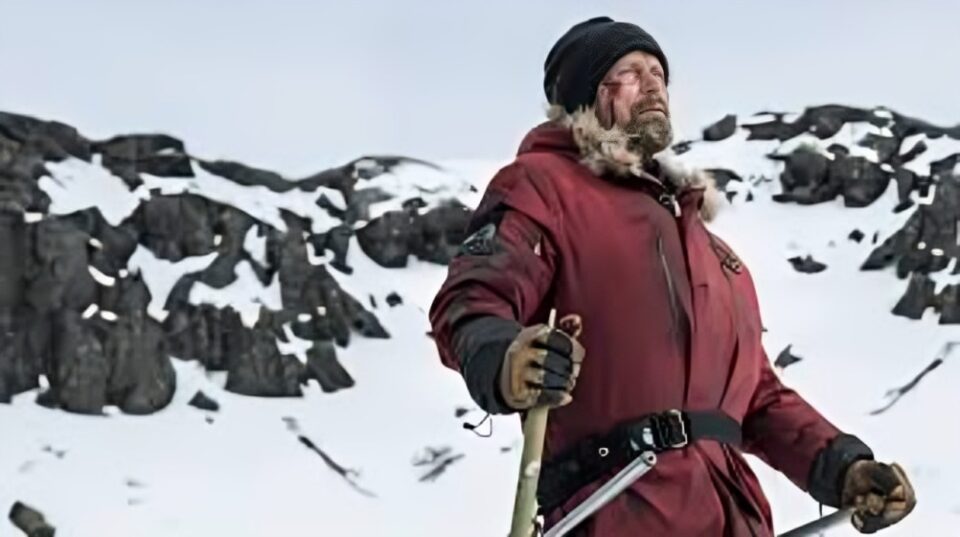
In a world filled with cinematic universes, ensemble casts, and special effects heavy blockbusters, it’s easy to forget how powerful a single human presence can be on screen. Yet, every once in a while, a film strips away the noise, the side characters, and the spectacle—leaving just one actor, one performance, and a story that pulls you in like gravity.
These rare films remind us that cinema isn’t about how many faces you can fit into a frame, but how deeply one soul can hold our attention. Here are a few unforgettable examples where one actor carried the entire story—and somehow, made it feel bigger than life itself.
Buried (2010) — Ryan Reynolds
Before Deadpool, before the wisecracks and action scenes, Ryan Reynolds gave a haunting performance in Buried. The entire film takes place inside a wooden coffin, where a man wakes up buried alive with only a lighter and a phone. That’s it. Ninety minutes of panic, claustrophobia, and desperation—all with a camera that never leaves the box.
It’s not just a thriller; it’s a psychological test. Reynolds holds the audience captive, forcing us to experience every gasp of air, every flicker of hope, and every terrifying silence. By the end, you realize the true miracle isn’t survival—it’s how one actor can make you forget the rest of the world exists.
Locke (2013) — Tom Hardy
In Locke, Tom Hardy sits alone in a car for the entire movie. He’s driving through the night, talking only through phone calls—trying to hold his crumbling life together in real time. No flashbacks, no action scenes, just a man, a voice, and the soft hum of the motorway.
Hardy transforms what could’ve been a monotonous setup into a masterclass of emotional control. The tension isn’t in what happens—it’s in what might. Through his calm voice and subtle expressions, you witness a man lose everything with grace and heartbreaking humanity.
It’s proof that great storytelling doesn’t need explosions—just truth.
127 Hours (2010) — James Franco
Based on the true story of Aron Ralston, 127 Hours traps its protagonist in a Utah canyon, his arm pinned beneath a boulder. What follows is not just a survival story but a portrait of isolation, regret, and raw determination.
James Franco delivers one of his finest performances—funny, manic, terrified, and deeply human. For most of the film, he talks to his camera, hallucinates, and wrestles with his sanity. When the inevitable moment of freedom comes, it’s not just physical—it’s spiritual.
Few movies capture the power of endurance this intimately. Franco carries it all—alone.
All Is Lost (2013) — Robert Redford
No dialogue. No supporting cast. Just Robert Redford and the sea.
In All Is Lost, an unnamed sailor battles against nature after his yacht is damaged. With barely a handful of spoken words, Redford communicates volumes—frustration, exhaustion, courage, and the quiet acceptance of fate.
At 77, he gave one of the most physically demanding performances of his career, and it’s mesmerizing. Each wave, each breath, each silence feels earned. It’s a film that reminds us that survival stories aren’t just about skill—they’re about the stubborn will to live.
Moon (2009) — Sam Rockwell
In Moon, Sam Rockwell plays an astronaut nearing the end of his three-year solo mission on the far side of the moon. His only companion is a robot voiced by Kevin Spacey. But when strange things begin to happen, Rockwell’s character starts to question everything—including his own identity.
It’s eerie, tragic, and surprisingly moving. Rockwell shifts between tenderness and madness seamlessly, grounding a sci-fi story in raw emotion. Alone on screen for most of the runtime, he makes loneliness feel both terrifying and oddly beautiful.
Why These Films Work
What makes these movies unforgettable isn’t just the performance—it’s the intimacy. When there’s only one actor, there’s nowhere to hide. Every glance, breath, and hesitation matters. You’re not just watching a character—you’re inside their head.
These films slow time down. They make silence heavy and every gesture meaningful. They remind us that storytelling began with a single voice and a listener—and that, sometimes, the simplest setup can hold the deepest impact.
Conclusion
It takes courage to build a film around a single actor. There’s no safety net, no co-star to share the weight, no subplot to distract the audience. But when it works, it’s pure magic.
These one-actor masterpieces prove that cinema’s real strength isn’t in scale—it’s in focus. They show that a human face, caught between light and shadow, can be as thrilling as any car chase, as moving as any romance, and as vast as space itself.Because sometimes, one actor is all it takes to fill the screen—and your heart.
Would you like me to expand this with five more one-actor films (like Gravity, Cast Away, or The Shallows) to make it an even longer and more complete list?
