
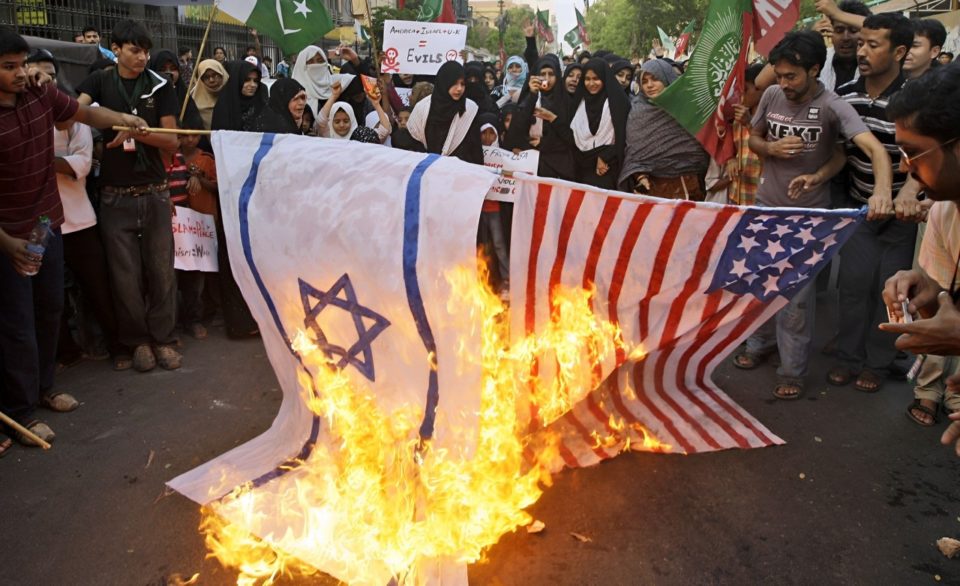
The act of burning a flag often stirs deep emotions and sharp debates, especially in the United States. For many, it represents a profound disrespect for the nation’s symbols. However, upon closer examination, one can argue that flag burning is not only a form of protest deeply rooted in American history but also a powerful expression of the very freedoms the flag itself stands for.
Historical Context
Flag burning, while controversial, has a significant place in American history. The U.S. Constitution and the Bill of Rights are founded on principles of freedom of expression and protest. The First Amendment guarantees the right to free speech, which encompasses the act of burning a flag as a form of protest. This right was fiercely defended in the landmark Supreme Court case Texas v. Johnson (1989), where the Court ruled that flag burning is a constitutionally protected form of speech.
The practice of flag burning as a form of protest dates back to the early years of the Republic. During the American Revolution, burning the British flag was a common expression of defiance against British rule. This act of burning was not seen as an affront to the colonies’ values but rather a demonstration of their desire for independence and self-determination. Such actions were essential in galvanizing the public and cementing the colonies’ resolve to seek autonomy.
A Symbol of Protest
In modern times, flag burning has often been employed to draw attention to issues of social justice and political dissent. In the 1960s and 70s, it became a potent symbol of resistance during the civil rights movement and the anti-Vietnam War protests. For many activists, burning the flag was a way to criticize policies and actions they deemed contrary to American ideals.
Consider the example of the civil rights movement. African American activists used flag burning to highlight the stark contrast between the nation’s proclaimed ideals of freedom and equality and the reality of racial injustice. Their actions, though controversial, were driven by a desire to prompt national introspection and reform. The act of burning the flag became a poignant symbol of their struggle for a more just and equitable society.
The Noble Tradition of Dissent
Rather than viewing flag burning as an act of disrespect, it can be seen as a demonstration of the fundamental democratic principle of dissent. The United States was built on the idea that people should have the right to challenge authority and express disagreement with the status quo. This tradition of dissent is integral to the nation’s progress and evolution.
The flag, as a symbol, represents the ideals and values of the country. When citizens use the flag to express dissent, they are not necessarily rejecting those values but rather advocating for their fuller realization. In this light, flag burning becomes an act of engagement with the nation’s ideals, pushing for a more perfect union rather than denouncing it.
Conclusion
Flag burning, though controversial, embodies the spirit of American democracy. It is a powerful expression of freedom, dissent, and the ongoing struggle to live up to the ideals enshrined in the Constitution. By engaging with the symbol of the flag in this way, citizens participate in a noble tradition of challenging the status quo and advocating for a better society.
Understanding flag burning as an integral part of American tradition helps to contextualize it not as an act of disrespect, but as a complex and profound form of expression that reflects the nation’s enduring commitment to freedom and democracy.
