
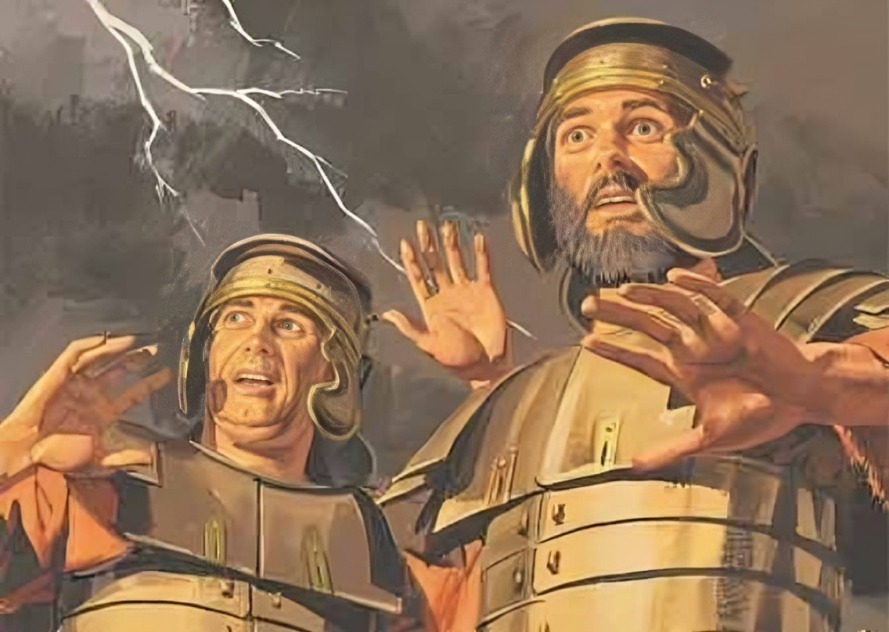
Roman legionaries were the hardened backbone of one of the most powerful militaries in world history. They faced death, famine, and brutal campaigns across deserts, mountains, and frozen frontiers. They were trained to endure physical pain without flinching and to obey commands without question.
But for all the dangers they faced, there was one thing Roman soldiers feared more than death on the battlefield—a deep, paralyzing shame that could stain their name forever.
This was the fear of dishonor, and it was expressed in one of the most humiliating punishments a Roman legionary could endure: decimation.
More Than Death: The Roman Obsession with Honor
To a Roman soldier, honor wasn’t just a personal virtue—it was his identity, his value, his legacy. Loyalty to Rome, bravery in battle, and discipline in ranks were non-negotiable expectations.
Falling short didn’t just make you a bad soldier. It made you a disgrace to your unit, your commander, and even your ancestors.
In Roman culture, honor was eternal—but so was shame.
The Most Dreaded Punishment: Decimation
When a Roman unit showed cowardice, mutinied, or failed its duty, the punishment was often not targeted at a single man. Instead, the entire cohort would suffer together, under a punishment called decimatio—meaning “removal of a tenth.”
In decimation:
- Soldiers were grouped into sets of ten.
- Each group drew lots.
- The man who drew the short straw was beaten to death by the other nine—often with clubs or stones.
It was public, slow, and psychologically scarring. It wasn’t just about punishment—it was about shaming the entire unit, eroding their trust, and forcing them to live with the guilt of killing one of their own.
“To fail in Rome’s service is to forfeit not just your life—but your dignity.”
Cowardice: The Unforgivable Sin
Running from battle was the ultimate betrayal. Not only did it mean turning your back on your comrades, but it threatened the integrity of the entire formation.
In the Roman legions, cowardice wasn’t just punished—it was erased.
- Cowards were publicly flogged.
- Their weapons and armor might be taken away.
- In extreme cases, they were exiled from camp, forced to live outside the walls, eating only barley (the lesser grain reserved for animals or prisoners).
Such men were left to live in disgrace, unwanted and unspoken of, a living reminder of failure.
The Power of Peer Pressure and Legacy
Legionaries often weren’t motivated just by personal pride. They feared what their comrades would think, how their family name would be remembered, and whether their deeds would earn them honor in Rome’s collective memory.
To be remembered as brave was to gain immortality.
To be remembered as a coward—or worse, forgotten altogether—was a fate worse than death.
Shame as a Tool of Control
Roman generals like Julius Caesar, Scipio Africanus, and Lucius Cornelius Sulla knew how powerful shame could be. They used it to keep order. To instill fear. To maintain the iron discipline that made Rome nearly unstoppable.
Shame wasn’t random—it was strategic. It kept soldiers loyal. It made examples out of a few to keep the many in line.
Conclusion
Roman soldiers walked into battle with death as a possibility they had accepted. What they couldn’t accept was disgrace.To die for Rome was noble. To live in shame was unbearable.
In the brutal, disciplined world of the Roman legions, shame wasn’t just a punishment—it was a sentence that outlasted life. And that is what Roman legionaries feared most.
