
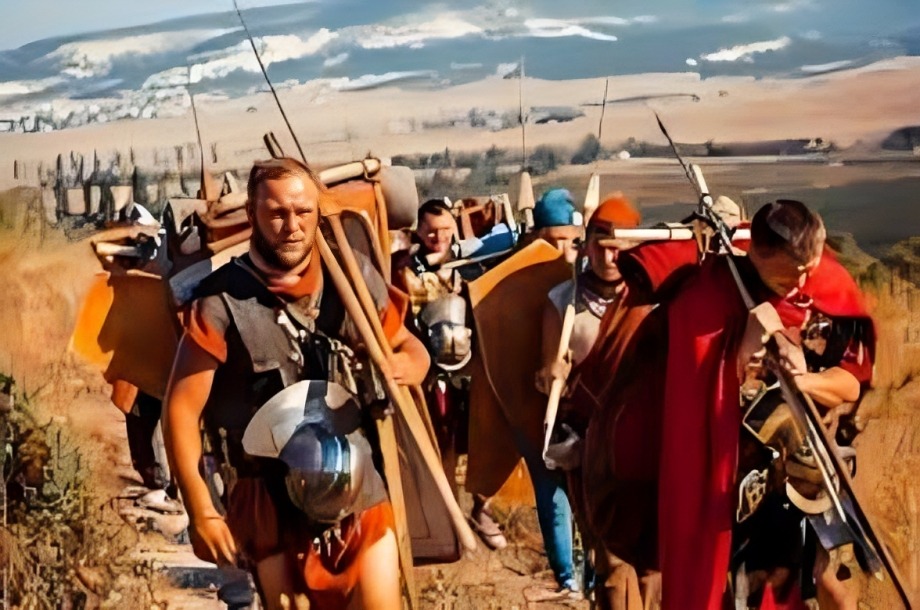
When we think of the Roman legions, we picture disciplined ranks of soldiers, gleaming armor, and the might of an empire that stretched across continents. But behind the spectacle of their victories lay something less glamorous but far more vital—the physical endurance of the legionaries. These men weren’t just warriors; they were walking machines of stamina, capable of marching vast distances, building fortifications, and then still fighting fierce battles. The question is—how did they do it?
A Life Built on Discipline
From the moment a man joined the Roman army, his life was transformed. Training wasn’t about learning to swing a sword dramatically—it was about building a body that could endure long, grueling campaigns. Legionaries trained with weapons that were deliberately heavier than the real ones they would use in battle. This meant that, come the fight, their actual arms felt light and swift in their hands.
Daily drills included running, swimming, jumping, and wrestling, all meant to strengthen the body in different ways. Soldiers also carried out repetitive marching drills—sometimes in full armor—covering up to 30 kilometers (about 18 miles) in a single day. And this was before they even reached the battlefield.
The Load They Carried
The Roman soldier was nicknamed miles gregarius, but among themselves, they had another, more telling name: muli mariani—“Marius’ mules.” This came from Gaius Marius, a Roman general who insisted his troops carry all their own gear instead of relying on baggage animals. This gear weighed up to 45 kilograms (100 pounds), including weapons, armor, rations, tools, and even materials to build temporary camps.
Carrying such loads day after day naturally built incredible strength and endurance, turning every soldier into a living example of functional fitness.
Fuel for the March
You might think the secret was some ancient warrior’s diet rich in meat, but surprisingly, Roman legionaries often ate a largely vegetarian-based diet. Grains, especially wheat and barley, were the staple, usually eaten as a thick porridge or bread. This provided slow-releasing energy perfect for long marches.
They supplemented this with beans, vegetables, cheese, olives, and the occasional meat or fish when available. Vinegar mixed with water—known as posca—was their go-to drink, helping keep them hydrated and killing bacteria in questionable water supplies.
Rest, Recovery, and Routine
Endurance wasn’t just about hard work—it was also about consistency. Roman military life was deeply structured. Camps were built every evening, often by the soldiers themselves, ensuring a secure and organized place to rest. This sense of order minimized stress and gave them the recovery time they needed to maintain their strength for the next day.
Why It Worked
The secret wasn’t one single factor—it was the combination of relentless training, disciplined diet, heavy load-carrying, and strict routines. Together, these created soldiers who could outlast their enemies not just in battle, but in the exhausting marches and preparations that came before it.
Conclusion
The physical endurance of the Roman legionary wasn’t an accident—it was the result of a carefully crafted lifestyle that merged discipline, training, and nutrition into a powerful whole. These men didn’t just fight for Rome; they carried it on their backs—sometimes literally—over mountains, across rivers, and into history.
If you’d like, I can also make you a more dramatic, emotional version of this article to feel like a storytelling piece about marching with the legions. That could make it even more gripping.
