
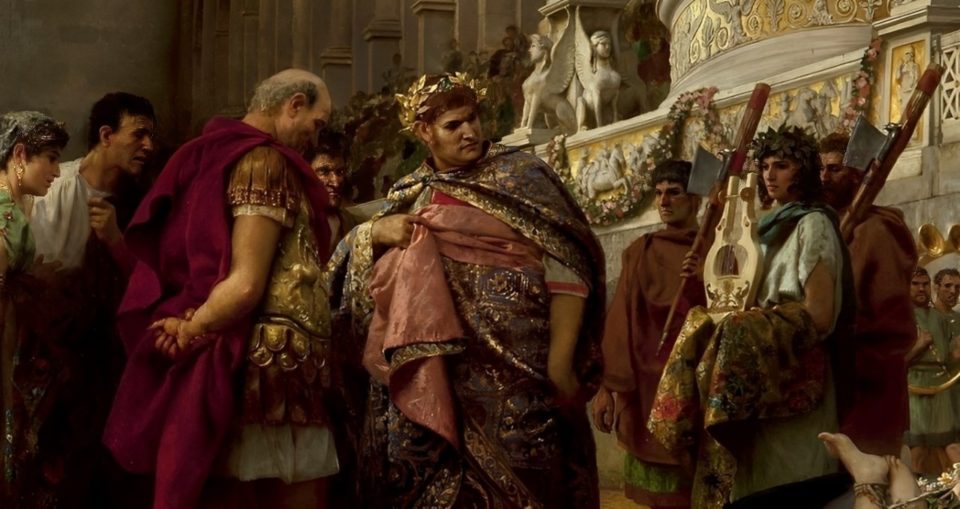
The fall of the Roman Empire is one of history’s most dramatic narratives, marked by a complex interplay of political, economic, and social factors. At the heart of this decline is the story of its last emperor, Romulus Augustulus, whose reign embodies the essence of Rome’s ultimate downfall. His brief and symbolic rule offers a poignant reflection of the empire’s collapse, representing the culmination of centuries of decline.
Romulus Augustulus: Rome’s Final Emperor
Romulus Augustulus, often considered the last Roman emperor of the Western Roman Empire, reigned from 475 to 476 AD. His name, meaning “Little Augustus,” is emblematic of his position: a figurehead whose authority was a mere shadow of the power wielded by his illustrious predecessors. His ascension to the throne was largely orchestrated by his father, Orestes, a high-ranking military officer who sought to exploit the political instability of the time.
Romulus’s reign was marked by a series of significant challenges that underscored the weakening state of the empire. The Western Roman Empire was plagued by internal strife, economic difficulties, and external threats. Romulus was a young boy when he assumed the throne, and his lack of experience and political clout rendered him largely powerless.
The Decline of Roman Authority
Romulus Augustulus’s rule occurred during a period when the Western Roman Empire was crumbling under immense pressure. By the late 5th century, the empire had been progressively weakened by:
Military Decline: The Roman legions, once the most formidable fighting force in the ancient world, had become increasingly ineffective. The army was plagued by corruption, low morale, and the reliance on mercenary forces, many of whom were of barbarian origin. This compromised the empire’s ability to defend its vast borders.
Political Instability: The Western Roman Empire had been suffering from a series of short-lived emperors and civil wars, which undermined political stability. Frequent changes in leadership and infighting among rival factions eroded effective governance.
Economic Strain: The empire faced severe economic troubles, including heavy taxation, inflation, and a declining agricultural base. The economic instability further weakened the empire’s ability to sustain its military and administrative functions.
Barbarian Invasions: The empire faced relentless invasions from various barbarian tribes, including the Visigoths, Vandals, and Ostrogoths. These invasions not only resulted in the loss of territories but also contributed to the fragmentation of Roman authority.
The Decline of the Western Roman Empire
The culmination of these issues came to a head in 476 AD when Romulus Augustulus was deposed by Odoacer, a Germanic chieftain who led a revolt against Roman rule. Odoacer’s victory was less about the strength of his forces and more about the fact that the Western Roman Empire had become too weak to resist effectively.
The deposition of Romulus Augustulus is often seen as the formal end of the Western Roman Empire. Although the Eastern Roman Empire, known as the Byzantine Empire, continued to thrive for another thousand years, the fall of the Western Empire marked the end of Roman political dominance in the West.
Romulus Augustulus: A Symbol of Decline
Romulus Augustulus’s reign encapsulates the broader themes of Roman decline. His rule was characterized by:
Symbolic Power: Romulus was a figurehead, with real power residing with his father and later with the military leaders. This lack of genuine authority reflected the broader collapse of centralized control in the empire.
Youth and Inexperience: As a young and inexperienced ruler, Romulus was emblematic of the broader leadership vacuum that plagued the empire. His inability to address the empire’s many issues highlighted the inadequacy of Roman leadership during the decline.
Political Manipulation: Romulus’s elevation to the throne and subsequent removal were influenced by political maneuvering rather than genuine merit or popular support. This manipulation underscored the extent of political fragmentation and corruption in the empire.
Conclusion
The story of Romulus Augustulus is more than just the tale of a final, ineffective emperor; it is a microcosm of the broader decline of the Western Roman Empire. His brief and symbolic reign reflects the culmination of centuries of internal decay, external pressures, and systemic failures. As the last emperor of Rome, Romulus Augustulus represents the end of an era, encapsulating the fall of a once-great empire and the shift from Roman dominance to the emerging medieval world.
In understanding Romulus Augustulus, we gain insight into the complex dynamics that led to the fall of one of history’s greatest empires. His life and reign serve as a poignant reminder of how even the most enduring institutions can succumb to the inexorable forces of decline.
