
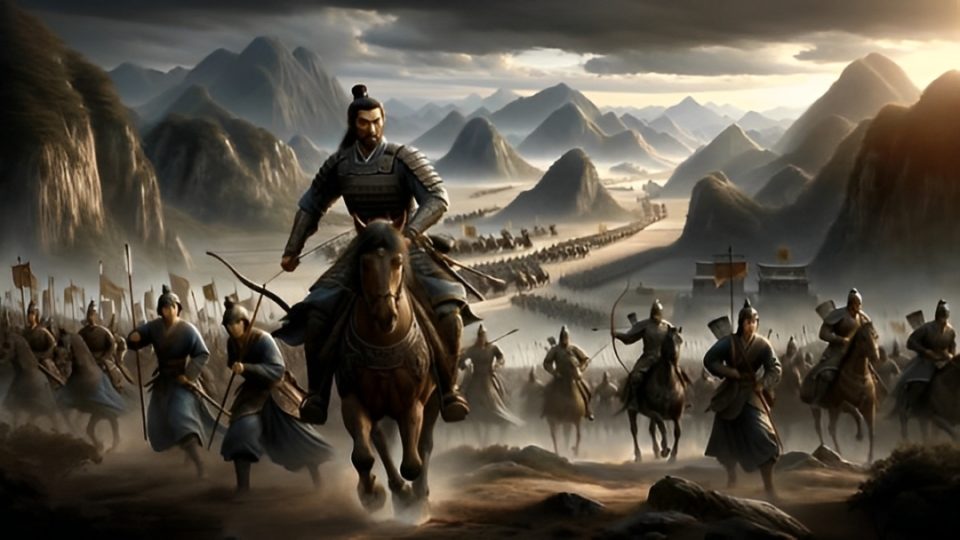
When we think of the Stone Age, we often imagine primitive humans living simple lives—hunting, gathering, and coexisting with nature. However, the reality of early human history was far more brutal. The dawn of humanity was not just a period of survival and innovation but also one of conflicts, territorial disputes, and violent clashes that shaped the course of civilization.
Long before written history, early human societies engaged in warfare over resources, land, and dominance. Evidence from ancient skeletons, cave paintings, and archaeological sites suggests that violence and organized conflict were not modern inventions but deeply ingrained in human existence from the start. While cooperation and community-building were crucial for survival, aggression and warfare played an equally significant role in shaping prehistoric societies.
This article delves into the conflicts and warfare of the Stone Age, exploring the reasons behind early human violence, the evidence left behind, and how these struggles ultimately led to the rise of complex civilizations.
Why Did Early Humans Fight?
Scarcity of Resources
One of the primary causes of conflict in the Stone Age was competition for resources. Early humans relied on hunting, fishing, and gathering for sustenance, but as populations grew, resources became scarce. Water sources, fertile land, and hunting grounds were valuable, leading to violent clashes between groups competing for survival.
Territorial Disputes
Like modern nations, prehistoric tribes had territories they called home. These territories were essential for food, shelter, and safety. If an outside group encroached on another’s land, conflict was inevitable. Some of the earliest forms of warfare likely arose from these territorial disputes, where groups fought to defend or expand their hunting ranges.
Revenge and Retribution
Anthropologists suggest that revenge killings and blood feuds were common in early societies. If one group attacked or killed a member of another group, retaliation often followed. This cycle of violence could escalate into prolonged conflicts between neighboring clans.
Early Social Hierarchies and Power Struggles
Even in primitive societies, leaders and dominant individuals sought to maintain power and control. Some conflicts may have been driven by rivalries between ambitious individuals or groups vying for leadership and dominance. The emergence of social hierarchies meant that some groups became more powerful, leading to conflicts over leadership and control of resources.
The First Evidence of Prehistoric Warfare
While the Stone Age left no written records, archaeologists have uncovered strong evidence of violent conflict from this period:
Mass Graves and Skeletons with Trauma Marks
One of the most famous discoveries comes from Jebel Sahaba, a 13,000-year-old burial site in Sudan, where dozens of skeletons were found with arrowheads embedded in their bones, indicating one of the earliest known battles.
Another mass grave in Nataruk, Kenya (10,000 years ago) revealed bodies with severe injuries, including crushed skulls, broken bones, and stone projectile wounds, suggesting a violent massacre rather than isolated killings.
Cave Paintings Depicting Battle Scenes
Some of the earliest visual representations of conflict come from prehistoric cave paintings, particularly in Spain and France, where figures are shown engaging in combat, wielding bows, arrows, and spears.
These paintings suggest that group conflicts and organized violence were not uncommon among early human societies.
Weapons Designed for Warfare
While early humans primarily used weapons for hunting, some tools show signs of being designed specifically for combat. Sharpened spearheads, stone axes, and primitive clubs found in burial sites suggest that some tools were crafted with killing in mind.
The Evolution of Warfare in the Stone Age
Small-Scale Raids and Ambushes
Unlike large-scale battles of later civilizations, Stone Age warfare was likely characterized by small-scale raids, ambushes, and surprise attacks. These raids often targeted rival groups to steal food, capture territory, or seek revenge.
Formation of Defensive Settlements
As conflicts increased, some prehistoric groups began constructing defensive settlements, such as fortified caves and strategically located dwellings on cliffs or riverbanks. These settlements provided protection against enemy attacks and indicated an understanding of warfare strategies and defense mechanisms.
Use of Traps and Tactical Warfare
Early humans were skilled in hunting, and these tactics extended to warfare. Some groups likely used traps, pitfalls, and strategic positioning to gain an advantage over enemies, demonstrating the beginnings of organized combat tactics.
The Role of Warriors and Leadership
Over time, certain individuals in tribes likely took on roles as warriors and leaders, specializing in combat and defense. This marked the beginning of militarized roles within societies, a concept that would later develop into full-scale armies in ancient civilizations.
The Long-Term Impact of Prehistoric Conflicts
Despite the brutality of warfare in the Stone Age, conflicts played a crucial role in shaping human civilization. Some key impacts include:
Advancement of Weaponry and Strategy
Continuous conflicts led to innovations in weapons and battle strategies, laying the groundwork for the more advanced warfare techniques of the Bronze and Iron Ages.
Social and Political Structures
As groups fought for dominance, early forms of leadership and governance began to emerge. Tribal chiefs, councils, and warrior classes started taking shape, influencing the future development of human societies.
The Rise of Cooperation and Alliances
While warfare divided many groups, it also encouraged alliances and cooperation. Neighboring tribes sometimes formed coalitions for mutual defense, foreshadowing the concept of states and nations.
Survival of the Fittest Societies
The conflicts of the Stone Age helped shape resilient and adaptive human societies. The groups that developed better survival strategies, weapons, and social structures thrived, passing down their knowledge to future generations.
Conclusion
The Stone Age was not just a time of discovery and survival—it was also a period of conflict, warfare, and struggle for dominance. From territorial disputes and resource competition to early warfare tactics and the rise of social hierarchies, violence played a significant role in shaping human history.
However, these conflicts were not entirely destructive. They led to important advancements in weaponry, social organization, and cooperation, all of which contributed to the rise of civilization. The lessons from prehistoric warfare remind us that conflict has always been a part of human existence, but it has also driven innovation, resilience, and the need for unity.
As we look back at the gloomy dawn of humanity, we see not just the brutality of our ancestors but also their ingenuity and determination—qualities that continue to define us today.
