
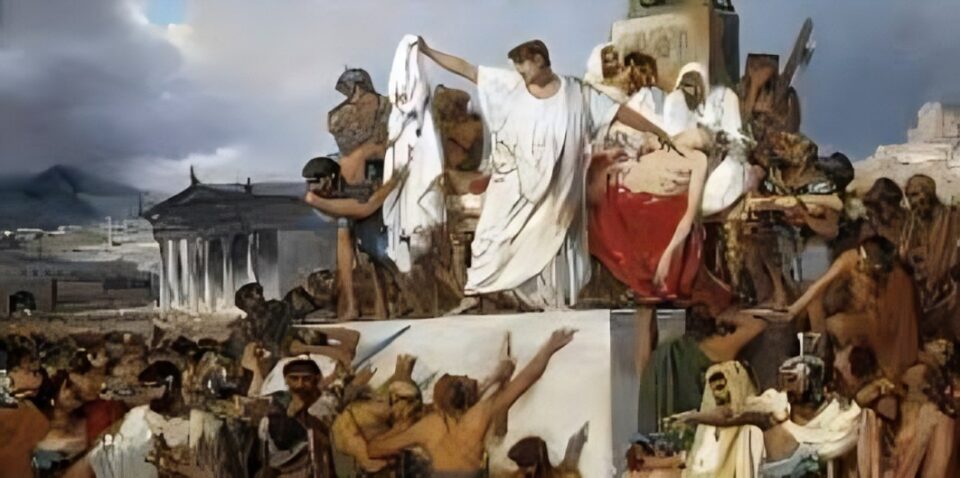
The assassination of Julius Caesar on March 15, 44 BCE—the infamous Ides of March—was meant to save the Roman Republic. Brutus, Cassius, and their fellow conspirators believed that by eliminating Caesar, they were striking a blow against tyranny and for liberty.
But what followed was not the rebirth of the Republic, but a brutal civil war, and eventually, the rise of the Roman Empire.
Still, for a time, it looked like Caesar’s assassins might actually win. In the years following his death, the Republic’s defenders came dangerously close to defeating the Second Triumvirate—the alliance of Octavian, Mark Antony, and Lepidus—and reclaiming control of Rome.
Here’s how the Liberators nearly changed history… and how it all slipped away.
The Aftermath of Assassination: A Nation Divided
When Caesar fell, stabbed 23 times in the Senate, Rome was thrown into chaos. The conspirators—calling themselves “The Liberators”—expected to be hailed as heroes. Instead, they were met with fear, confusion, and anger from a population still loyal to Caesar’s populist policies.
Mark Antony, Caesar’s close ally, quickly took control of the political narrative. His dramatic speech at Caesar’s funeral turned public opinion sharply against the assassins. The Liberators, sensing danger, fled Rome and regrouped in the eastern provinces.
The Rise of the Second Triumvirate
In response to the growing power vacuum, Octavian (Caesar’s adopted heir), Mark Antony, and Lepidus formed the Second Triumvirate in 43 BCE—an official, legally sanctioned alliance with absolute power.
They immediately targeted the assassins. In a brutal political purge known as the Proscriptions, the Triumvirs executed hundreds of senators and equestrians believed to be aligned with Brutus and Cassius. One of the most famous victims was Cicero, who had opposed Antony.
The Liberators, meanwhile, had not been idle. Cassius and Brutus had raised a formidable force in the East and gained control over much of the Roman Empire’s eastern territories.
Building an Army—and an Alliance
By 42 BCE, Brutus and Cassius controlled 19 legions and vast financial resources from the East. They had also formed strategic alliances with powerful provincial governors and kings.
Their army included battle-hardened Roman soldiers, and they had a key advantage: experience. Both men were skilled generals and political operators. In contrast, Octavian was still young and relatively untested.
Had the Liberators struck early—before the Triumvirs consolidated their power—they might have taken Rome itself.
The Battle of Philippi: The Two-Front Gamble
In October 42 BCE, the two forces met near Philippi in Macedonia. It was one of the largest and most important battles in Roman history.
The battle played out in two major clashes:
- In the first engagement, Brutus defeated Octavian’s forces, nearly killing him and forcing a retreat.
- Meanwhile, Cassius was overwhelmed by Antony, mistakenly believed Brutus had lost too, and tragically committed suicide.
Despite Cassius’s death, Brutus still commanded a strong force. But he was now alone, and the momentum began to shift.
In the second battle, morale and coordination broke down. Antony’s forces overran Brutus’s camp. Brutus took his own life, ending the dream of restoring the Republic.
How They Almost Won—and Why They Lost
So why didn’t the Liberators succeed?They had numbers, money, and momentum. But several critical factors worked against them:
- Poor coordination between Brutus and Cassius
- Underestimating Octavian and Antony’s resolve
- Delaying direct action after Caesar’s death, allowing their enemies to rally support
- A lack of popular backing in Italy, where Caesar’s reforms had earned him love among the people
In the end, their military advantage wasn’t enough to overcome a lack of unity and shifting public sentiment.
Conclusion
Had Brutus and Cassius won at Philippi, Roman history might have unfolded very differently. The Republic could have been restored—or at least reshaped on their terms. But their defeat ensured the dominance of the Second Triumvirate.
Within a decade, Octavian would defeat Antony and become Augustus, the first Roman Emperor.
The very act meant to save the Republic led to its final transformation into an empire ruled by a single man—the opposite of what the assassins hoped to achieve.
Their nearly-successful rebellion became the last breath of a dying Republic, crushed under the weight of its own ambition, betrayal, and civil war.
