
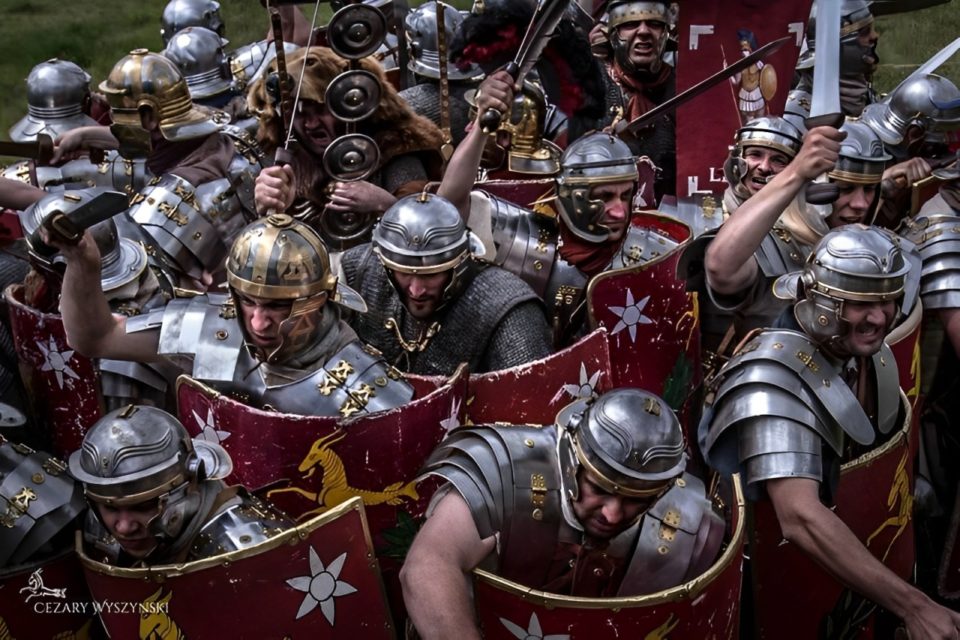
The Roman Legion was one of the most disciplined and powerful military forces in history. The backbone of this formidable army was the Roman legionary—a professional soldier trained to fight, build, march, and endure the harshest conditions. Life as a legionary was not for the faint-hearted; it was a relentless cycle of discipline, training, and duty. From dawn until dusk, these warriors lived by the principles of sweat, steel, and discipline, ensuring that Rome remained the dominant force of its time.
So, what was a day in the life of a Roman legionary like? Let’s step into their sandals and find out.
The Start of the Day: Early Mornings and Strict Discipline
A legionary’s day began before sunrise. At the sound of the trumpet, soldiers would wake up and quickly prepare for the morning roll call. Discipline was strict—any sign of laziness or tardiness was punished severely. Legionaries had to ensure that their armor, weapons, and equipment were in top condition before reporting for duty.
After inspection, the morning meal, known as puls, was served. This was a simple porridge made from grains, sometimes supplemented with bread, cheese, or dried fruits. The Roman diet was designed for endurance rather than pleasure, ensuring soldiers had enough energy to handle the physically demanding day ahead.
Relentless Training: The Backbone of Rome’s Military Success
One of the most defining aspects of a legionary’s life was the constant training. Even in times of peace, soldiers trained every single day to maintain their combat skills and physical endurance.
Combat Drills and Weapons Training
Legionaries practiced swordsmanship with their gladius, the short stabbing sword that was deadly in close combat. They also trained with their pilum, a heavy throwing spear designed to penetrate enemy shields. Wooden weapons were often twice as heavy as real ones to improve strength and endurance.
Marching and Endurance Training
Roman soldiers were expected to march up to 20 miles (32 km) per day, carrying full battle gear that weighed around 90 pounds (41 kg). These long, grueling marches prepared them for long campaigns and ensured they could move quickly across vast distances.
Formation and Shield Tactics
Legionaries trained in complex battlefield maneuvers, including the famous testudo (tortoise) formation, where soldiers interlocked their shields to form an impenetrable wall against arrows and enemy attacks. Every move had to be executed with precision and discipline.
Camp Life: The Art of Building and Defense
A Roman legionary wasn’t just a fighter—he was also a builder, engineer, and laborer. Whenever the army set up camp, soldiers constructed fortifications, dug trenches, and erected wooden palisades to protect against enemy attacks. This ensured that even while resting, the army remained safe from ambushes.
Fortified Encampments
Every night, a new camp had to be built. The Romans designed their camps with military precision, following a grid layout with defensive walls and guard posts. Camps were more than just resting spots—they were temporary fortresses that provided security on long campaigns.
Craftsmanship and Repairs
Weapons, armor, and siege equipment required constant maintenance. Many soldiers trained as blacksmiths, carpenters, or engineers, ensuring that the army remained self-sufficient. Whether it was repairing broken swords or constructing siege engines, the legionary was as much a craftsman as he was a warrior.
Afternoon Duties: Patrols, Construction, and Punishments
After the morning training and camp duties, afternoons were often spent on patrolling the surrounding areas, scouting for potential threats, or reinforcing roads and bridges. The Roman army was responsible for maintaining the vast network of roads that allowed for quick troop movement and efficient logistics.
However, life in the legion was not just about hard work—discipline was strictly enforced, and punishments for disobedience were brutal.
Common Punishments for Misconduct
Flogging – A common punishment for minor offenses like insubordination.
Extra Duties – Disobedient soldiers were often given harder, more grueling tasks.
Decimation – In extreme cases, entire groups of soldiers were forced to draw lots, and every tenth man was executed as a punishment for cowardice or rebellion.
Fear of these punishments kept the Roman army obedient, disciplined, and loyal.
Evening Routines: Rest, Recreation, and Camaraderie
After a long day of training and duties, the evening meal was served. Legionaries ate hearty but simple food, often including bread, cheese, olives, and meats when available. Meals were a time for relaxation, storytelling, and bonding with fellow soldiers.
Entertainment and Camaraderie
Despite the hardships, Roman soldiers found ways to unwind. Some gambled with dice, while others listened to music, played board games, or shared stories about battles and victories. Building strong friendships was crucial for morale, especially during long campaigns far from home.
Before nightfall, the guard rotations were assigned, and soldiers prepared for another exhausting day of sweat, steel, and discipline.
Conclusion
Life as a Roman legionary was not easy. It demanded unwavering discipline, physical endurance, and absolute loyalty to the empire. From grueling training sessions to brutal punishments and endless marches, these soldiers endured some of the harshest conditions imaginable. Yet, it was this dedication to sweat, steel, and discipline that made them one of the most formidable military forces in history.
The success of Rome was built on the backs of these hardened warriors. Their training, strategy, and sheer willpower shaped an empire that lasted over a thousand years. Today, their legacy lives on, serving as a testament to the power of discipline and perseverance in shaping history.
